



Asteroid named after university of China's science academy









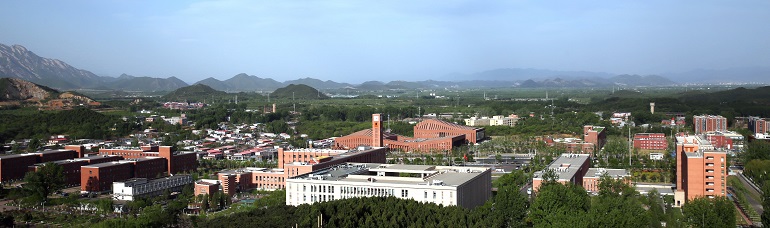
BEIJING -- An asteroid has been named after the university of China's top science academy, with approval from the Minor Planet Center of the International Astronomical Union (IAU).
Asteroid Guokeda (University of Chinese Academy of Sciences), coded 189018, was discovered on Oct 14, 1998 by astronomers with the Beijing Schmidt CCD Asteroid Program at the Xinglong observatory in northern China, according to a recent IAU communique.
With an absolute magnitude of 15.2, the asteroid orbits in an asteroid belt between Mars and Jupiter. Its orbital period is 5.33 years.
A senior official with the university read the communique at an event Sunday to celebrate its 40th founding anniversary.
Guokeda is the Chinese abbreviation of the University of the Chinese Academy of Sciences, which was founded in 1978 as the first and largest graduate education institution in China. The university granted the country's first PhDs in science and in engineering. In 2014, it began to recruit undergraduates.
The university has conferred degrees on more than 160,000 students so far, including nearly 80,000 doctorates.
The Chinese Academy of Sciences is China's highest academic institution in natural sciences, and the most important training base for advanced scientific talent.
Other Chinese universities including Peking University, Tianjin University and Harbin Institute of Technology, have also been used as names for asteroids.




- Beijing West Railway Station marks 30th anniversary
- Taiwan compatriots will see more opportunities
- For some intrepid travelers, sky will not be limit
- Xinjiang reports highest foreign trade growth in China
- Harbin authorities demand return of pensions paid out to deceased
- Global research project on AI guardrails launched in Beijing