



Sweet smell of success for incense masters









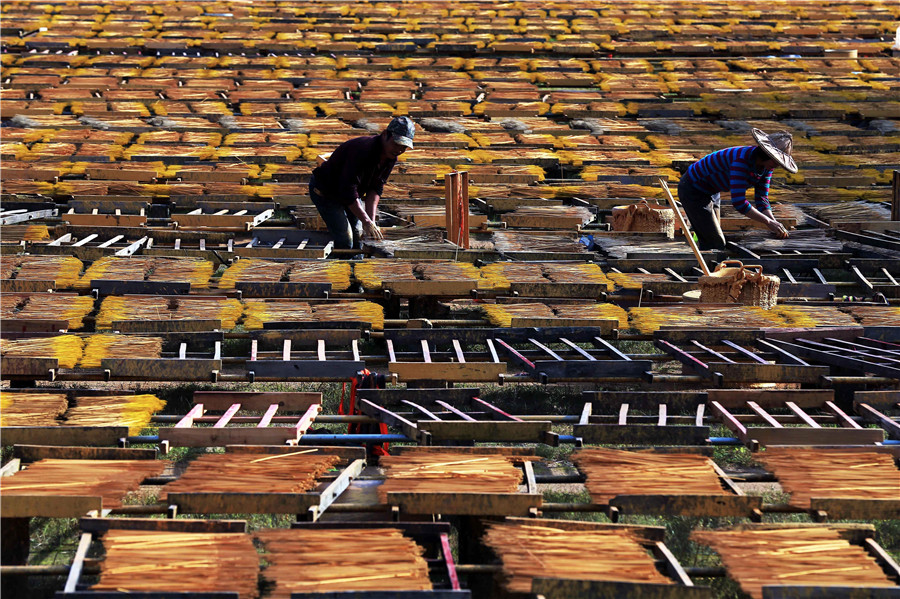
Family traces its origins in trade back centuries as the craft draws new admirers
Holding a bunch of bamboo sticks in his hands, Pu Lianggong, 65, dips them into a jar of water, flips and rolls them in a basket of incense powder to coat every piece evenly.
He eventually casts them on the floor to dry in the sun. The sticks fan out like a blooming flower.
Pu spends most of his time studying and making incense in his old workshop, a one-roof shed with walls of rammed earth in Yongchun county of Quanzhou, a city in eastern China's Fujian province.
Despite the long hours and labor required, the adept craftsman never gets tired of making incense, a handicraft that originated from his Arab ancestors who traded spices along the ancient Silk Road centuries ago.
Arab origin
Producing a faded family tree booklet from an archaic cupboard, the craftsman is proud to trace his lineage back to Pu Shougeng, an Arab trader appointed as a highranking official in Quanzhou during the late Song (960-1279) and early Yuan (1271-1368) dynasties in the second half of the 13th century.
For over three decades, Pu's family controlled the shipping trade in spices, one of the most prevalent products of Quanzhou.


- Authorities prepare for heavy rain, flood risks during May Day holiday
- Zhejiang sets course to become innovation hub
- Social safety net law to protect vulnerable
- Zero-tariff policy opens door wider for African imports
- Respect for honest labor emphasized
- BASE-jumpers take flight over Nizhuhe Grand Canyon





