



Scientists discover new 'cold vent' on ocean floor









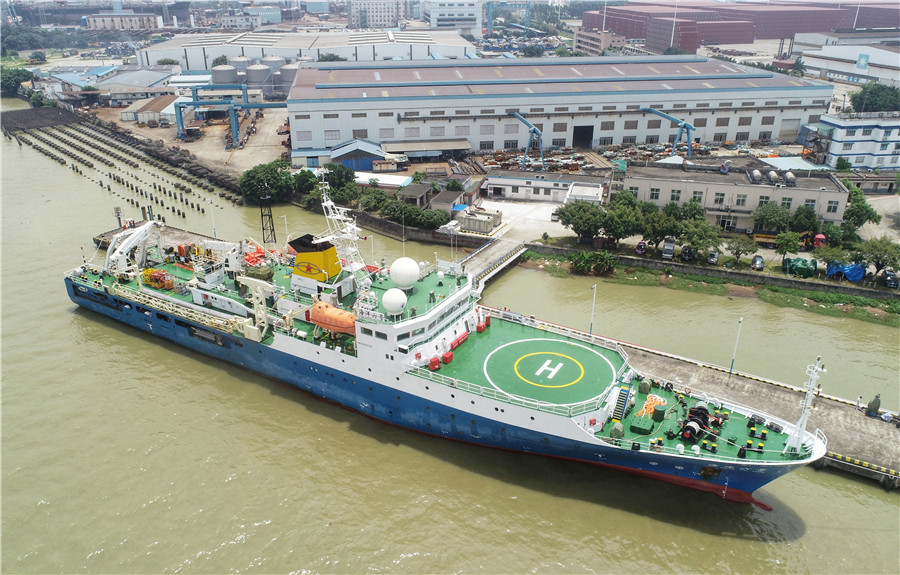
Chinese scientists discovered an active "cold vent" in the South China Sea during a research voyage that concluded on Thursday.
Cold vents are areas where methane, hydrogen sulfide and other hydrocarbons seep out off the ocean floor, providing a unique environment for organisms or the development of topographic features.
Samples and data of organisms, water, gas and sediments were collected to further the study of the evolution and mechanisms of cold vents, according to the China Geological Survey of the Ministry of Natural Resources.
Among the organisms seen was a type of tubeworm-paraescarpia echinospica-in the cold vent 1,390 meters below sea level.
With a 250-year life span, the species is one of the longest living, said Gong Yuehua, a senior engineer of the Guangzhou Marine Geological Survey, according to a report by China Central Television.





- Defense spokesman: PLA drills around Taiwan justified
- Chinese fantasy animation hits Vietnamese theaters amid holiday surge
- BBC documentary reveals Guangdong's wild side
- Hangzhou 'Bunny Officer' goes viral for gentle traffic management
- From lab to life: humanoid robots' 'coming-of-age' year
- Video of PLA's drills around Taiwan Island released