



Herbs, tourism bring prosperity to poor Qinghai family









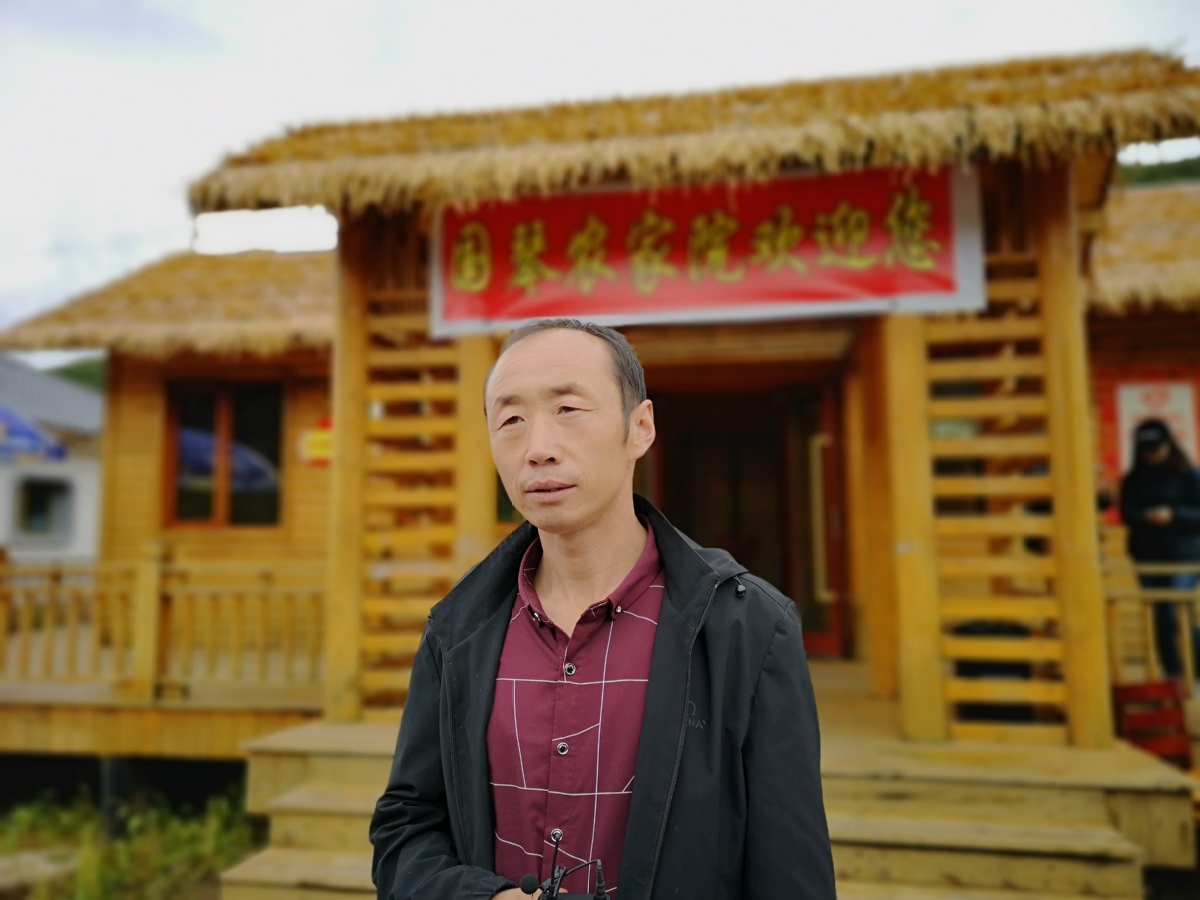
Eating meat used to be a luxury for Zhao Wenke's family of six, including two sons aged 14 and 8, in Dongzhigou village in Datong Hui and Tu autonomous county, Qinghai province.
When the 39-year-old's eldest son was almost 2 years old, the boy told his grandfather that he wanted to eat meat. The family was so poor then that the senior man only bought back a piece of pork even smaller than Zhao's palm, he recalled, stretching his hand to describe.
"Now, if you open my fridge, there are different types of meat, including beef and lamb. We could eat it any time we want," he said.
With a mother troubled by rheumatoid arthritis and a father suffering from cerebral infarction, Zhao dropped out from school when he was 15. After helping complete tasks on their farms, the man went out of the village to serve as a migrant worker. Quite often, he worked on construction sites to help move construction materials.
"I could hardly make enough money to cover the medical fees for my parents," he lamented.


- China launches immersive aerospace science center for kids, teenagers in Beijing
- Intl delegates inspired by Shanghai robotics innovation, human connection
- Art project fuses technology, imagination at Guangdong Museum of Art
- Zhejiang to focus on innovation, role as 'strategic pivot'
- Revision to Prison Law helps protect inmate rights
- Book acts as window on China's governance philosophy





