



Relocation policies move villagers out of poverty









Serving plates of fruit in a yard decorated with galsang flowers, Abbas Atek, a resident of Hongshan new village in Aksu prefecture, Xinjiang Uygur autonomous region, is a hospitable host. But he said he had been reluctant to welcome guests to his former home deep in the mountains of Wensu county.
At that time, six members of the family lived in a stone house. Without electricity, they used kerosene lamps and candles for light. They drank water from a stream and snow and burned cattle and sheep manure to cook. Vegetables were rarely seen on the dining table.
The family made a living by grazing 150 sheep. Its annual income was about 10,000 yuan ($1,500), which could barely feed everyone.
"It wasn't stable either," Abbas, 43, said.
"In 2008, a heavy snow froze over 30 of our sheep to death. Wolves ate nine. It was a big loss."
In 2012, the family moved to a new home at the foot of the mountains that was provided free of charge, benefiting from a local relocation policy for poor people.
The new house, with an area of 85 square meters, has three bedrooms, one living room, a restroom and a kitchen, with power and running water.
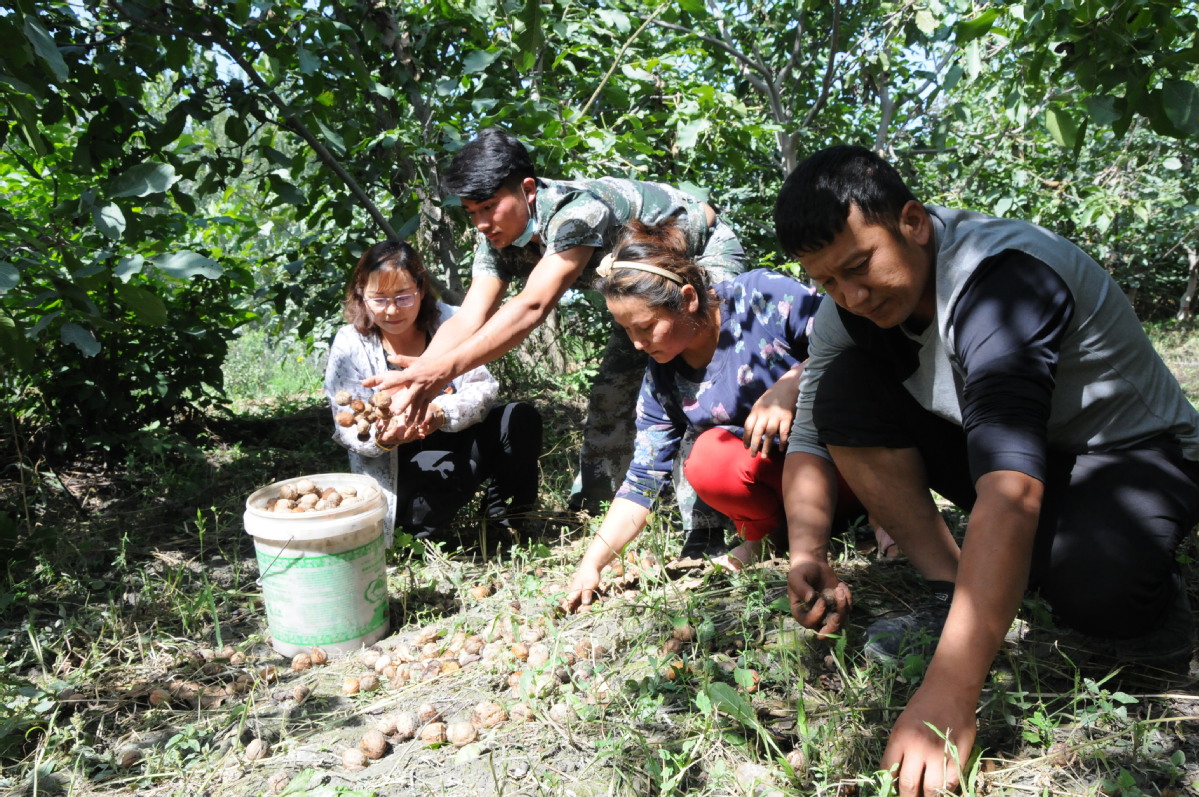
They also have a separate animal husbandry zone and a 5,300-square-meter orchard.
About 2,200 people from 566 families have moved out of the mountains to the village and found new jobs in orchards and factories, local authorities said.
Abbas' family now has multiple income sources, such as raising cattle, growing walnuts and receiving a government subsidy. Its annual income has grown to 50,000 yuan.
"We have bought a refrigerator, washing machine, television, shower and car," Abbas said.


- Seven dead, 12 hurt as vehicle rolls over in Yunnan
- Purple sea of?catnip flowers?blooms in Shandong town
- 'Blue tears' turn Fuzhou's beaches fluorescent
- China-made marine-derived antitumor drug to begin combination therapy trials soon
- Wild apple trees create a poetic spring landscape in Xinjiang
- Tianjin town plays leading role in global instrument trade





