



Appeal of North, South poles keeps luring scientist back









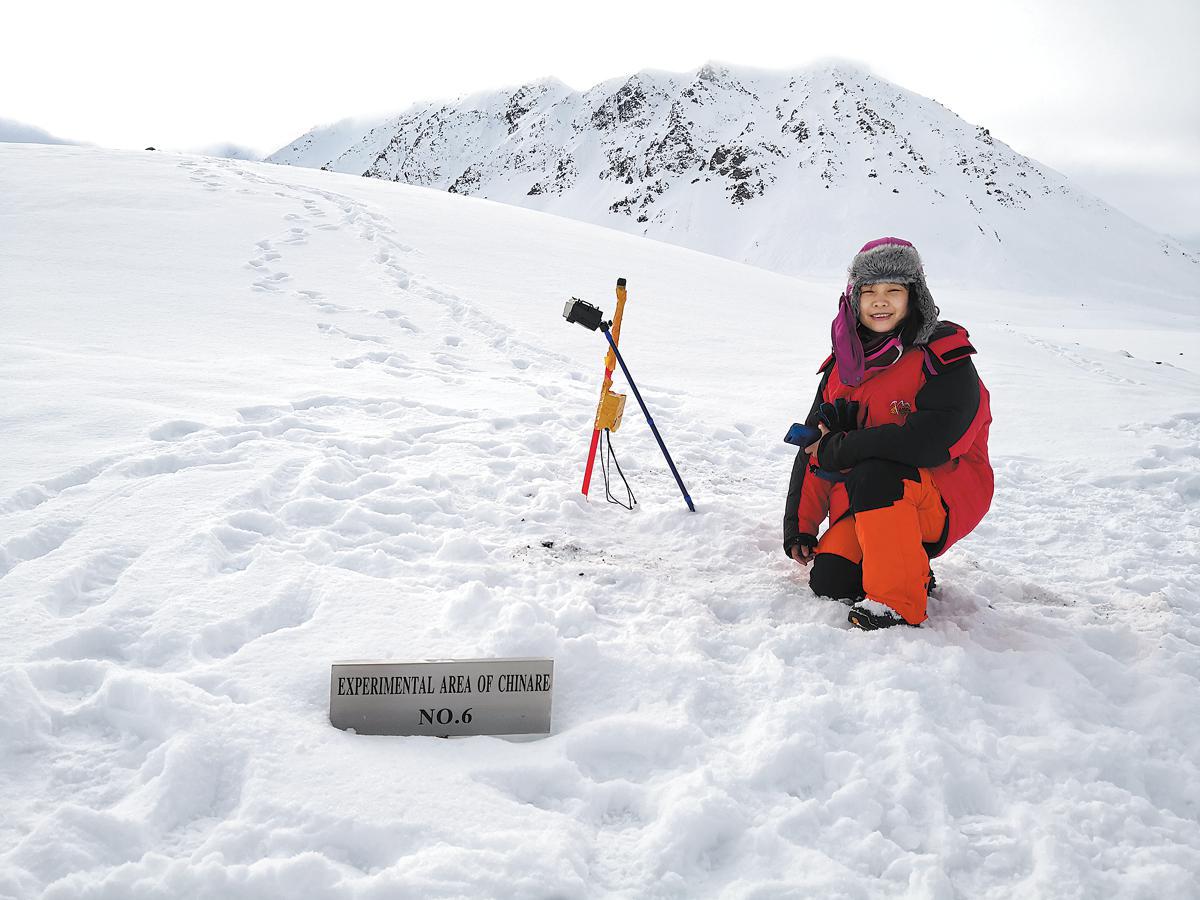
Over the past 15 years, Chinese scientist Peng Fang has gone on scientific expeditions at the North and South poles 13 times. Though she is not a fan of outdoor activities, she said the charm of the polar regions is irresistible, compelling her to return again and again.
In Antarctica, Peng's primary task is to search for and collect new species of microorganisms in order to study their survival strategies and evolutionary patterns in extreme environments. Research on the characteristics of those microorganisms, including their tolerance of cold, drought, radiation, polar days and inadequate nutrition, could be beneficial to human society in the future, the scientist said.
"Studying how these microorganisms adapt to the North and South poles allows me to learn the wonders of life," she said. "These tiny bacteria have so many strategies, which I find very intriguing. Interest is crucial for learning and research, and polar expeditions help me maintain a long-term interest in my field."
As time has passed, Peng has discovered numerous new microorganisms, and Wuhan University's microbiology research team, which Peng is a part of, is responsible for the most polar bacteria species discoveries in the world.
Her frequent journeys with the team have enabled Peng to really get to know her fellow researchers.
"Instead of direct interactions, people back home would communicate more through computers and phones. However, in the polar regions, especially on polar research vessels where there is no internet, everyone lives together in cramped cabins for several months or even half a year, leading to a lot of conversations," Peng said.
She jokingly added, "By the time we disembark, we all know each other's ancestors up to the eighth generation."


- 'Blue tears' turn Fuzhou's beaches fluorescent
- China-made marine-derived antitumor drug to begin combination therapy trials soon
- Wild apple trees create a poetic spring landscape in Xinjiang
- Tianjin town plays leading role in global instrument trade
- AI tool maps Chinese family trees, links mainland and Taiwan heritage
- Shanghai to stage new production of Natasha, Pierre and the Great Comet of 1812





