


Tomb rekindles Chu history
Lavish burial reveals monarchy's splendor, vulnerability and struggles on the eve of imperial unification, Lin Qi reports.










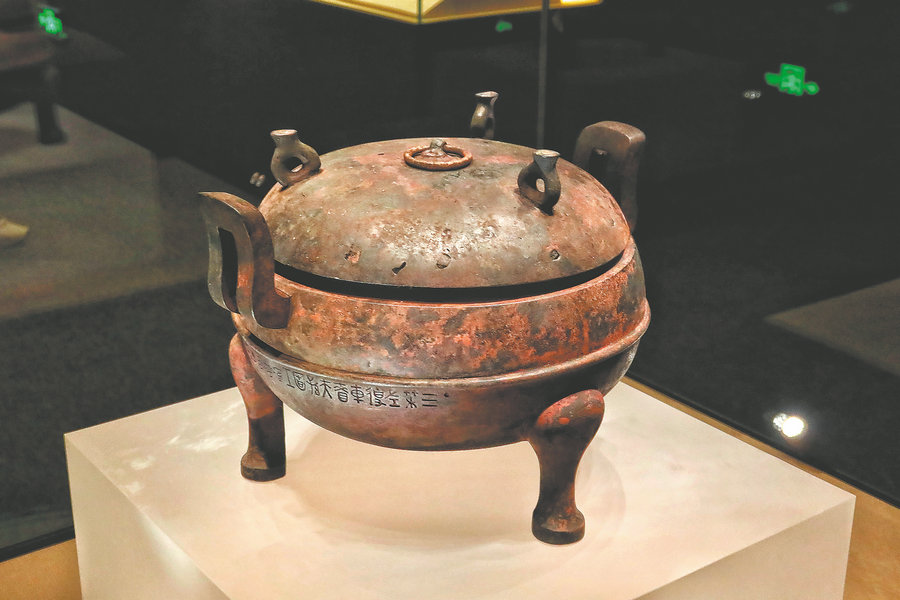
One highlight of the exhibition is a colossal three-legged huo ding vessel used for royal banquets and sacrificial ceremonies. Nearly 1 meter tall with an 88-centimeter rim, it is the largest Chu-era ding vessel ever excavated.
Another bronze fu vessel bears a 12-character inscription stating it was commissioned by King Xiong Yuan himself.
Cross-disciplinary analysis involving anthropology and paleopathology of human remains suggests the occupant of the tomb died at 50 or older, stood about 164 centimeters tall, and likely had a mother from the northern region, consistent with historical records of King Kaolie.
Therefore, the drama of King Kaolie's life journey has been vividly unveiled.
Although hailing from an influential family, he grew up in the ever-changing cauldron of the Warring States Period during which the crucial players, including his home state, annexed small powers, formed alliances or became military rivals. As a youth, he was one of the so-called "hostage princes" sent to enemy courts — a common diplomatic practice of the time.





