


Court reviews Nexperia situation









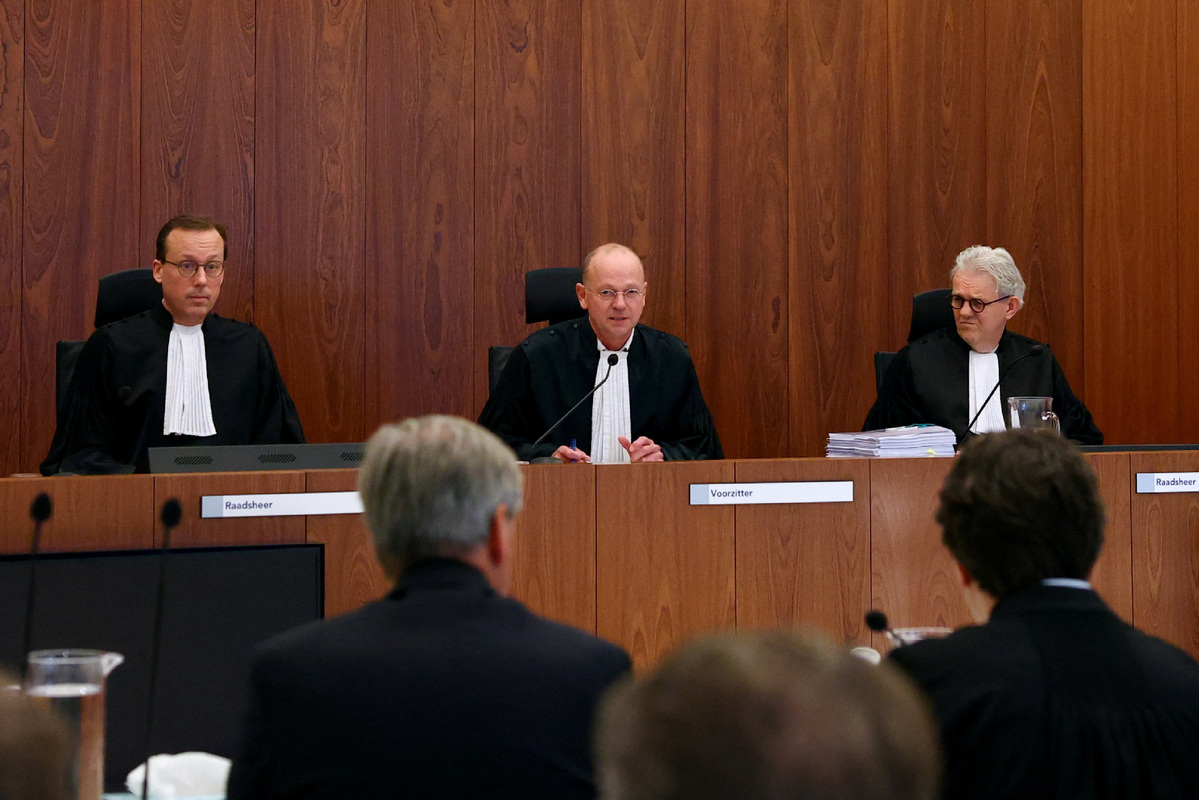
A verdict is pending after a court case on Wednesday looked into whether there are grounds to order an investigation into the policies and conduct of the chipmaker Nexperia.
The case at the Enterprise Chamber, which is a special section of the Amsterdam Court of Appeal, is being seen as highly relevant to the decision the Amsterdam Enterprise Chamber made in October, when, based on doubts about the management of Nexperia under the leadership of CEO Zhang Xuezheng, who is also founder and board chairperson of Nexperia's Chinese parent company Wingtech, the court suspended his position and placed the voting rights of Nexperia shares held by Wingtech under the management of an independent administrator.
China's Ministry of Commerce urged the Netherlands government in December to immediately revoke the administrative order, calling it an inappropriate intervention in corporate operations.
If, based on the hearing held on Wednesday, the court decides to order an investigation, the October verdict would be maintained, or even strengthened. But if it does not, the previous verdict could be dropped, and the months-long chips supply crisis facing the European automobile industry, which was caused in part by the Nexperia case, could be nearing an end.
Netherlands-based Nexperia makes silicon wafers in Europe that are sent to its plant in China to be cut and packaged into chips.
Nexperia's struggle to take back control of its operations, and the Netherlands company's recent difficulties in cooperating with its parent company in China have disrupted chip production and damaged the global auto industry, which extensively uses its products.
At the hearing on Wednesday, lawyers representing Wingtech and Nexperia presented evidence to argue Nexperia under Zhang's leadership was not mismanaged and that Zhang served the overall interests of the company well.
No verdict was issued and one is not expected imminently.
A TikTok and YouTube commentator who goes by the name Mr Fong and who comments on geopolitical issues said the case has deep roots in the maneuvers of the United States and the Netherlands.
"They (Nexperia executives) say they have a problem with a Chinese CEO … but what does ethnicity have to do with business?" he asked.
Marc Hijink, a veteran columnist for Netherlands newspaper NRC and author of the book Focus the ASML Way, told China Daily the case "creates the image that anything could happen to your company when you're investing in the Netherlands or in Europe" but that "it's the wrong impression".
"What really happened here is that when business people have different opinions, they ask the Dutch court to intervene for what they believe will benefit the whole company," he said. "Everybody should obey by the rules in the country they are operating their business in, and any CEO, be he or she German, Swedish, or Dutch, is to run this business according to the rules of the Netherlands and that's what's happening here. What was unusual was that the court made an ex parte decision in October — one reason Zhang Xuezheng was caught by surprise and felt unable to defend himself properly."
Amsterdam-based Mr Fong added: "For us in the Netherlands, this creates serious complications. With so many people and so much growth in China, there is a question of whether investors might become hesitant to invest in the Netherlands. I see this concern come up repeatedly in my videos — we are often labeled or judged in that way."
He added the fact that the case happened at all was "very, very detrimental" for the Netherlands.
"It's bad for our economy and for our overall growth," he added.