



High-tech tools keep track of rare milu deer
Advanced network deployed at Hubei reserve to assist with conservation efforts









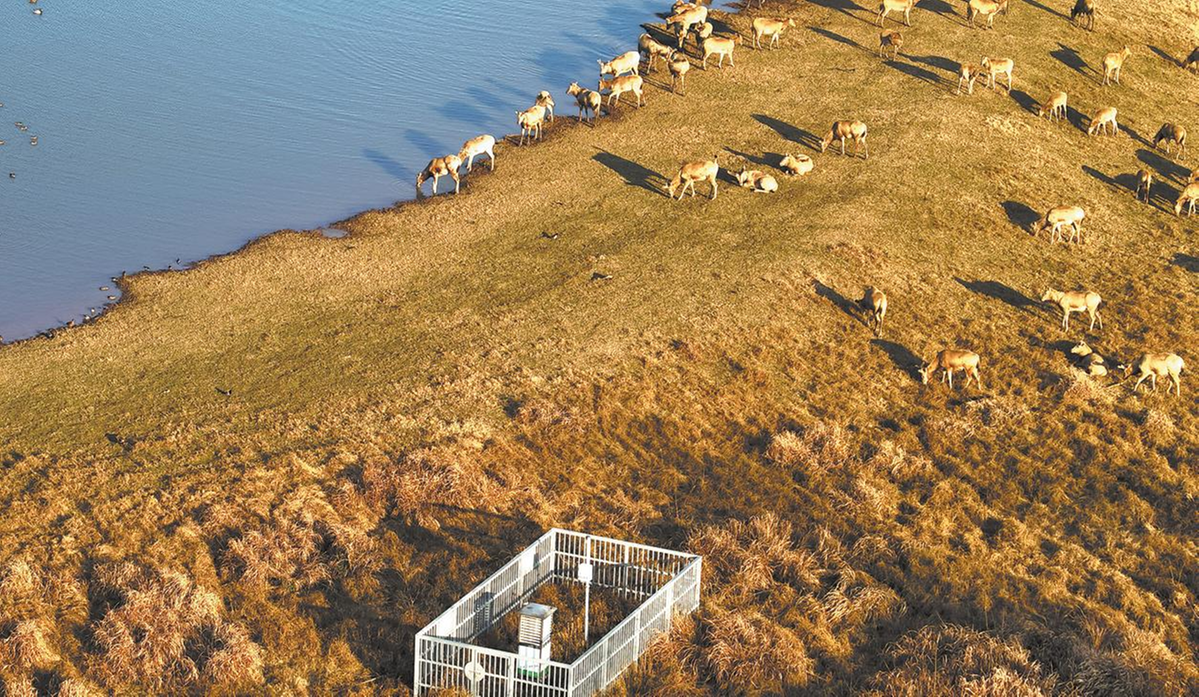
Ranger Wang Chuanjun's workday used to be a 10-hour battle against the elements. Patrolling the 1,567-hectare Hubei Shishou Milu National Nature Reserve meant trekking through waist-high weeds and sinking into mud pits swarming with mosquitoes and snakes.
Today, the 57-year-old ranger's morning begins not with a motorbike ride into the reserve, but with a digital dashboard.
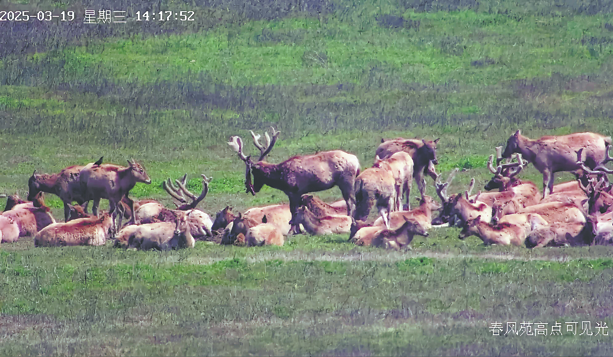
The reserve, home to the rare milu deer — also known as Pere David's deer — has undergone a massive digital transformation. By deploying an intelligent information platform powered by 5G and artificial intelligence, the reserve has replaced manual logs and "blind" patrols with a network of 450 high-definition cameras, 50 infrared cameras and a suite of environmental monitors.
The shift from manual labor to data-driven conservation is already paying dividends. Since March 2024, the system has issued over 3,000 early warnings, ranging from equipment malfunctions to potential fire hazards and illegal human intrusions into the reserve.
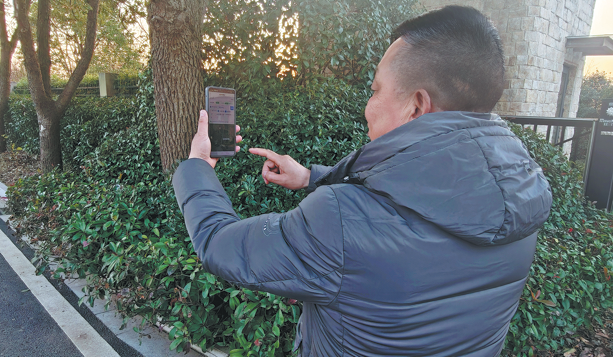
Wang's daily routine is to review the feeds from cameras to check the distribution of the deer, whether any fawns have been born, and whether any deer seem unwell.
Then he checks the environmental data, such as soil moisture, water quality and weather, to make sure they're all within normal ranges.
He still patrols daily, but he follows the most ideal route to wherever any abnormal alerts have been reported. "It makes our work so much easier, efficient and effective,"Wang said.
Last autumn, the system's precision was put to the test when it detected two trespassers attempting to fish in the core habitat near midnight.
"In the past, night patrols were impossible," Wang said. "Following the location marked on the platform, we arrived in less than 20 minutes and stopped them on the spot."
Beyond security, the system acts as a digital doctor for the ecosystem. When sensors detected a dangerous spike in pH levels in a pond, staff were alerted instantly, allowing them to replenish the water before it impacted the herd's drinking supply. According to reserve officials, the successful handling rate for such alerts exceeds 98 percent.
Ge Xianmei, an IT manager at the reserve, said the digital system provides workers with a greater degree of precision in their duties.
"Because the alerts are timely, we can pinpoint the exact location immediately after receiving the information and reach the scene in 10 to 20 minutes, preventing any serious impact," Ge said.
Perhaps the most significant "thumbs up" for the system comes from the deer themselves. For a first-class protected species sensitive to human presence, the reduction in physical patrol frequency has allowed for a return to their wild instincts. Wang said: "In the past, they would run when we approached. Now, they are seen resting near the equipment, and fawns even dare to play in open areas."
The infrared "eyes" have also debunked old myths about the species; rangers now know that the deer are highly active at night and actually forage over wider areas during light rain — behaviors that remained hidden for decades.
The technological shield has facilitated a remarkable recovery for the species. From just 64 individuals introduced in the early 1990s, the regional population has surged to 4,500, with a fawn survival rate now exceeding 95 percent.
"The environmental data is now a basis for scientific management," Ge said. By analyzing soil fertility and meteorological trends, the team can predict floods and vegetation damage from overgrazing long before they occur.
Ge said the next step is to integrate environmental data and deer behavior data for research, such as seeing if their reproduction rate is higher when water quality is better; whether their migration routes change after extreme rainfall; and whether there is a relationship between soil fertility, vegetation growth and their range of activity.
"Through such analysis, we can better understand more complex ecological patterns, and future conservation work will become even more targeted," he said.
Ge added that the deer population has grown significantly over the past two years, saying it is closely related to the ability to monitor their living environment in real time and eliminate threats promptly.
The intelligent platform has also led to a reduction in management costs, cutting unnecessary inputs and "allowing us to allocate more resources to ecological restoration and species protection", said Yang Tao, who is in charge of the informatization project at the reserve.
In the future, more advanced monitoring equipment will be added, said Yang, such as high-definition night-vision cameras, long-endurance drones, underwater sensors and micro-sensors capable of monitoring air quality.
He added that they will also introduce more artificial intelligence models, such as those that can detect potential health risks in advance by monitoring changes in deer behavior and physical appearance.
For ranger Wang, he believes that human experience and instinct will still play an important role at the reserve. A human can tell from details cameras cannot capture, such as footprints and feces, the health condition of a deer, whether it is injured or in heat during mating season.
"For emergencies such as a deer getting trapped in mud, the system may not recognize it precisely, but we know which areas are more risky and can take preventive measures," he said.






Today's Top News
- Visit highlights cooperative nature of China-Europe ties: Editorial
- Placating bully with concessions 'fool's errand': China Daily editorial
- 17 rescued Filipino crew members transferred
- Xi leads China's diplomacy to usher in new chapter in turbulent world
- Finnish PM arrives in Beijing for official visit
- Beijing leads Chinese cities in number of registered AI models