



Nation's underwater archeology uncovered
The passionate people behind China's search for submerged treasure trove of rich maritime relics









Nestled in the heart of Pingtan Island — the "county of islands" off the coast of Fujian province, where the land meets the sea — fishing boats lie at anchor.
Just a stone's throw from the waterfront stands a striking four-story red house, which serves as China's Underwater Archeology Training Base.
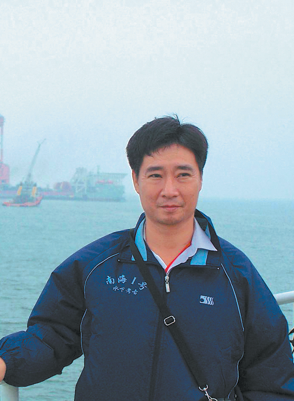
For retiree Cui Yong, one of the country's earliest underwater archaeologists and former deputy director of the Guangdong Institute of Cultural Relics and Archaeology, the training center is deeply rooted in maritime history.
Sunken legacy
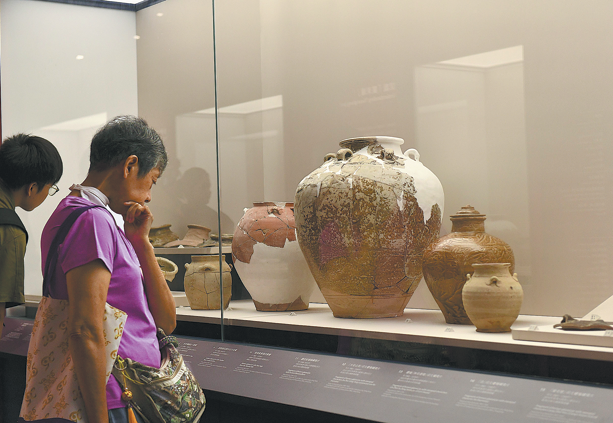
A pivotal moment in China's underwater archeology came in 1987 when Cui was tasked with cataloging 247 artifacts from a sunken Southern Song Dynasty (1127-1279) commercial ship.
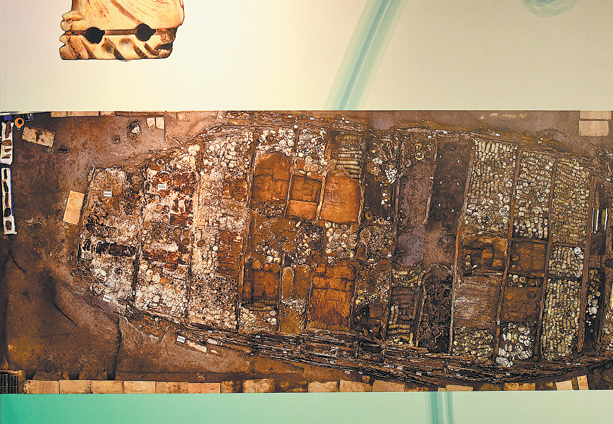
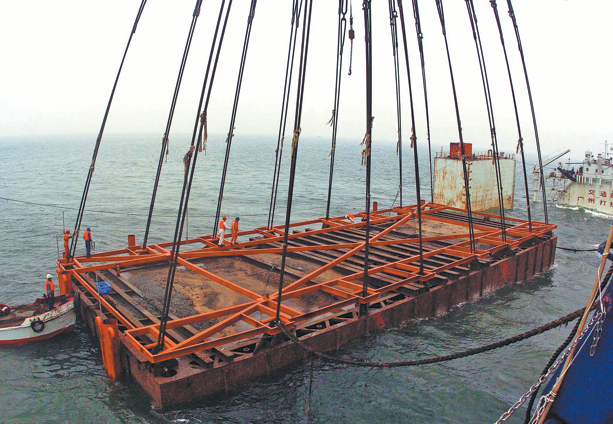
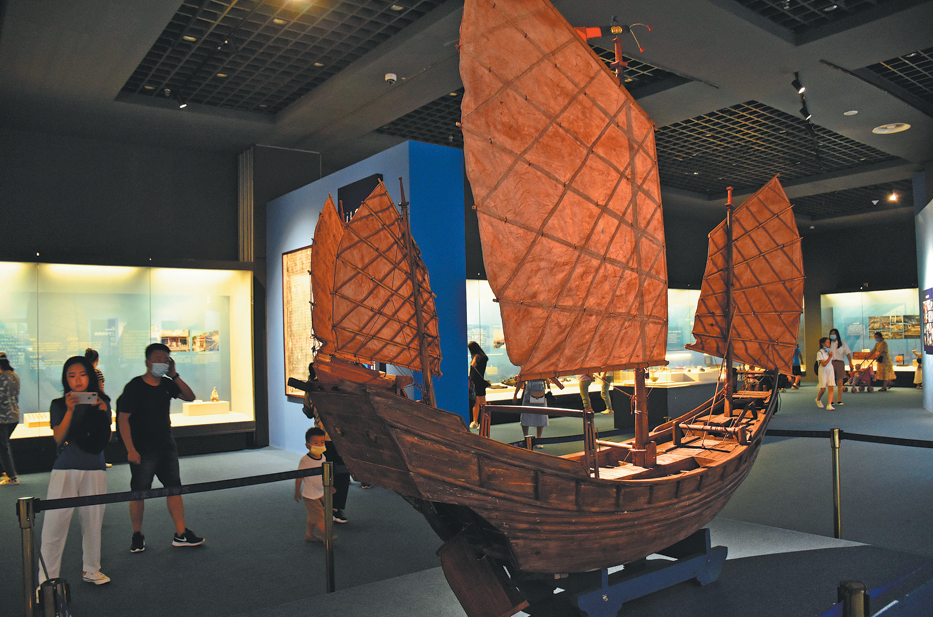
More than 800 years ago, a merchant vessel laden with goods left Quanzhou Port, bound for the Indian Ocean. Tragedy struck when it went down in the seas off Guangdong province, lost to time until it was discovered during a joint Sino-British search in 1987. The ship, now known as Nanhai One, has since captured imaginations with decades of ongoing archaeological work.
Submerged ships and their contents, once isolated from the air, can be remarkably well-preserved, creating enigmatic sites of underwater heritage. However, the vastness of the ocean floor remains largely unexplored due to human physiological limits and the rudimentary technology of earlier times.
With the breakthroughs in diving technology, terrestrial archaeology has, naturally, extended underwater.
"In the early days, a few countries, mainly developed nations like Japan, the United Kingdom, the United States and France, had been involved in underwater archaeology," Cui said.
The 1990s saw budding interest in underwater archaeology within China, with the Nanhai One project prompting collaborative efforts with British and Japanese experts. Despite several attempts, the ship's recovery remained elusive, further complicated by financial constraints that halted the project.
But, help came from across the waters in Hong Kong.
In 1999, Cui and several colleagues were invited to conduct underwater archaeological surveys in the city where they chanced upon businessman Chan Lai-fak who ran a diving equipment company. "It was shortly after Hong Kong's return to the motherland, and they all wanted to do something for the country," said Cui.
A year later, armed with a vessel, diving equipment and HK$1.2 million ($154,000), Chan stepped forward as the project's pioneering angel investor. "It was our last stand, a final roll of the dice," said Cui.
Chan's unwavering optimism had offered a ray of hope as the team's resources dwindled. At the eleventh hour, Cui's discovery of crucial artifacts unveiled Nanhai One's elusive resting place, validating Chan's faith and foresight.
"Life's ledger can be tallied in two ways," said Chan. "One is tangible where 1+1 neatly equals two. The other is intangible, measured by the heart. And if you do one thing right in your lifetime, that's live a life without regrets."
A quarter of a century on in summer last year, the businessman beamed with pride at the sight of the unmanned search vessel undergoing maintenance. He walked around it, marveling at the rapid pace of technological advancement and the new era it has heralded for today's underwater archaeologists.
Currents of change
Becoming a qualified underwater archaeologist means navigating a demanding sea of training and assessment.
The journey from novice to a certified expert is long and challenging, with 196 individuals on the Chinese mainland capable of undertaking front-line underwater archaeological work, according to the National Cultural Heritage Administration.
"Undergraduate education in archaeology takes at least four years, while diver training typically spans just a few months," said Cui, emphasizing the importance of a solid archaeological foundation combined with a passion for diving."Our ideal candidates are those with an archaeological background and a love for diving too."
Tseung Pak-long was an ideal candidate. A graduate of Wuhan University's archaeology program and one of the first Hong Kong students to seek further education on the mainland, his connection with the ocean and the mainland seemed predestined.
Born and raised in Hong Kong with a profound interest in Chinese history and culture, Tseung read classic novels, particularly Romance of the Three Kingdoms, leading him to pursue archaeology. With no local programs available, he had to wait for a year to be admitted to Wuhan University's archaeology department.
Tseung's fascination with the nation's historical narrative drove him to pursue archaeology — a path that led him to various archaeological sites across the country. Yet, his hometown's call, with its vibrant maritime and diving landscape, remained strong. A chance meeting with Chan in 2015 bridged his dual passions for archaeology and diving, marking the beginning of a new chapter in his life's work.
Today, Tseung is chairman of the Institute of Hong Kong Underwater Archaeology Research. He's heard the story of the Nanhai One countless times, and often reflects on his mentor's pivotal decision that helped shape the course of Chinese underwater archaeology.
"The journey of archaeology in China has been fraught with challenges. Now that we have established our own direction and uniqueness, it is crucial to pass these on to the next generation," Tseung said.
With this mission in mind, he started visiting schools across Hong Kong, narrating China's underwater archaeology history and stories. By recreating real archaeological excavation sites, he hopes to ignite interest in the younger generation to explore and join this niche industry.
The opening of the Greater Bay Area Underwater Archaeology International Cooperation Center in Guangzhou in December 2023 signaled a new chapter for the discipline. Hong Kong, once a pivotal node along the Maritime Silk Road and now a global shipping hub, continues to play a vital role in East-West trade. In the new phase of China's underwater archaeology going global, the influence of the Hong Kong Special Administrative Region is set to grow even stronger.
Time capsules
Each ship carries a tale from procurement and loading to sailing and, ultimately, sinking.
The 2024 documentary, The Sinking of the Lisbon Maru, unveiled a previously unknown chapter of history, while ancient shipwrecks like the Nanhai One narrate the life and times of the Maritime Silk Road — one of the oldest known sea routes linking East and West.
Originating in the Han Dynasty (206 BC-AD 220), the Maritime Silk Road became a primary avenue for ancient China's foreign trade, comprising eastward and westward routes, with the former reaching Korea and Japan, the latter stretching to Southeast Asia, West Asia and Africa.
"When it comes to the Maritime Silk Road, people often only know the starting and ending points, the sales channels and the origins of goods. But, the route itself, mediated by the sea, is the most challenging to find," Cui said, using Nanhai One as a "time capsule" and point for retracing the ancient maritime path.
"Each shipwreck is a dot. The more you find, the more connected they become, forming a line that reveals the route," he said.
As these time capsules on the seabed are unlocked, they reveal the bustling maritime-terrestrial trade of centuries past.
"We must honor those ancestors who left us this tragic yet invaluable (insight into our) cultural heritage," Cui told students at the underwater archaeology training base in Pingtan.
Spanning over three decades, Cui's career has paralleled Nanhai One's rediscovery and excavation. His enduring patience and resilience are the hallmarks of an archaeologist's success. "One day at a time and, before you know it, you've lived through history," he said.
Cui has witnessed the development of China's underwater archaeology, from in-situ excavation to cofferdam extraction and mastering deep-sea archaeology projects.
Like the aged boat in the training center's courtyard, its body tells stories of storms and years gone by. Its original shape might be hard to recognize, but its presence encourages everyone to remember the journey taken and to understand the way forward.
Centuries ago, a Southern Song Dynasty merchant ship set off on the vast journey of the Maritime Silk Road and left behind a trail of historical embers across the ocean floor.
Today, China's Belt and Road Initiative is building a solid bond of trade and human connection, as fragments of history are salvaged from the ocean depths, not just reconstructing the past but reflecting the confidence and vision of a nation venturing into the deep blue.







Today's Top News
- China hands over 17 Filipino sailors from shipwreck to Philippines
- Finnish PM arrives in Beijing for official visit
- Beijing leads in number of registered AI models
- WHO chief says US reasons for withdrawal 'untrue'
- Xi congratulates Yoweri Museveni on re-election as president of Uganda
- Senior military officials under investigation