


Targeted policies can help cushion AI job impacts









Editor's note: Mo Rong, a National Committee member of the Chinese People's Political Consultative Conference, spoke to China Economic Weekly about the challenges facing employment and how artificial intelligence will reshape work. Below are excerpts of the interview. The views don't necessarily represent those of China Daily.
The main structural contradiction in China's job market is the mismatch between the supply of skills and market demand.
This structural imbalance is the key factor behind the employment pressures faced by young people. Some college graduates have specialized in fields that are poorly aligned with market demand. As a result, these graduates face "difficulties in landing jobs" while employers are confronted with "difficulties in hiring".
Some graduates have an insufficient understanding of what society needs. Their job-seeking abilities and career expectations need to be changed.
To address these structural challenges, China is implementing differentiated and targeted employment policies.
Mechanisms to promote employment for college graduates on a regular basis have been established, including career guidance and entrepreneurship training on campuses, special recruitment activities and special service platforms that provide graduates with job resources and opportunities.
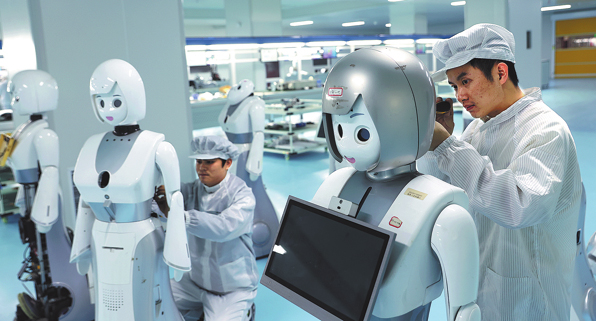
Over the past decade, perceptions about the impact of artificial intelligence on employment have changed significantly. Initially, it was widely believed that AI would mainly take over repetitive work. But in recent years, the development of generative and embodied AI has raised widespread concerns about AI's ability to take over physical and mental labor.
AI is indeed replacing workers and may affect an even broader range of jobs in the future, but such replacement often offers something new. AI is not only enhancing labor productivity and driving national output growth, it will also create new kinds of jobs and new kinds of industry supply chains.
In the future, work will gradually shift toward "human-AI collaboration". At the same time, it is necessary to know that replacement often occurs before creation. It is likely that young people and white-collar workers will bear the brunt of the impact before the creation of new jobs takes place.
A smooth transition is possible if we follow an "employment first" approach and guide the replacement process in an orderly manner. For example, in certain fields, phased and gradual replacement strategies can be adopted to balance the need for maintaining employment and the consequences of technological iteration.
This also requires efforts to design better employment policies and public services.
It is worth emphasizing that opportunities lie within challenges. AI's empowerment and embodiment are expected to transform low-quality jobs by enhancing workers' skills and incomes, reducing their physical burden and mitigating the risks in the work environment, thus upgrading the overall quality of employment.
Therefore, in the face of changes brought by AI, the key lies in proactive planning and tailored strategies to form a new employment environment that features a positive interaction between replacement and creation.