
The China Story
at your Fingertips
OPEN
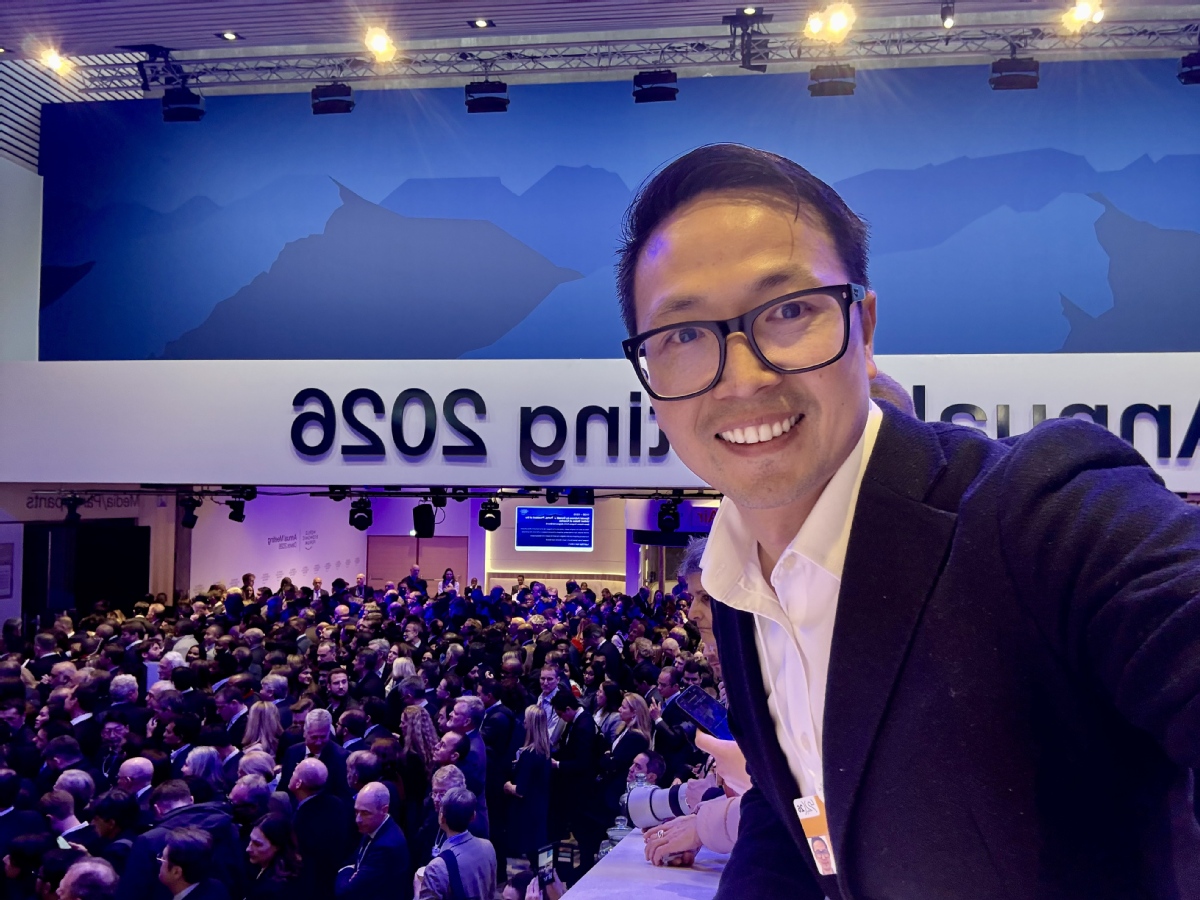
Every trip to Davos during the WEF is not easy — flights, trains, shuttles, and endless security checks. By the time I arrive, I'm exhausted, but that feeling never lasts long. It is quickly replaced by the reminder of how rare this access is: for one week, a quiet Alpine town becomes a crossroads for global decision-makers, and some of the world's most sensitive conversations take place face to face.
This year, uncertainty dominates those conversations. Much of the hallway talk centers on the United States, its latest foreign policy moves, and renewed push to acquire Greenland. Despite widespread dissatisfaction over President Donald Trump's move on Greenland, his address still drew what regular attendees have described as the largest crowd in Davos history. The Congress Hall had reached over-capacity, with even badge-holding journalists turned away at the door.
The sense of unease is sometimes expressed in stark terms. On the sidelines of the forum, I heard former Canadian prime minister Justin Trudeau reflect on how the world may be entering a new era unlike anything seen since World War II. With pop star Katy Perry standing nearby, the contrast felt surreal. Trudeau's message was blunt: the roughly 80 years of relative stability that followed the war may be giving way to a far less predictable global order.
China, meanwhile, is firmly in focus. Vice-Premier He Lifeng's speech emphasized free trade and multilateral cooperation, and in private discussions China is often described as a stabilizing force. As tensions rise elsewhere, many participants see China as an anchor of continuity in an increasingly volatile geopolitical landscape.
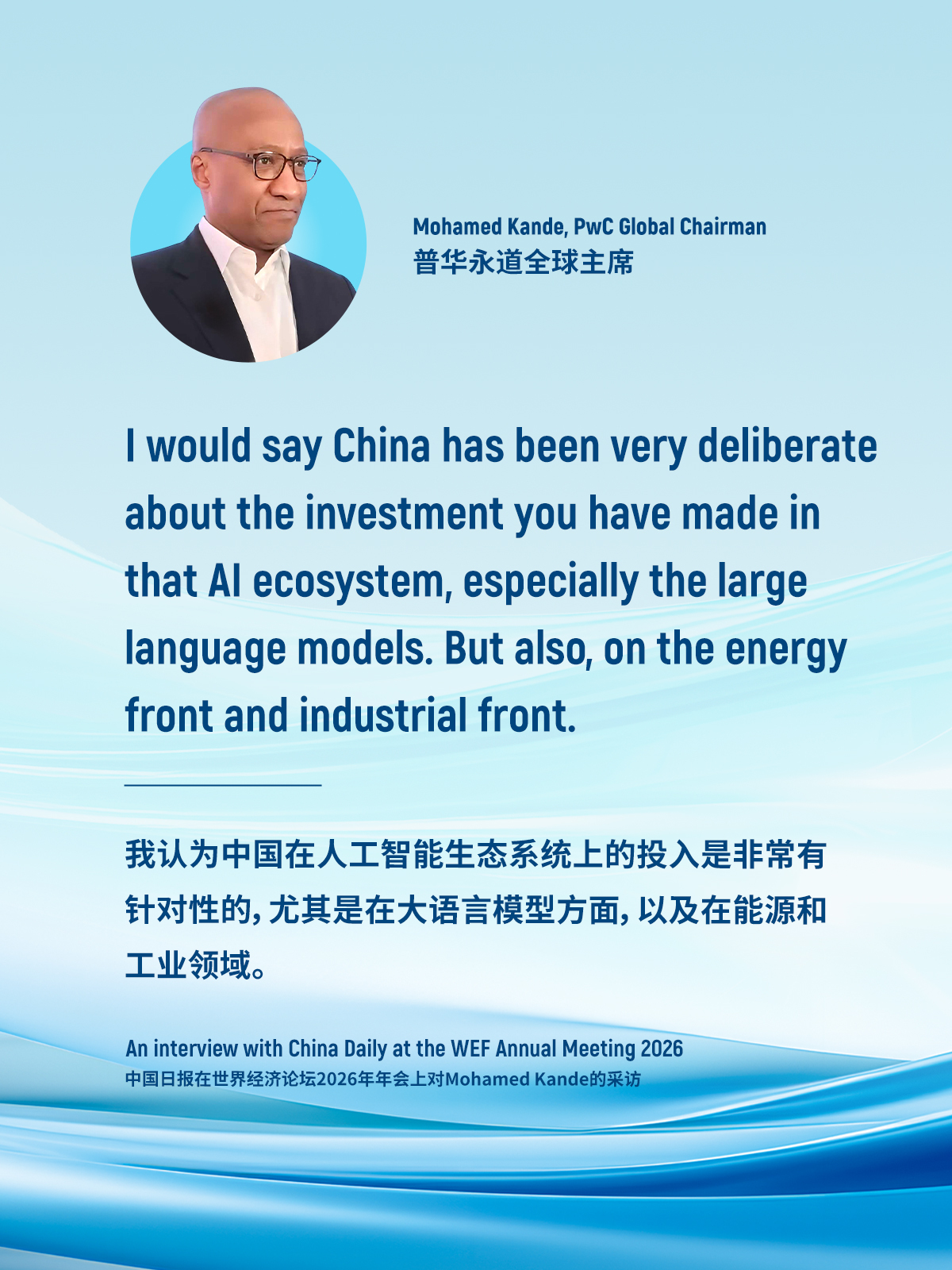
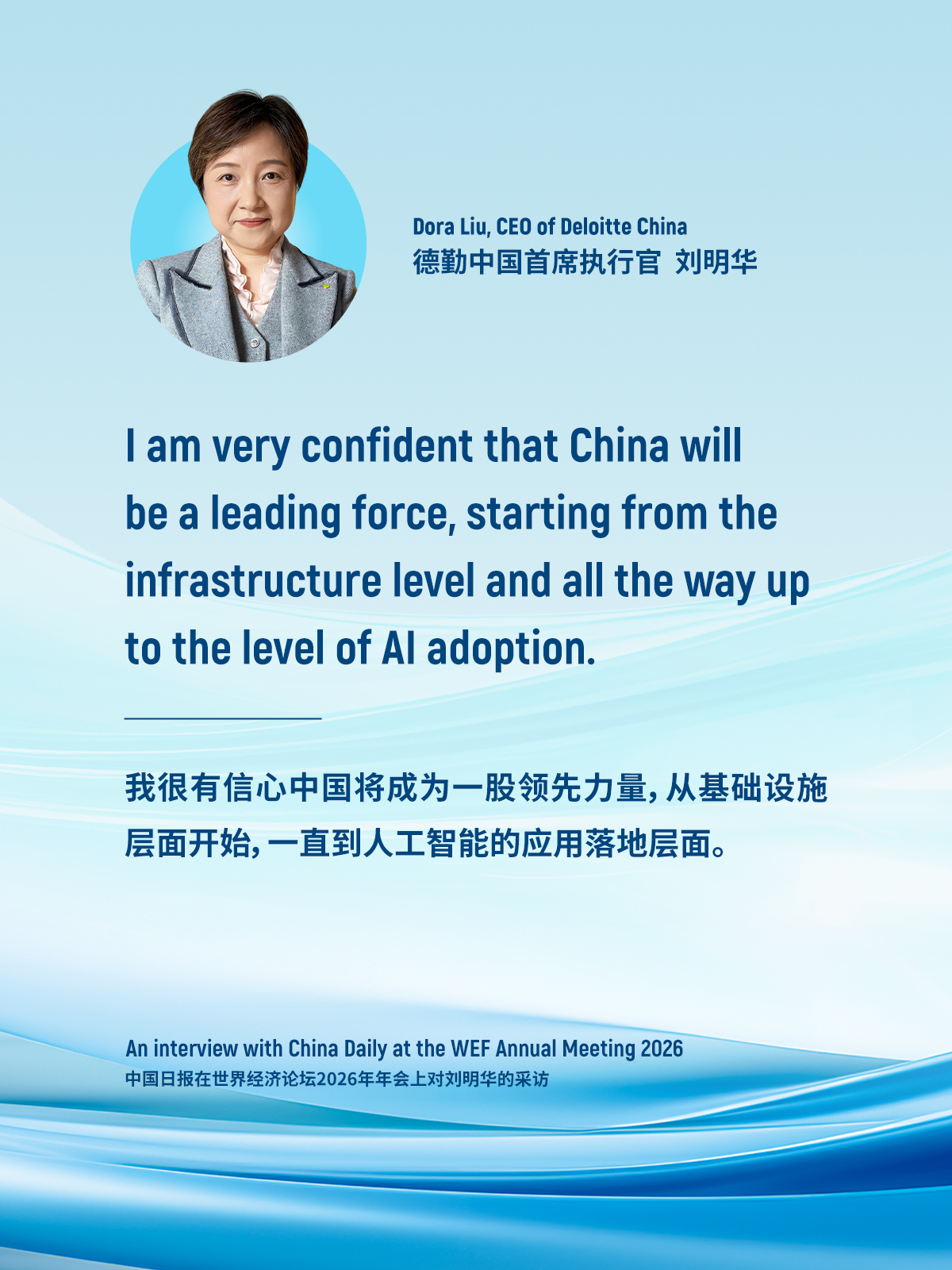
Artificial intelligence is another constant theme. The main street in Davos is lined with companies displaying AI slogans, not to mention the packed agenda of AI-related panels. Beyond chips and computing power, the debate is also about development models. China's open-source approach and rapid industrial deployment are frequently cited, and companies including UnionPay and JD shared their experiences in AI investment and application.
For a reporter, the week is intense and demanding, but also deeply instructive. One personal highlight this year was interviewing Ireland's Prime Minister Micheal Martin, who recently visited China and told me about the significant interest the Chinese government has in creating a framework between Europe and China that would facilitate a more stable and sustainable trading relationship.
And now, the WEF is beginning to draw to a close again. After days of relentless discussions, motorcades and media briefings, the town of Davos prepares to return to its normal Alpine tranquility.

China and the United States highlighted the stark contrast in their approaches to global challenges at the 56th Annual Meeting of the World Economic Forum in the Swiss town of Davos this week, which was held under the theme A Spirit of Dialogue.
China's message, delivered by Vice-Premier He Lifeng on Tuesday, was clear and consistent: the country sees itself as a reliable partner committed to multilateralism and free trade.
Amid rising unilateralism and protectionism, and the impact of regional conflicts and geopolitical tensions, He told the audience "the world must not return to the law of the jungle, where the strong will eat the weak".
With global economic growth losing momentum, He said expanding the overall economic "pie" together was more important than fighting over existing shares, and that China advocates universally beneficial and inclusive economic globalization.
China has placed domestic demand at the top of its policy agenda this year, the vice-premier said, with the government working to raise incomes and boost consumption. He invited companies from around the world to seize opportunities in the Chinese market with their products and services.
"On top of being the world's factory, we hope to be the world's market too," He said, noting that China has imported more than $15 trillion worth of goods and services during the past five years. He added that China's overseas investment has generated more than $300 million in tax revenue abroad, creating jobs and supporting local economies.
He also said China is willing to deepen cooperation with other countries in science and technology innovation, and to address global challenges in areas including artificial intelligence governance.
On climate change, He reiterated China's commitment to its carbon-neutrality timeline and called for greater international cooperation on green and low-carbon development.
A day later, US President Donald Trump struck a markedly different tone on the same stage. Speaking at the end of the first year of his second term, Trump claimed he had "made America great again" and reiterated his view that the US should acquire Greenland from Denmark for security reasons — an argument that has been widely questioned by fact-checkers — and he seemed to say his country has helped keep its allies afloat and that it was time they paid the US back.
In his hour-long address, Trump aimed a series of criticisms at his country's European allies and at fellow NATO members.
Explaining his position on Greenland, he invoked the US role in defending Europe during World War II, telling the largely European audience: "Without us, right now, you'd all be speaking German and a little Japanese."
He also argued the US had shouldered the bulk of NATO's military costs, and suggested European countries were unable to protect Greenland.
On energy and climate policy, Trump criticized Europe's investment in wind power and the United Kingdom's restrictions on new oil and gas drilling in the North Sea.
European leaders largely avoided direct responses to Trump's remarks, but many emphasized the need to reduce excessive reliance on the US and the importance of pursuing greater strategic autonomy.
On Tuesday, France's President Emmanuel Macron said "faced with the brutalization of the world, France and Europe must defend effective multilateralism", and added that it serves the interests of all those who "refuse to submit to the rule of force".
European Commission President Ursula von der Leyen echoed that view, saying recent geopolitical shocks have made European independence not just an option, but a necessity.
"The seismic change we are going through today is an opportunity — in fact, a necessity — to build a new form of European independence," she said.
Some analysts attending Davos said the contrasting messages highlighted a broader shift in global leadership narratives, with China being a stabilizing force amid growing divisions.
Joe Ngai, chairman of the consulting company McKinsey's offices in China, said China's consistent messaging stood out.
"Over the past few years' Davos meetings, China has been clear that it is open for business and committed to a stable global order," Ngai said. "China is also working to strengthen consumption, upgrade its industries, and advance technologies that it can share with the rest of the world."
Contact the writer at xingyi@chinadaily.com.cn.

DAVOS, Switzerland - China has emerged as an essential actor in the global sustainability transition and is poised to play an important role in the next phase of sustainable development, according to Peter Bakker, President and CEO of the World Business Council for Sustainable Development (WBCSD).
In a written interview with Xinhua on the sidelines of the World Economic Forum annual meeting in Davos, Switzerland, Bakker identified three converging global risks: physical climate impacts disrupting productivity and investment, geopolitical fragmentation straining trade and value chains, and rapid technological change like artificial intelligence (AI) outpacing governance and workforce adaptation.
He said that the priority for the global economic community is to align capital, policy, and business action to accelerate low-carbon transitions, integrate nature-positive strategies, and mainstream circular business models.
China is the representative economy currently undergoing a successful transformation, Bakker said. He highlighted its triple role as a major manufacturing hub, a fast-growing innovation ecosystem, and a leader in scaling clean technologies, noting that "these capabilities are shaping global decarbonization pathways."
The WBCSD was established in 1995 and comprises over 200 multinational companies. Bakker emphasized China's growing engagement in international collaboration, such as through the "Two Lakes Dialogue," where Chinese companies show strong commitment to sharing best practices, co-developing solutions and connecting innovation with global markets.
Bakker expressed confidence that China will play an important role in the next phase of sustainable development, not only in delivering its own transition, but in enabling global implementation at scale.
Commenting on the World Economic Forum's theme, "A Spirit of Dialogue," Bakker said, "The spirit of dialogue is most lacking where trust has eroded - between geopolitics and markets, between short-term pressures and long-term priorities, and between ambition and implementation."
Bakker called on all countries to strengthen dialogue through clearer policy signals and investing in cooperation, even in a more contested world, stressing that "sustained dialogue is not optional - it is an economic necessity."

BEIJING - As a responsible major developing country, China's endeavors in climate response and promoting global development and application of renewable energy are widely recognized, Chinese foreign ministry spokesperson Guo Jiakun said on Thursday.
Guo made the remarks at a news briefing in response to US President Donald Trump, who reportedly said on Wednesday at Davos that China made lots of wind turbines but he had not "been able to find any wind farms in China." He also said China has been selling wind turbines to "stupid" people.
China has developed the world's most complete policy system on reducing carbon emissions, as well as the world's largest renewable energy system, and actively shares its achievements in green development, Guo said.
He stressed that China's installed capacity of wind power had ranked the first in the world for 15 consecutive years. Up till the end of November 2025, China's installed capacity of wind power had exceeded 600 million kw.
During the 2021-2025 period, the wind power and photovoltaic products China exported helped reduce around 4.1 billion tons of carbon emission in other countries in total, the spokesperson said.
China stands ready to work with all sides to continue to promote global green and low-carbon transition, and jointly build a clean and beautiful world, he added.
China is accelerating a shift toward a new growth model anchored in tech-driven domestic consumption as geopolitical tensions and technological disruption reshape the global economic landscape, officials, business leaders and economists have said.
They made the remarks on Wednesday at the World Economic Forum Annual Meeting in Davos, noting that such a model of sustainable growth is expected to not only reshape global economic expansion but also to create broader development opportunities worldwide.
Zhu Min, a member of the Senior Expert Advisory Committee, China Center for International Economic Exchanges, said China is entering a critical phase of transformation as it moves away from traditional growth drivers toward a model centered on technology, consumption and productivity gains.
Over the next five years, China is expected to place greater emphasis on technology as an important engine of growth, with artificial intelligence playing a central role, said Zhu, who was also a former deputy managing director of the International Monetary Fund.
According to Zhu, while the United States remains strong in fundamental research, China has developed distinct advantages in applying AI technologies across industries, particularly through open-source and cost-effective models. "China emphasizes application — vertical use in all sectors," he said, noting that such models could find broad acceptance globally.
Used to be defined only by affordability, "'Made in China', over the next 20 years, will be cheap but good and high-tech," Zhu said.
Zhu also stressed that strengthening domestic demand will be essential to sustaining growth. According to the National Bureau of Statistics, the contribution rate of final consumption expenditure to GDP growth reached 52 percent in 2025.
The focus is increasingly on the domestic market, with boosting consumption seen as essential to ensuring that economic growth is firmly anchored in domestic demand, he said.
The strategy outlined by Zhu is already visible in the actions of leading domestic companies, which are turning technological innovation into tangible consumer growth.
With about 700 million annual active customers in the fourth quarter of 2025, Chinese e-commerce giant JD said there remains significant room to boost consumption.
According to JD, products with real AI capabilities — such as robots and smart glasses — are emerging as major new engines of consumption, with sales in the two categories tripling and rising tenfold year-on-year in 2025, respectively.
"Sales of robots were constrained by supply. Otherwise, growth would have been even stronger," said Sandy Xu Ran, CEO of JD. "AI function is no longer a nice-to-have feature. It's a must-have core product value to drive consumption and growth in the retail industry."
To keep pace with evolving consumer demand, Xu said the company works closely with brand manufacturers to develop C2M (consumer-to-manufacturer) products that can quickly capture emerging consumption trends.
The company has also invested nearly 30 billion yuan ($4.1 billion) in rural markets to expand logistics and infrastructure in towns and villages, enabling faster and more reliable delivery services and supporting broader consumption growth.
"Growth momentum is increasingly coming from smaller cities and rural areas rather than major metropolitan centers," said Dong Junfeng, chairman of China UnionPay.
This trend reflects the role of digital infrastructure, logistics and mobile payments in broadening access to consumption, he said.
Eswar Prasad, a professor at Cornell University, said China's efforts to rebalance and restructure its economy are significant not only for China itself but also for the global economy, given the country's role as a major contributor to global growth and trade.
He also said that, as a major economy leading the world in both GDP and trade volume, it is a logical and natural progression for the renminbi to play a greater role in international finance and become an important reserve currency.
However, this would require further progress in areas of capital account openness and regulatory frameworks that inspire confidence among domestic and foreign investors, Prasad said.
While China has taken steps to open its economy through various connectivity and market access measures, the key issue, he said, is whether investors believe these measures are durable and that China will remain open over the long term.
yinmingyue@chinadaily.com.cn
Joe Ngai, chairman of McKinsey Greater China, told China Daily during the 2026 World Economic Forum in Davos, Switzerland that amid global uncertainty, China has emerged as a very stable force. He said the nation has consistently maintained an open stance toward economic and trade cooperation, committed to building a sustainable global order, and promoted fair and prosperous global trade.
Reporter: Wang Mingjie
Video: Yang Yi
Responding to questions from China Daily, Taoiseach, or prime minister, of Ireland Micheal Martin said on Thursday at the World Economic Forum in Davos, Switzerland that he welcomed China's openness to a stable, sustainable EU?China trade framework.
Reporter: Wang Mingjie
Video: He Xiating, Chen Yuehua
Editor's note:
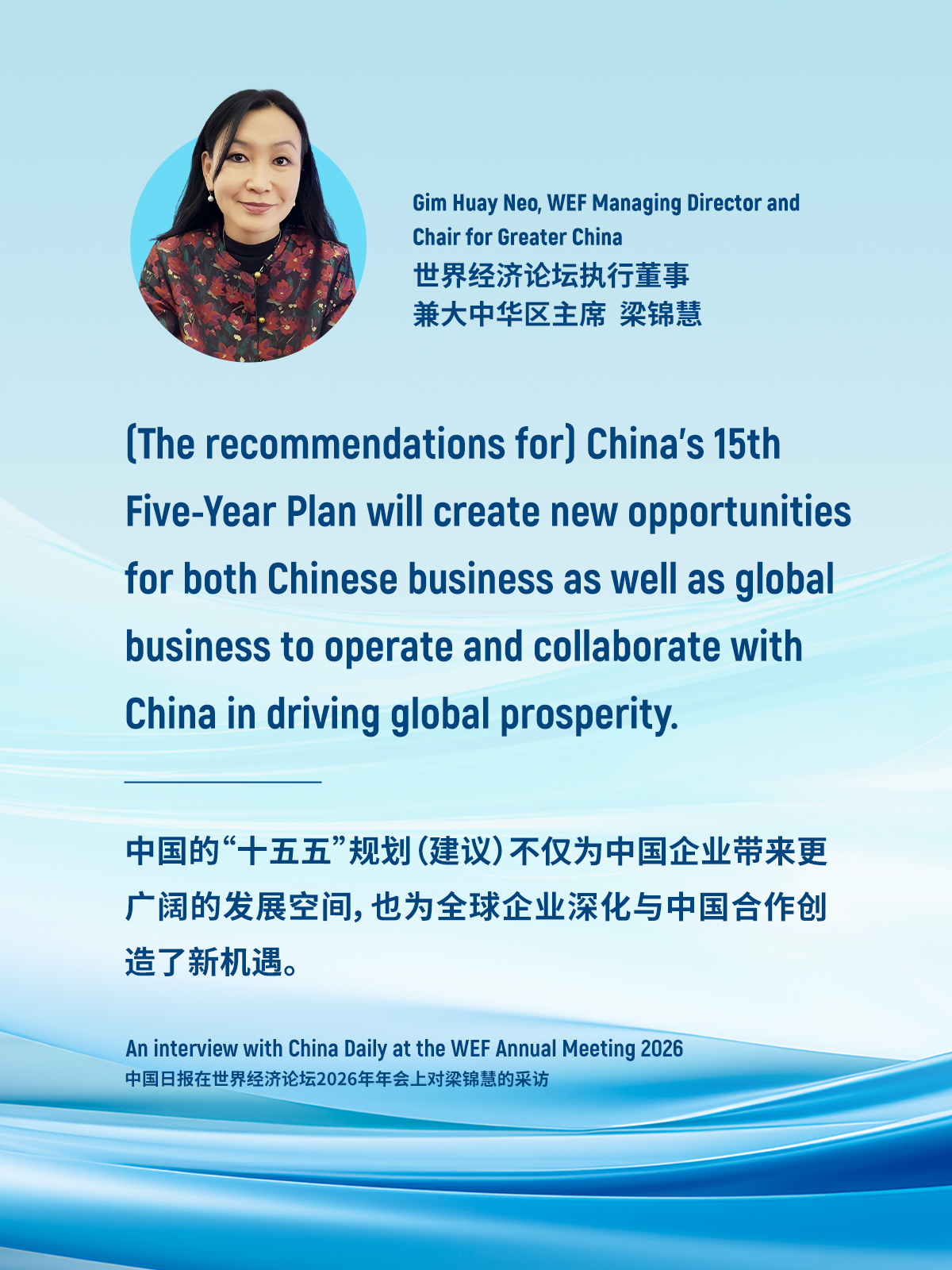
The 56th Annual Meeting of the World Economic Forum brings together the foremost leaders from government, business, and civil society from Jan 19-23 in Davos, Switzerland. The platform connects leaders, confronts shared challenges, and drives innovations defining the future.

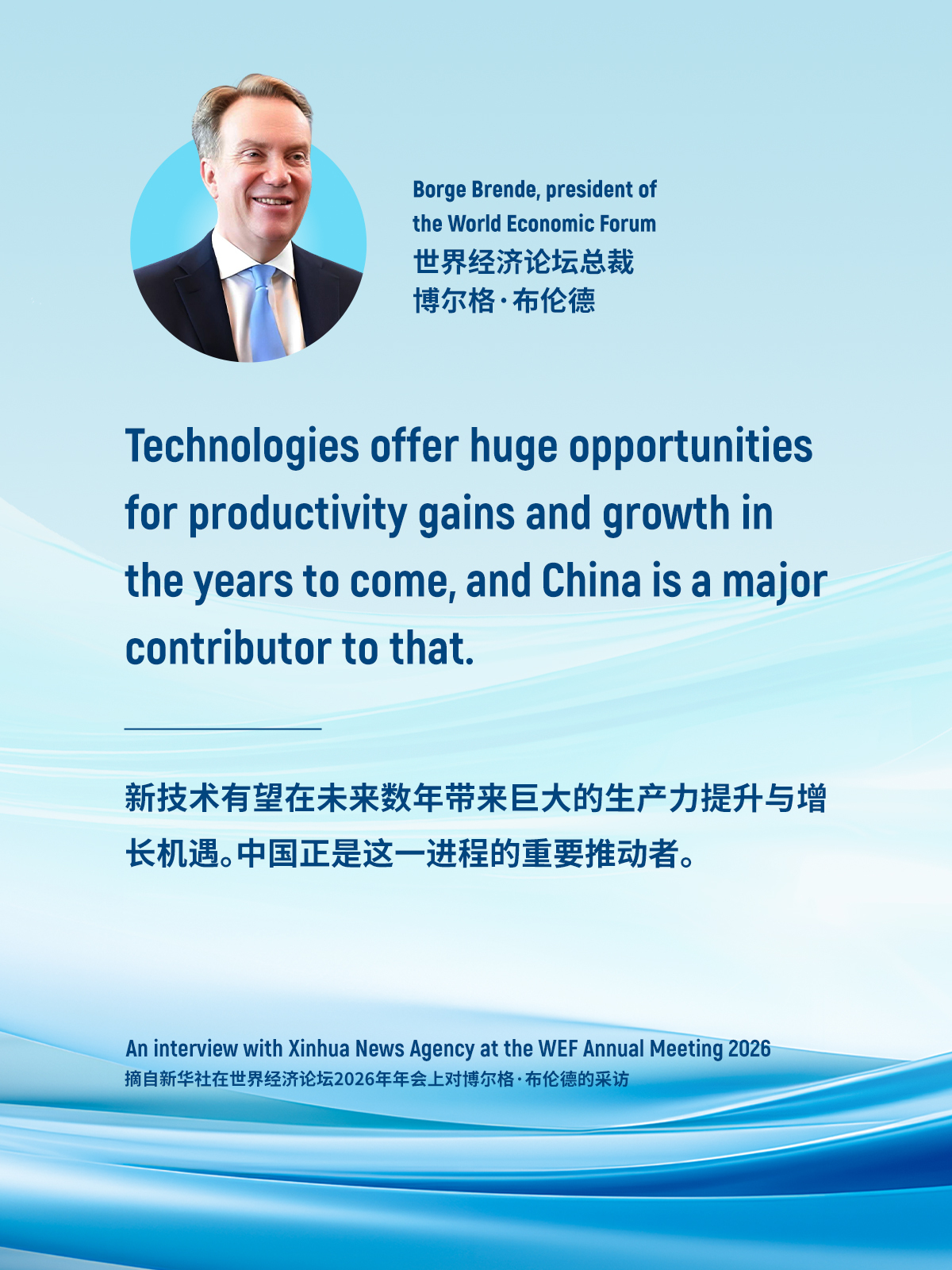
The annual Davos gathering of political leaders and corporate chiefs in the Swiss Alps is often treated as a barometer of the global mood. Sometimes it reflects optimism about growth, while at other times it reveals unease about wars, debt, inflation or technology shocks.
Yet one anxiety has become unusually visible at this year's World Economic Forum meeting in Davos: the sense that trade, finance and market access are no longer governed primarily by predictable rules, but by threats, and that economic coercion is being normalized as a substitute for diplomacy.
The current transatlantic dispute over Greenland illustrates the shift. When tariff threats are publicly linked to a demand over territory (a demand rejected by Denmark and Greenland), the dispute is no longer a conventional negotiation about trade balances, regulatory alignment or even security burden-sharing. It becomes a test of whether coercion can rewrite political red lines.
Media reports on the episode have captured both the bluntness of the United States' posture and the seriousness with which Europe is weighing retaliation, including a debate over the European Union's Anti-Coercion Instrument, a legal framework created to respond to economic intimidation.
In Europe, the dilemma is structural. Retaliation can protect credibility but risks escalation that harms European companies and consumers. Restraint can lower immediate costs, but it risks inviting more pressure later.
Markets, in turn, do what they always do when confronted with uncertainty: they price the risk.
Reuters has noted that tariff threats have already jolted currencies and equities, a reminder that "policy-by-ultimatum" becomes a tax on confidence long before any tariff takes effect.
The broader question is whether sanctions and tariffs still work as policymakers promise. The honest answer is that they do work, but often unevenly, with consequences that are poorly distributed and frequently strategic rather than purely economic. The world is now better at adapting to pressure than it was a decade ago. Supply chains reroute; intermediaries multiply; substitution accelerates; and "friendshoring" creates new winners and losers. The targeted economy may suffer, but it also adapts. It diversifies. It builds alternatives. And the sender's leverage erodes over time, even as collateral costs to bystanders accumulate.
That is why the major multilateral institutions are increasingly alarmed by geo-economic fragmentation. The International Monetary Fund's latest World Economic Outlook update, for example, projects global growth at 3.3 percent in2026, but it explicitly emphasizes how policy shifts and uncertainty shape outcomes, a diplomatic way of describing the costs of confrontation and unpredictability. The World Bank's Global Economic Prospects report, meanwhile, acknowledges resilience but flags rising trade barriers and policy uncertainty as key downside risks to global growth.
The international institutions are making a point that is easy to miss amid political drama: the global economy can continue to grow while becoming less efficient, less stable and more unequal. Fragmentation is not a single "crash"; it is a slow accumulation of friction, higher financing costs, duplicated production networks, delayed investment and a persistent premium on safety over efficiency. That premium is disproportionately paid by developing countries and smaller economies, which have less bargaining power and fewer alternatives when access to markets or technology becomes conditional.
Coercion may look decisive in domestic politics, but it is corrosive internationally because it teaches every partner the same lesson — that dependence is dangerous. Once that lesson sinks in, the rational response is to reduce exposure, and the cumulative result is a world economy that is less integrated, less efficient and more prone to crisis. The world can live with competition. What it cannot afford is a permanent global economy run by ultimatum.
Coercion will not disappear, but it can be made expensive, awkward and ultimately self-defeating. The answer is collective discipline that turns intimidation into a bad bet, calibrated retaliation, enforceable anti-coercion rules, diversified supply chains and payment rails, and a revived respect for multilateral bargaining over unilateral brinkmanship.
The world can absorb rivalry, but it cannot normalize ransom. If economic statecraft becomes a permanent threat to the economy, every port, pipeline and platform will be built with suspicion baked in, and growth will arrive more slowly, and will be costlier and meaner.
The deeper issue is legitimacy. In the end, an empire of ultimatum discovers the same truth: You can scare partners into compliance for a season, but you cannot bully your way into legitimacy.
The author is an Indian scholar in the Department of Journalism of Hong Kong Baptist University in Hong Kong.
The views do not necessarily reflect those of China Daily.

Chinese Vice-Premier He Lifeng's speech in Davos, Switzerland, on Tuesday drew international praise as a timely reaffirmation of China's role as a stabilizing force in an increasingly volatile world and a defender of free trade and globalization amid rising protectionism.
He, also a member of the Political Bureau of the Communist Party of China Central Committee, delivered a speech at the World Economic Forum Annual Meeting 2026 in the Swiss Alps town, calling on the international community to firmly support multilateralism and free trade, and stay committed to win-win cooperation.
Recalling President Xi Jinping's speech delivered at the WEF in January 2017, He said China has since walked the talk and firmly upheld multilateralism and free trade. In recent years, Xi has successively proposed four global initiatives, providing Chinese solutions to collective problems facing the world.
He urged the international community to firmly support free trade and promote universally beneficial and inclusive economic globalization. The world should also adhere to win-win cooperation, be committed to maximizing the fruits of cooperation, and jointly solve development problems, he added.
Maarij Farooq, deputy editor-in-chief at Pakistan Economic Net and Daily Ittehad Media Group, said Chinese vice-premier's address at the WEF was both timely and strategically significant, as it powerfully reinforced President Xi's long-standing vision for a more cooperative and inclusive global order.
"By recalling President Xi's landmark 2017 Davos speech, He effectively demonstrated how China has not only articulated but consistently implemented its commitment to multilateralism and free trade, turning vision into action," Farooq said."He's reference to the four global initiatives proposed by President Xi highlighted how China continues to offer practical solutions to shared global challenges, positioning itself as a responsible and proactive stakeholder in international affairs."
At a time when geopolitical tensions and economic uncertainties dominate the global landscape, He's speech serves as a reminder that the world's major economies must work together rather than drift apart, he said.
Fundamental position
Park Soong-chan, chairman of Korea China Association and a professor of Chinese studies at Yong In University in South Korea, said: "In Vice-Premier He Lifeng's special address at the WEF, he mentioned China's fundamental position (on multilateralism and free trade). This is not only China's stance but also represents the position of the majority of countries in the world.
"Historically, the world has developed against the backdrop of free trade and multilateralism. However, since 2017, the United States has started a wave of deglobalization that has disrupted the overall global economic growth trajectory, causing significant crises for the entire world, including South Korea," Park said.
"The global economy is interdependent; no single country possesses everything. Therefore, it is important to uphold the spirit and rules of the World Trade Organization," Park said. "It is necessary for countries to promote universally beneficial and inclusive policies to maintain the development of the global economy."
Speaking at the forum, the Chinese vice-premier said multilateralism should be firmly upheld, and it's necessary to make the international economic and trade order more just and reasonable. He also highlighted mutual respect and equal consultation, and called on all countries to make good use of dialogue to properly manage differences and resolve issues.
Khalid Taimur Akram, executive director of Pakistan Research Center for a Community with Shared Future in Islamabad, said Chinese leadership repeatedly conveys a clear message that the world is interconnected, all countries are interdependent, and share a common destiny, just like passengers on one large ship.
"Attempts to reverse globalization through tariffs and trade wars only harmed the global economy, supply chains got disrupted, demand-supply balance got disturbed, which then led to inflation in various parts of the world, and as a result, the common masses suffered," he said."Therefore, we all should work together so that we can cope with the challenges the world is facing today."
"Overall, the speech reflected that China is a stabilizing force in this dynamic world. It supports free trade, advocates mutual trust, and promotes inclusive development so that all nations can benefit," Akram said.
Xinhua contributed to this story.
Contact the writers at vivienxu@chinadailyapac.com.
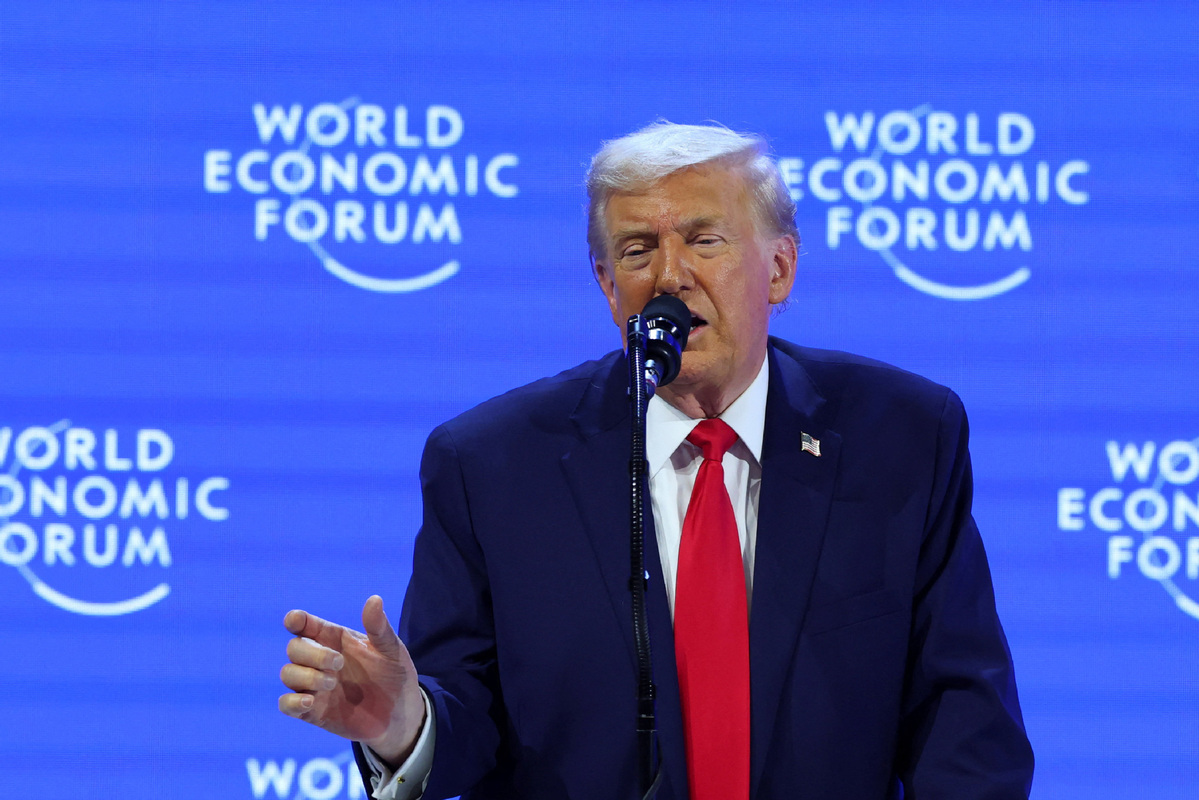
The third day of the ongoing World Economic Forum in Davos, Switzerland, was marked by United States President Donald Trump's 74-minute speech that largely focused on his claimed achievements in making the US economy stronger. Greenland, NATO, and the Russia-Ukraine crisis, topics that are important to most European nations, were also mentioned.
"Now what I'm asking for is a piece of ice, cold and poorly located that can play a vital role in world peace and world protection. It's a very small ask compared to what we have given them for many decades," he said in the speech in apparent reference to Greenland.
He gave two reasons for wanting the Arctic island, with the first one being "it's not defensible that way, totally," and the second being that the US has made a great contribution to NATO production, but without much return.
"Psychologically, who the hell wants to defend a license agreement, or at least, which is a large piece of ice in the middle of the ocean, where if there is a war, much of the action will take place on that piece of ice. Think of it. Those missiles would be flying right over the center of that piece of ice," he said.
Trump also sought to frame the US acquisition of Greenland from Europe as economically justified.
"It's costing Denmark hundreds of millions a year to run it. And Denmark is a small country and a wonderful people. It's very expensive. It's a very big piece of ice. It's very important," he said. "I don't want to repeat the speech, but it's very important that we use that for national and international security that can create a power that will make it impossible for the bad guys to do anything against the perceived good ones."
He talked about the US' historical contribution to World War II as well, saying: "Without us, right now, you'd all be speaking German and a little Japanese, perhaps. After the war, we gave Greenland back to Denmark. How stupid were we to do that? But we gave it back. But how ungrateful are they now?
"So, we want a piece of ice for world protection, And they won't give it," he concluded. "We've never asked for anything else, and we could have kept that piece of land and we didn't. They have a choice."
Reflecting on Trump's address in Davos, Chris Hamilton, co-founder of UK-based Clarasys Limited, said: "I think he believes that if he keeps saying Greenland should belong to the US, eventually everyone will just give in and do a deal. Even though it was often inaccurate hyperbole and he sounded tired, he was still compelling."
Alan Slatas, head of business development at US-based Growth Protocol, who was also in Davos for the World Economic Forum, said: "Trump repeated himself too much, and again stretched the truth. "He is fixated on Greenland for all the wrong reasons. He can accomplish national and global security without owning the country."
"Trump is openly talking about Greenland like it's a real-estate flip," Brian Allen, CEO of Allen Media, wrote on X. "He just said the US 'needs' Greenland for national security, dismissed Denmark's sovereignty, mocked their military, and compared it to the Louisiana Purchase, while naming a US governor as a 'special envoy'."
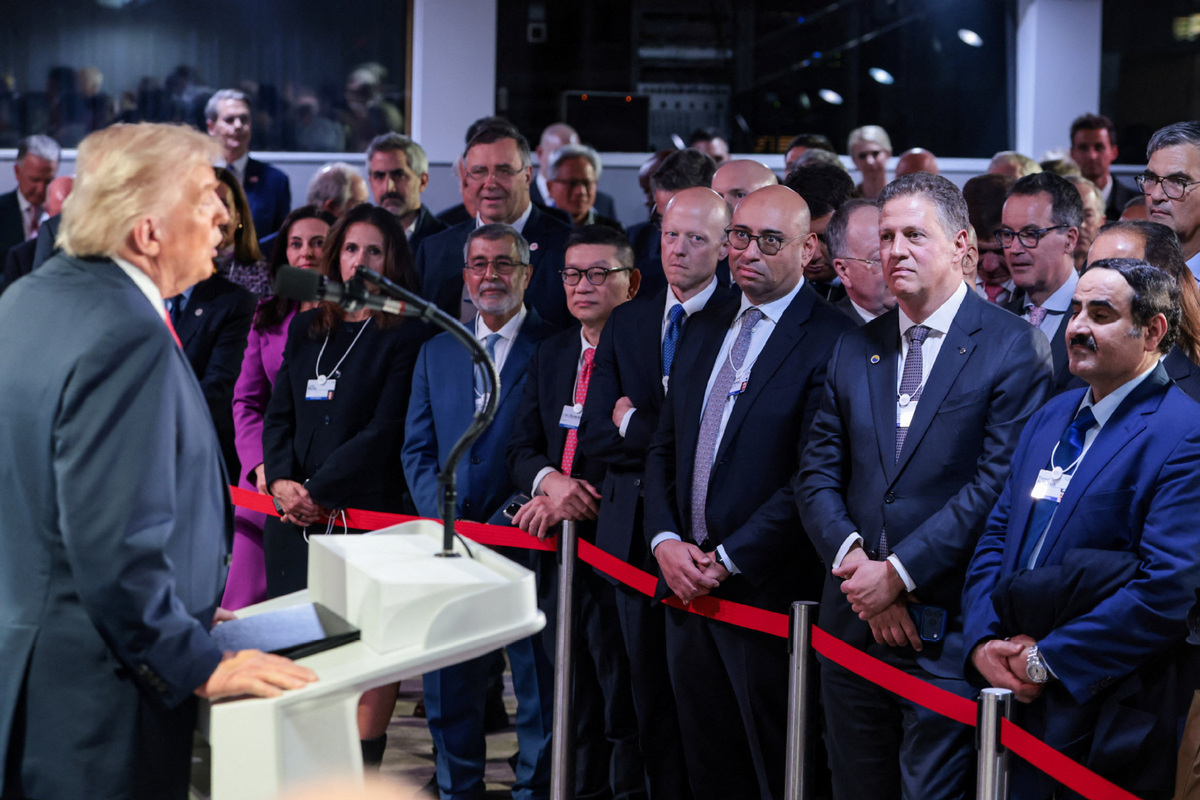
The Associated Press quoted an anonymous Danish official as saying their government is ready to discuss US security concerns in the Arctic, but he underscored that Denmark's "red lines", namely Denmark's sovereignty, must be respected.
But Trump also ruled out the possibility of the US acquiring Greenland by force.
"I don't want to use force. I won't use force. All the US is asking for is a place called Greenland," he said. "You can say yes, and we will be very appreciative. Or you can say no and we will remember."
NATO was another focus of Trump's remarks, saying: "It's a great block for Europe, just like Denmark was supposed to spend hundreds of millions of dollars. They didn't spend the money. They didn't spend anything almost. NATO has treated the United States of America very unfairly. We never asked for anything. We never got anything. We actually took care of the needs of NATO for years and years, which I felt was always unfair. So, I got NATO to pay because they're rich countries, but I think it's time that NATO stepped up. Without us, I think that could have been a World War III.
"And we will remember a strong and secure America means a strong NATO. That's one reason why I'm working every day to ensure our military is very powerful. Our borders are very strong. And above all, our economy is strong, because national security requires economic security and economic prosperity."
He also doubted "NATO would be there for us if we really needed them", which was widely quoted on X.com, with people posting photos of soldiers' coffins covered with the national flag of US allies to highlight how European nations have often, in fact, helped the US in conflicts.
Trump also referred to internal political challenges within Europe, saying: "Here in Europe, we've seen the fate that the radical left tried to impose on America.
"They tried very hard. Germany now generates 22 percent less electricity than it did in 2017 ... And electricity prices are 64 percent higher. The United Kingdom produces just one third of the total energy from all sources that it did in 1999. Think of that. One third. And they're sitting on top of the North Sea, one of the greatest reserves anywhere in the world, but they don't use it. And that's one reason why their energy is reached catastrophic, low levels with equally high prices, very low levels. Think of that. One third.
"I love Europe, and I want to see Europe go good. But it's not heading in the right direction. In recent decades. It became conventional wisdom in Washington and European capitals that the only way to grow a modern Western economy was through ever-increasing government spending, unchecked mass migration, and endless foreign imports. The consensus was that so-called dirty jobs and heavy industry should be sent elsewhere. That affordable energy should be replaced by the green new scam."
The Russia-Ukraine crisis was also mentioned, with Trump saying he "inherited a mess with Ukraine and Russia, something that would have never happened."
Time magazine said: "Trump's speech, which lasted more than an hour, emphasized how dramatically his maximalist foreign policy has shifted the footing of those attending the annual World Economic Forum. Once a bastion of multilateralism and consensus-building, the forum this week revolved around a single question: how to navigate a world increasingly shaped by one leader's willingness to pressure allies as aggressively as rivals."

US President Donald Trump, in an address at the World Economic Forum on Wednesday, reiterated his ambition to acquire Greenland from Denmark, describing the territory as a "strategic" necessity for US national security.
"No nation or group of nations is in any position to be able to secure Greenland other than the United States," Trump stated, calling for "immediate negotiations" while ruling out the use of force. "All the United States is asking for is a place called Greenland ... We need it for strategic, national security, and international security," he added.
Trump also defended his aggressive use of tariffs as a cornerstone of US economic success. "We have made some great trade deals; everyone knows when the US grows, you will follow," he said.
This follows his weekend warning on Truth Social that he would impose 10 percent tariffs, starting Feb 1, unless a deal is reached for the purchase of Greenland, on goods from eight NATO allies, including the UK, Germany and France, that have opposed the Greenland acquisition.
The speech followed a series of pre-emptive strikes from European heads of state. On Tuesday, French President Emmanuel Macron rejected US pressure, declaring that Europe would not accept the "law of the strongest". In a critique of Trump's "new colonialism," Macron emphasized Europe's commitment to international law and sovereignty.
Earlier on Tuesday, European Commission President Ursula von der Leyen called Trump's tariff threats a "mistake" that risked a "downward spiral" in ties. UK Prime Minister Keir Starmer also weighed in from London, describing the proposed tariffs, which could escalate from 10 percent on Feb 1 to 25 percent by June, as "completely wrong".
Following Trump's formal reiteration of these policies on Wednesday, European reactions escalated into concrete measures. The European Parliament formally suspended work on approving a US-EU trade deal reached last summer, citing the ongoing threats. European Council President Antonio Costa confirmed an emergency summit in Brussels this Thursday to coordinate a collective response, which could include retaliatory tariffs on up to €110 billion ($129 billion) of US exports.
In his speech, Trump further attacked European renewable energy policies, particularly wind power, calling them a "hoax". He claimed such policies weaken Europe while benefiting China. "China makes almost all of the windmills, and yet I haven't been able to find any wind farms in China," Trump said.
However, industry data contradict this claim. According to the World Wind Energy Association, China remains the world's largest wind power market, with cumulative installed capacity exceeding 600 GW by mid-2025. In the first half of 2025 alone, China added 51.4 GW of new capacity, more than double the amount installed during the same period in 2024.
US President Donald Trump said on Wednesday at the World Economic Forum in Davos, Switzerland, that he is seeking "immediate negotiations" once again over the acquisition of Greenland, while insisting that he would not use force.
Trump also touched on the sovereignty of the territory, claiming that the US once held Greenland in trusteeship but had "respectfully returned it to Denmark" after World War II.
Video: Yang Yi, Zheng Wanyin
DAVOS, Switzerland -- US President Donald Trump said on Wednesday that Europe is not heading in the right direction, arguing that the continent has become "not even recognizable" in a "very negative" way.
Trump said he "love[s] Europe" and wants to see it "go good," but insisted that "it's not heading in the right direction."
Trump made the remarks in a special address at the World Economic Forum Annual Meeting in Davos, which runs from Jan 19 to 23.
Trump claims Greenland "core national security interest" of US

DAVOS, Switzerland -- US President Donald Trump said at the World Economic Forum on Wednesday that he will not use force to take control of Greenland.

DAVOS, Switzerland -- US President Donald Trump said on Wednesday at the World Economic Forum that the United States is going to split the 50 million barrels of oil with Venezuela that it has taken out of the country.
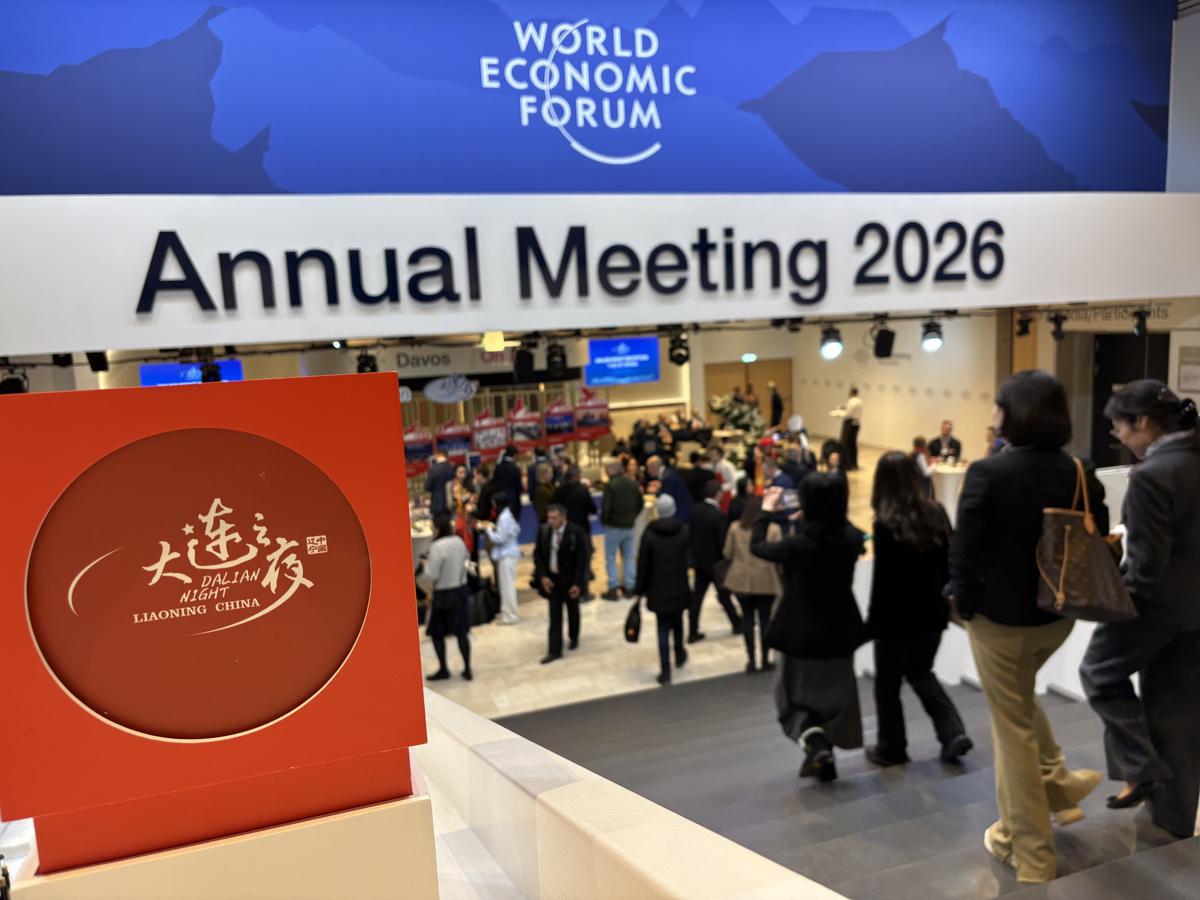
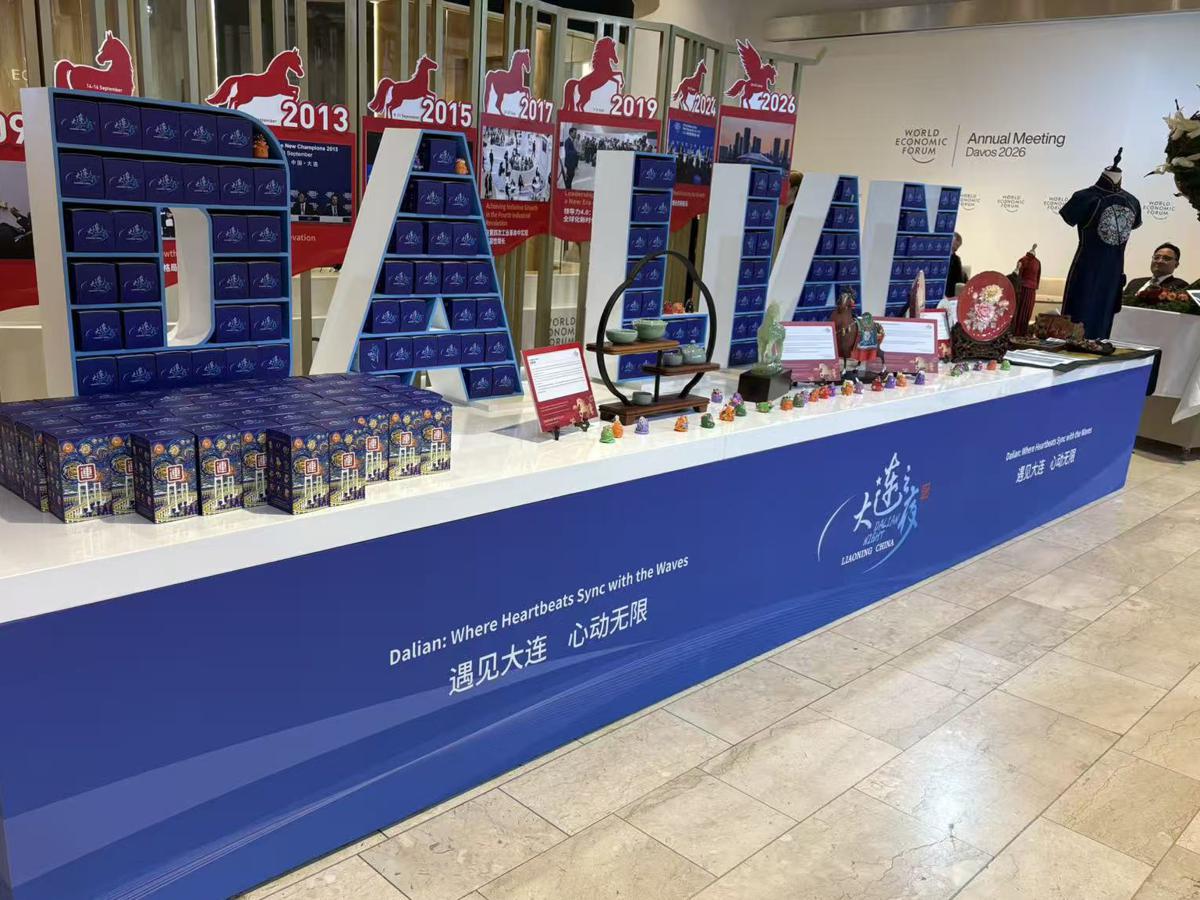
Dalian, Liaoning province, hosted the "Dalian Night" reception on Tuesday during the ongoing World Economic Forum meeting in Davos, Switzerland. The event served as a prelude to this year's meeting of the New Champions of the World Economic Forum, also known as the Summer Davos Forum, which will be held in Dalian this June.
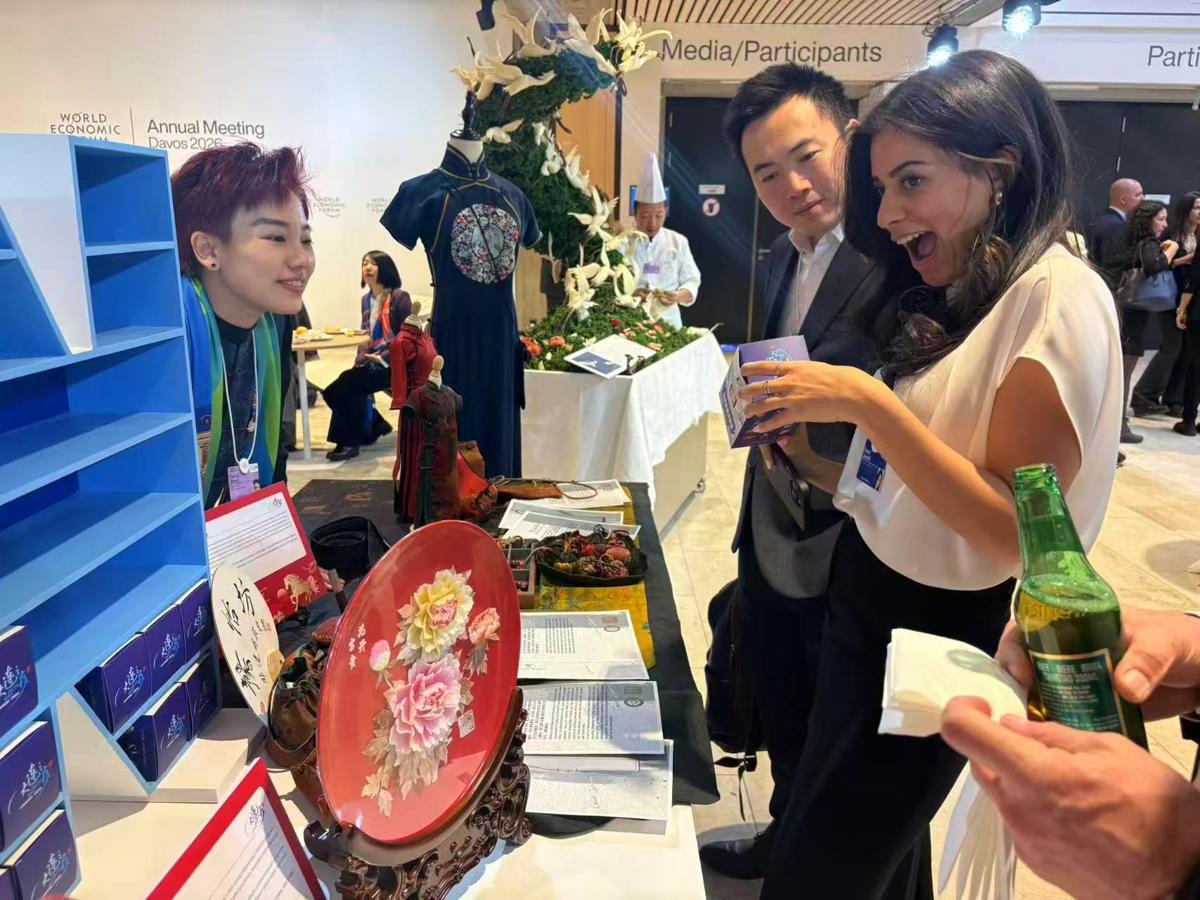
During the meeting, the Dalian delegation promoted new development opportunities in the city. Dalian's vice-mayor Qiu Baolin met with senior WEF executives to discuss preparations for the upcoming Summer Davos Forum and sign a memorandum of understanding.
China and the Summer Davos Forum have collaborated for 18 years. As one of the host cities, Dalian has partnered with the forum eight times.
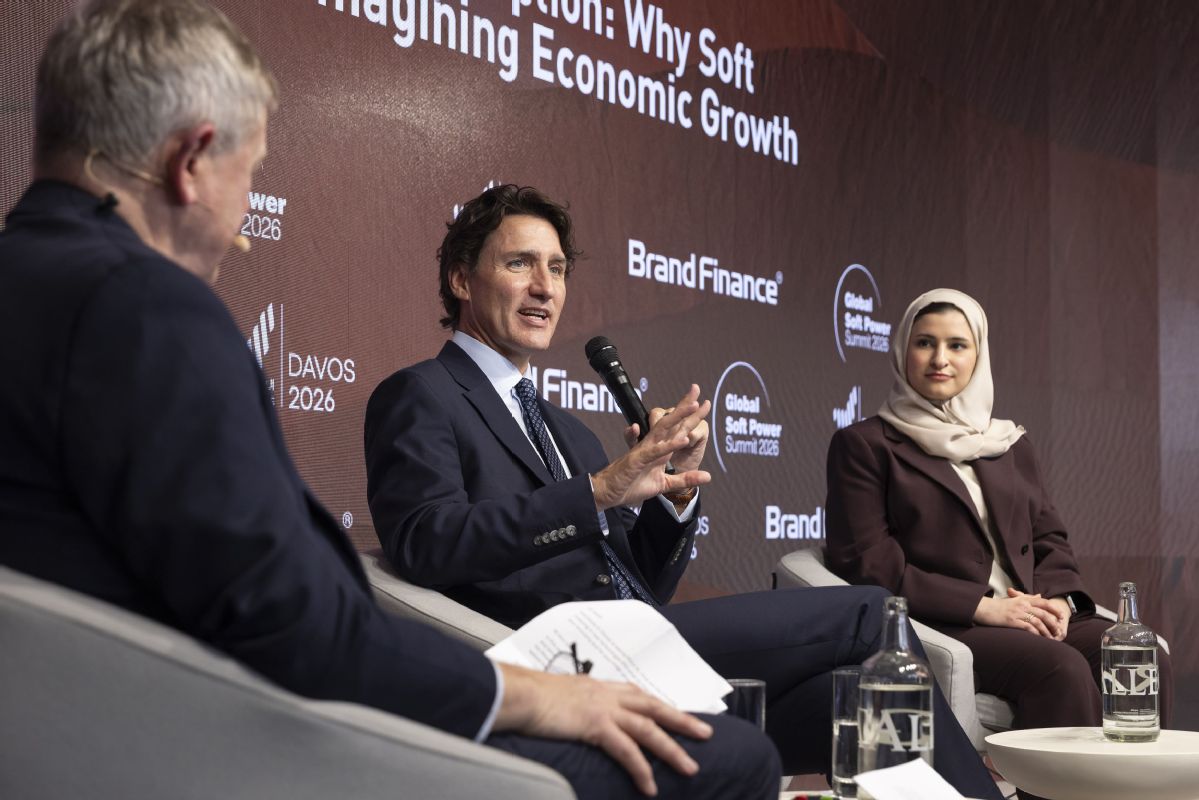
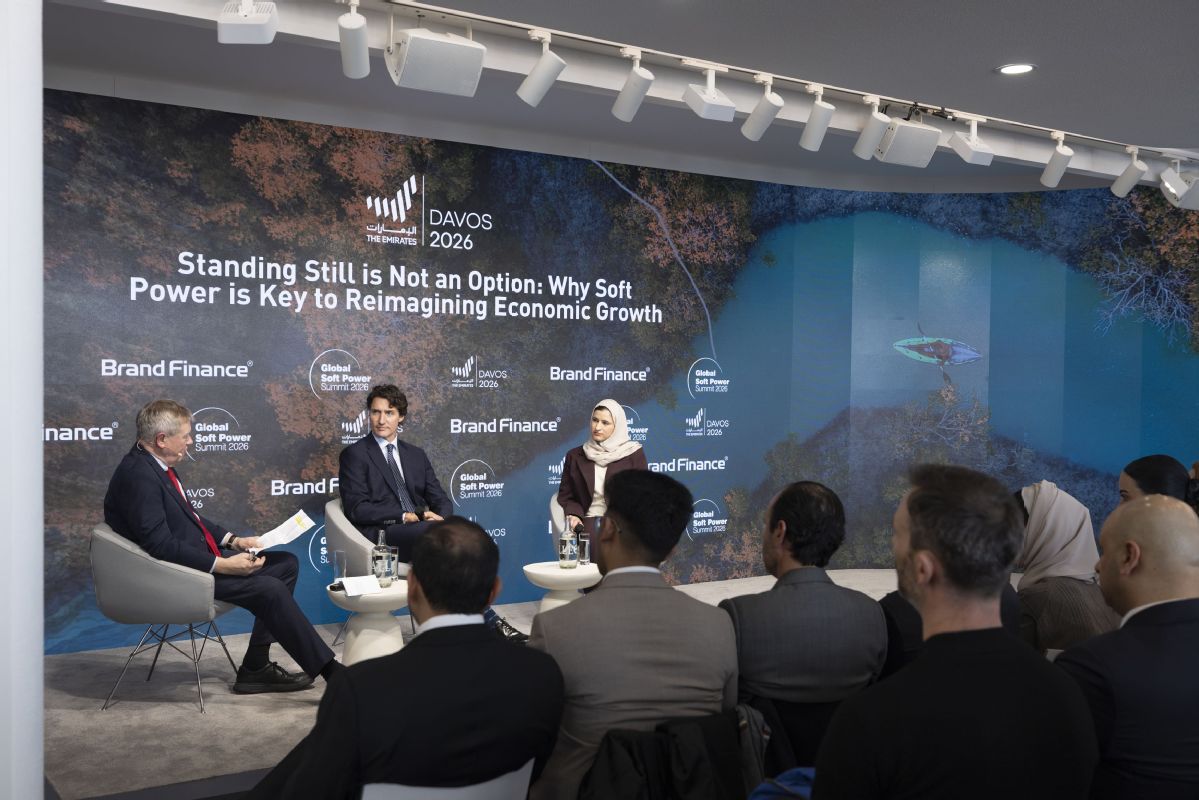
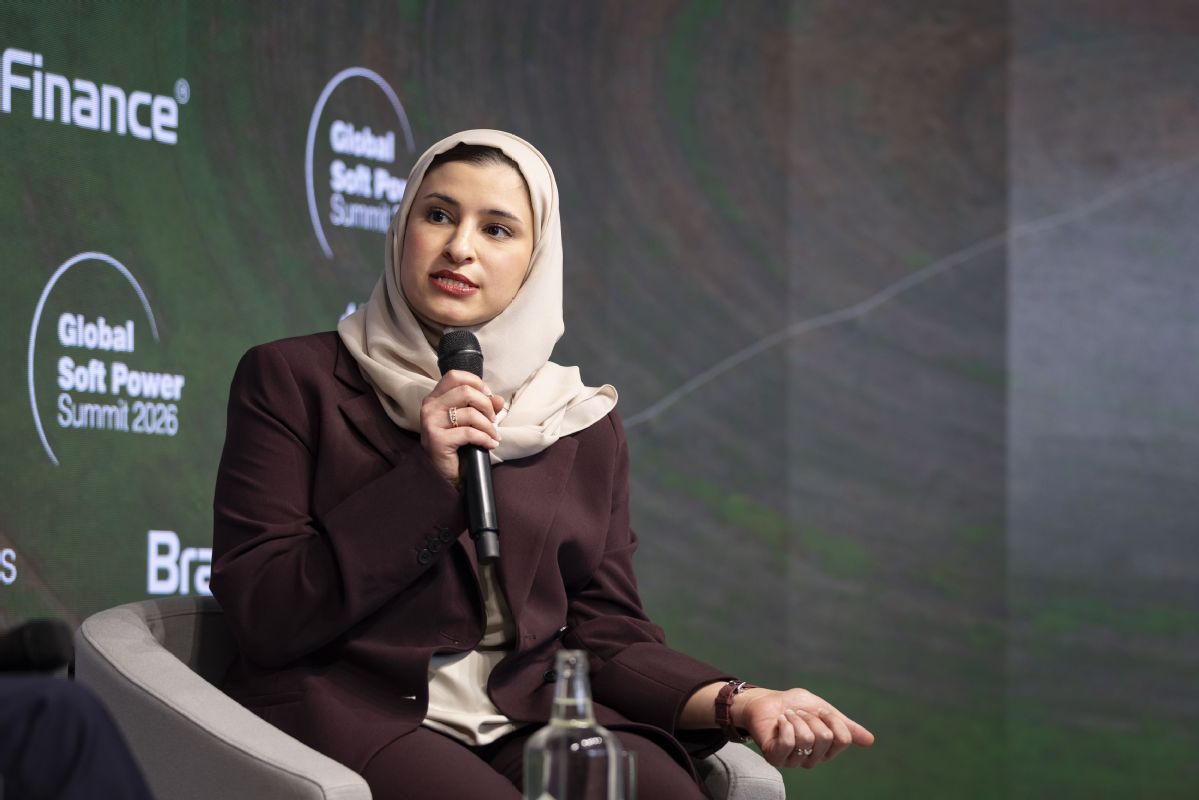
DAVOS -- The United Arab Emirates participated in a high-level dialogue session that discussed the role of soft power in strengthening economic resilience and rebuilding trust in a world experiencing increasing volatility, as part of the 2026 Annual Meeting of the World Economic Forum in Davos.
The session formed part of the Global Soft Power Summit, held in Davos for the first time, and brought together senior international leaders to discuss how countries can navigate geopolitical tensions, economic uncertainty, and shifting global perceptions through credible and forward-looking national strategies.
The session featured The Rt. Hon. Justin Trudeau, Former Prime Minister of Canada, Sarah Al Amiri, UAE Minister of Education, and David Haigh, Founder and Chief Executive Officer of Brand Finance, and focused on the theme of soft power as a strategic asset in a world increasingly shaped by conflict, competition, and economic fragmentation.
Discussions centred on the findings of the Global Soft Power Index 2026, which assesses the perceptions and influence of 193 countries based on insights from more than 150,000 respondents worldwide.
Participants explored how reputation, trust, education, governance, innovation, and economic credibility have become decisive factors in shaping long-term national competitiveness and resilience, alongside traditional measures of hard power.
The Rt. Hon. Justin Trudeau addressed the evolving global context in which economic and geopolitical pressures are reshaping international relations.
Trudeau underscored the growing importance of credibility, consistency, and values-driven leadership in maintaining global trust and influence. He noted that soft power, when grounded in authenticity and long-term commitment, can support stability, cooperation, and resilience even amid heightened global uncertainty.
Sarah Al Amiri highlighted the importance of education, science, and future skills as foundational pillars of national soft power.
She emphasised that investment in human capital, knowledge systems, and innovation ecosystems plays a critical role in shaping global perceptions, strengthening economic resilience, and enabling societies to adapt to rapid change.
Amiri noted that countries that prioritise education and future readiness are better positioned to build trust, attract talent, and sustain long-term growth in an increasingly complex global environment.
David Haigh presented key insights from the Global Soft Power Index 2026, highlighting how global perceptions are shifting as many countries face declining trust and reputational challenges. He emphasised that soft power has become a vital tool for economic resilience, enabling nations to safeguard investor confidence, strengthen trade relationships, and maintain relevance on the global stage.
Haigh noted that countries that invest strategically in reputation, governance, education, sustainability, and innovation are better equipped to withstand external shocks and navigate periods of disruption.
The dialogue examined how soft power contributes directly to economic outcomes by influencing investment flows, trade partnerships, talent attraction, and global confidence. Participants discussed the growing convergence between soft power and economic strategy, stressing that national branding is no longer a communications exercise but a core element of economic and development policy.
The session also explored the role of education, innovation, and responsible governance in shaping future-oriented national narratives. Participants agreed that countries able to align their economic ambitions with social progress, sustainability, and human development are more likely to maintain durable influence and competitiveness in the years ahead.
The session concluded by reaffirming that soft power is not a substitute for economic fundamentals, but a multiplier that enhances resilience, trust, and long-term value creation. Speakers emphasised that in a world marked by uncertainty and fragmentation, credible national strategies rooted in education, innovation, and global cooperation are essential to building stable and future-ready economies.
The dialogue reflected the UAE's broader participation at the World Economic Forum 2026, where the country continues to contribute actively to global discussions on economic resilience, governance, education, and sustainable development. Through its engagement at Davos, the UAE reinforces its role as a constructive and forward-looking partner committed to strengthening international cooperation and shaping a more resilient global economy.
WAM
DAVOS, Switzerland -- A new global roster of high-impact MINDS (Meaningful, Intelligent, Novel, Deployable Solutions) organizations was announced at the World Economic Forum (WEF)'s 2026 Annual Meeting here on Tuesday, with China now accounting for nearly half of all recognized solutions since the launch of the first batch last year.
The new report, titled "Proof Over Promise: Insights on Real-World AI Adoption from 2025 MINDS Organizations," was jointly released by the WEF and Accenture.
An independent assessment council composed of business executives and industry experts analyzed hundreds of cases from more than 30 countries and regions spanning over 20 industries including healthcare, energy and infrastructure, then selected the MINDS organizations, aiming to showcase real-world high-impact AI application cases.
"AI offers extraordinary potential, yet many organizations remain unsure about how to realize it," said WEF Managing Director and Chief Technology Officer Stephan Mergenthaler. "The selected use cases show what is possible when ambition is translated into operational transformation."
The WEF's 56th Annual Meeting is taking place on Jan 19-23 in Davos-Klosters, Switzerland, under the theme "A Spirit of Dialogue," convening leaders from business, government, international organizations, civil society and academia.



