
The China Story
at your Fingertips
OPEN

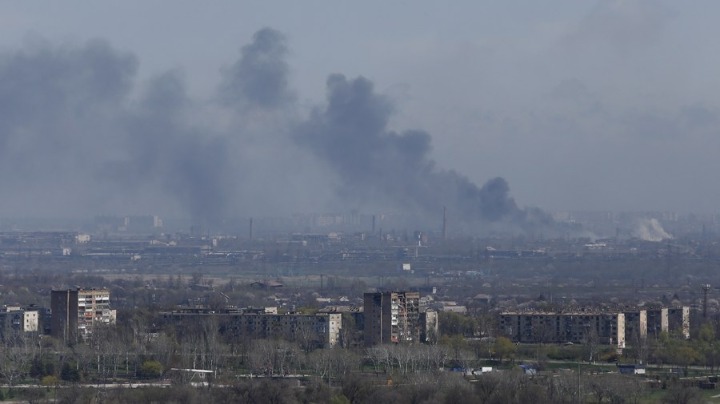
Russia's President Vladimir Putin says his country will continue its yearlong "special military operation" in Ukraine, and he accused the US-led NATO alliance of fanning the flames.
Russia-Ukraine conflict would have cost world economy $1.6 trillion in 2022, according to a study published by the German Economic Institute.

MOSCOW -- The Russian Foreign Ministry announced on Monday that additional 61 US citizens have been barred from entering Russia in response to the sanctions repeatedly imposed by Washington.
US Treasury Secretary Janet Yellen and Energy Secretary Jennifer Granholm are among the blacklisted.
The new restrictions have made longer the list of Americans banned from entering Russia, on which there were 963 names when the Russian Foreign Ministry published it on May 21, including US President Joe Biden.



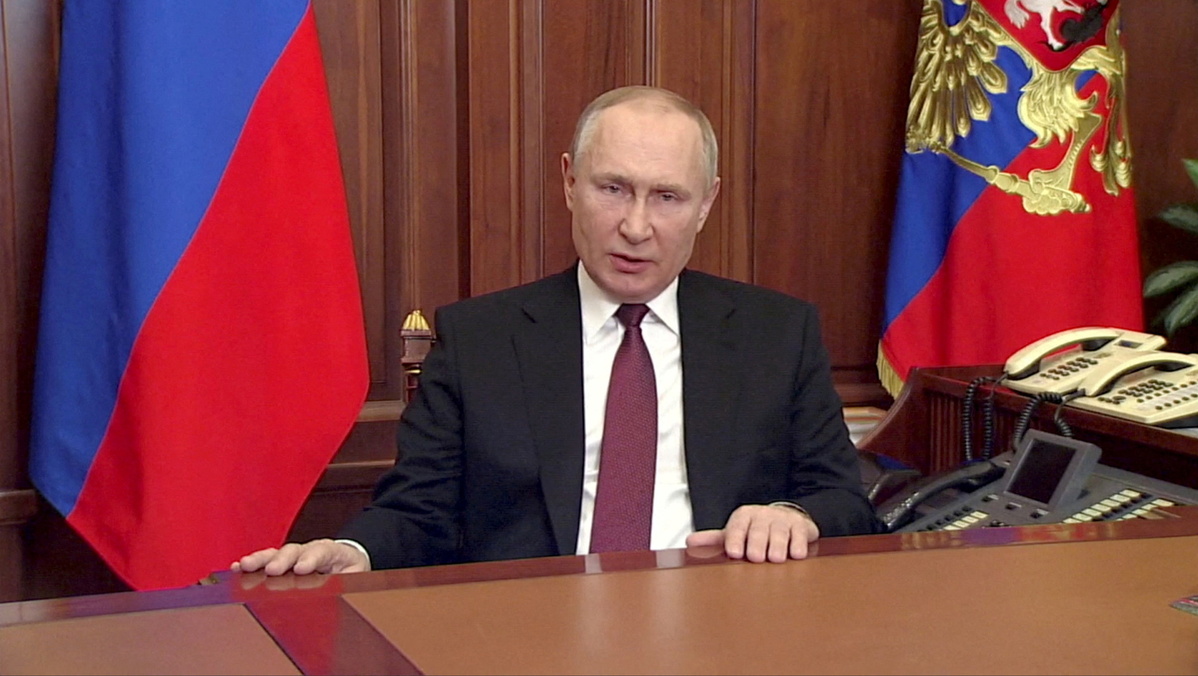
MOSCOW - Moscow will "draw appropriate conclusions" and hit new targets if Washington delivers long-range missiles to Kyiv, Russian President Vladimir Putin said in an interview broadcast on Sunday.
"If they are handed over (to Kyiv), we will draw appropriate conclusions, and deploy our weapons to strike at the targets we haven't hit before," Putin told the Rossiya-1 television channel.
Because "the Ukrainian army is armed with similar systems," the transfer of such weapons to Kyiv does not change anything, but will only prolong the conflict, Putin added.
On Tuesday, US President Joe Biden announced that the United States would supply Ukraine with advanced rocket systems that Kyiv had requested.
The Ukrainian Defense Ministry has also announced recently that the country was receiving Harpoon anti-ship missile systems from Denmark, Britain, and the Netherlands to defend itself in the Black Sea, while other countries will also supply defense equipment in the near future.
In telephone conversations with European leaders on May 28, Putin pointed out that the supply of weapons would further destabilize the situation and worsen the humanitarian crisis in Ukraine.

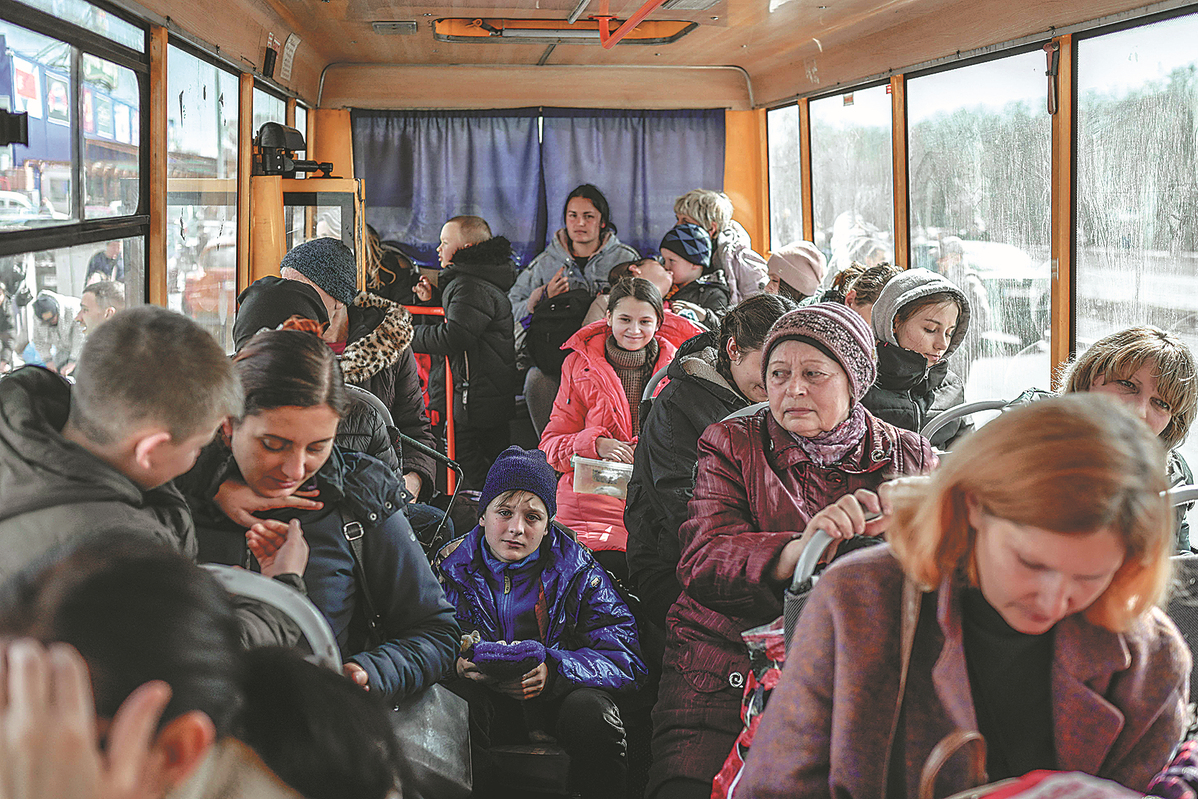
European countries have opened up to a flood of refugees fleeing conflict in Ukraine, and more than three months later they face growing challenges in confronting the largest refugee crisis since World War II.
Since the Russia-Ukraine conflict started on Feb 24, more than 6.5 million refugees are estimated to have fled to neighboring countries, the United Nations High Commissioner for Refugees says.
The European Union has welcomed Ukrainian refugees, and in early March it adopted an emergency plan allowing them to enter its 27 member countries without visas and granting them the right to live and work in the EU for up to three years. Many Europeans also opened their doors to host Ukrainian refugees.
Poland remains the main country of arrival for the refugees, of whom more than 3 million have arrived. The number of arrivals had slowed to about 20,000 a day last month, compared with more than 100,000 in early March, a UNHCR spokeswoman, Olga Sarrado, said.
While some refugees passed through and others returned home, most are still in Poland and receiving government support. Poland has registered more than 1.1 million people, 94 percent of whom are women and children. They are offered a state identification number that gives them access to services.
Other neighboring countries have also taken many refugees, with Russia and Romania each hosting nearly 1 million, and Hungary taking nearly 700,000.
The largest numbers of Ukrainian refugees in non-neighboring countries are in Germany, the Czech Republic and Italy, the UNHCR said.
Despite their hospitality, European countries are facing growing challenges as they try to provide long-term assistance to the refugees.
Over three months the 200,000-strong population of the Polish city of Rzeszow, has swelled by as much as 50 percent, a Reuters report said.
It quoted Konrad Fijolek, mayor of the city, about 100 kilometers from the Ukraine border, as saying the city will need new schools and housing to absorb refugees.
Finance ministers of 10 European countries, including Poland, Bulgaria and the Czech Republic, called on the EU to offer them more funding and more flexible spending rules to host Ukrainian refugees, according to the news outlet Politico.
'Heavy burden'
"The European Union is facing an unprecedented challenge due to the conflict in Ukraine," the finance ministers said, adding that the refugees constitute "a heavy burden on the social security system" of the 10 countries.
Poland has withdrawn some of the special benefits for Ukrainian refugees, including payments to households that host them, and free use of public transport. A law passed in March allowed people who have taken refugees into their homes to receive daily payments of about $9, and that benefit will no longer be available either.
The Czech Republic has also urged refugees from Ukraine to get jobs, and those who do not work risk losing welfare benefits.
Zhang Lihua, a professor in the Department of International Relations and director of the Center for China-Europe Relations at Tsinghua University in Beijing, said that in terms of geographical location, the European countries bordering Ukraine, such as Poland and Romania, are most affected by the refugee crisis.
"These countries are members of the European Union, but for various historical reasons their economic development lags behind the EU average. To a certain extent this has aggravated the difficulties in hosting refugees and helping them settle down."
Hosting Ukrainian refugees could cost EU countries 43 billion euros ($46 billion) this year, according to estimates of the Brussels think tank Bruegel.
That cost accounts for about a quarter of the EU's overall budget for this year, which was set at 171.8 billion euros, and is likely to increase with more refugees entering the bloc.
To strike a balance between accepting Ukrainian refugees and maintaining their own social security, countries in Europe, including Germany, have adopted corresponding restrictions.
Tian Dewen, deputy director of the Institute of Russian, Eastern Europe and Central Asian Studies at the Chinese Academy of Social Sciences, said countries in Central and Eastern Europe have expressed strong resistance to the EU's program of taking in refugees since the outbreak of the 2015 refugee crisis. Many European countries locked their doors to Syrian refugees as well as those fleeing Afghanistan last year.
As more EU countries face challenges in hosting the Ukraine refugees, society as a whole may also gradually adopt a more negative view of long-staying Ukrainians, and it is hard to guarantee that concerted efforts to accept Ukrainians will be sustained, Tian said.
Agencies contributed to this story.

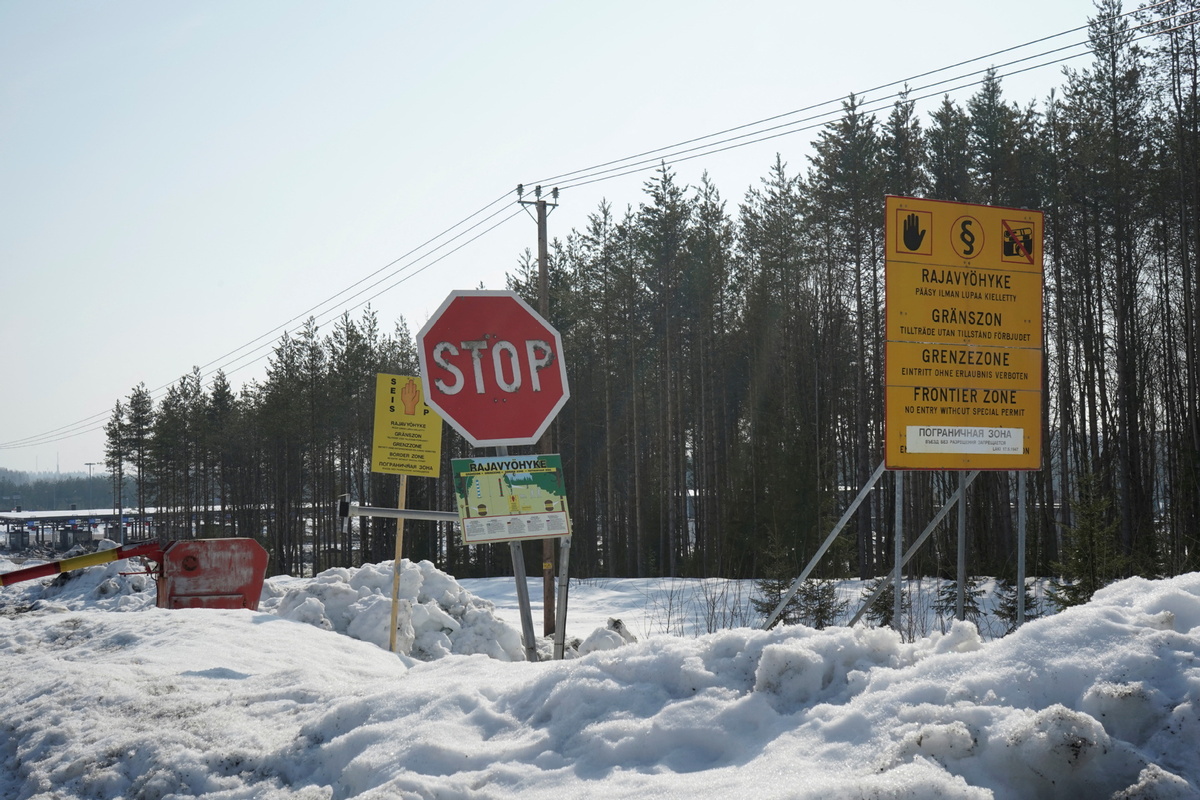
Russians are feeling the financial pinch after Western countries imposed draconian sanctions over what Moscow has called a special military operation in Ukraine. Hundreds of international companies have also pulled out of the country.
The United States, the European Union and several other countries and entities have continued to expand their economic sanctions since Feb 24, the day Russian forces entered Ukraine.
That move prompted the West to widen its economic crackdown on Russia by targeting President Vladimir Putin's relatives, his top allies, the country's banking system and its access to crucial technology.
Some Asian countries-Japan, Singapore and South Korea-also imposed sanctions on Russia, including freezing assets of several of the country's oligarchs with ties to Putin, blocking certain Russian banks and banning the export of some strategic materials to Russia.
These sanctions have affected Russians in their daily lives.
Consumer prices rose 2.2 percent in the first week after Feb 24, with food among the biggest rises.
From late February until late March some shops were restricting the sale of staples, after reports of hoarding.
Although the sale of medicines is not subject to sanctions, some big medicine companies suspended services amid fears of supply shortages.
The rouble plummeted from 74 roubles to 150 roubles against the US dollar in the first two weeks after the conflict began, leading many retailers to raise their prices.
The currency returned to the pre-conflict levels, soaring as high as 61 roubles against the dollar on May 23, owing to an oversupply of dollars in the market.
Russians have sold 80 percent of their foreign exchange earnings, yet within the country physical dollars cannot be bought.
Should limitations be lifted and imports resumed later this year, the exchange rate would stabilize at 90-100 roubles, experts said.
"The current rate is the outcome of a currency overstock relative to collapsed demand, which faded due to natural causes and regulatory efforts," said Mikhail Shulgin, head of the global research department at Otkritie Investments.
Exporters have been forced to sell nearly all their foreign exchange revenues, and nonresidents are barred from selling Russian assets or withdrawing foreign currency, he said.
A 12 percent charge levied on the purchase of dollars, euros and pounds sterling relieved pressure on the rouble, and this money can mostly be converted to cash in roubles.
In the medium term, the dollar will rise as imports recover and limitations are relaxed, and the investment company Freedom Finance of Kazakhstan gives a conservative forecast of 80-100 roubles.
Even though the rouble has rebounded and is now stronger than before the conflict, most retailers have not reduced their prices to reflect this.
Costlier groceries
Anecdotal evidence suggests that a basket of groceries that would have cost 5,500 roubles in Moscow on Feb 20 would now cost 8,000 roubles.
Daria Annatova, who lives in central Moscow, said she has yet to see empty shelves. "Food won't disappear but will become more expensive. How much more expensive, I can't imagine, and I'm scared even to think about it."
In February the prices of sugar and cereal were already about 20 percent higher than a year earlier. The Russian state news agency Tass said some retailers had agreed to limit price rises on some staples to 5 percent. Others are restricting the supply of basics such as flour, sugar and oil that individual customers can buy.
Apart from daily necessities, prices for other products have risen drastically. The cost of smartphones and televisions has risen more than 10 percent, and the cost of an average-priced holiday in Turkey, one of the most popular holiday destinations for Russians, has risen nearly 30 percent.
Annatova said she had considered buying new laptops for her family when she saw prices steadily rising because well-known brands such as Apple, Ikea and Nike no longer sell their products in Russia.
However, she opted not to buy it.
"At the beginning of February, they cost about 70,000 roubles but by the end of the month they had gone up to 100,000 roubles … They then went up to 150,000 before they all sold out in Moscow."
Apple said on March 2 that it would halt all direct product sales in Russia.
"We probably should have gone ahead and bought," Annatova said. "There's a joke now that we all have the last iPhone in Russia."
The prices of new cars and motor vehicle parts and repairs and maintenance have also risen.
"We bought filters and oil for the car for when it needs a service," Annatova said. "We managed to buy them at old prices before they almost doubled before our eyes."
McDonald's said it would close all its 847 restaurants in the country, something whose significance has not been lost on Russians, given that it was among the first Western firms to set up shop in the Soviet Union 30 years ago.
"Nuggets and pies bought just before the restaurant chain closed down," Annatova said. "Your last chance to taste foreign bliss."
Russian media reported that McDonald's may resume operations in Russia under a different brand, and the UK-Dutch oil and gas multinational Shell will soon change its signs to Russia's energy giant Lukoil, while Ikea of Sweden continues to pay salaries to its staff until the end of the summer.
Limited services
For those who own companies or work in the financial industry, the impact of sanctions may be more obvious and severe, because Russian banks were removed from the SWIFT international payment system, and Visa, Mastercard, American Express, Apple Pay and Google Pay have limited their services in Russia.
Russia's central bank has said the sanctions could lead the country's economy to shrink by up to 8 percent, and Ekaterina Lebedeva, who runs a number of language schools, agreed.
"We have teachers in other countries we can't pay because all the transfer networks are frozen. We also have students in the US, Germany and Latvia who can't pay their fees into our accounts. We've found ways around it but at the moment every working day begins with firefighting a new crisis."
In the Ukrainian capital, Kyiv, many people who had fled the city have returned and are trying to find a renewed sense of normalcy.
In the early days of the conflict, the sound of artillery fire echoed through the streets, and countless sandbag checkpoints went up. And looming over the city was the prospect of street fighting and a drawn-out siege.
During April many more residents who had fled the city returned, but the mayor has recommended that people refrain from returning for now.
Sidewalk cafes have popped up throughout the city and some restaurants are packed again. At the Tin Tin Food Spot, a restaurant near the city's bicycle racing track, a lunchtime crowd filled every seat on a recent Sunday afternoon.
In a park beside the sky-blue cathedral of St. Michael's Golden-Domed Monastery, in central Kyiv, a few young children clambered over a jungle gym and rocked on a seesaw.
Mothers stood idly by, chatting. The scene captured the mood of Kyiv these days, as the tension slowly lifts from a city that for weeks had been gripped by fear.
Ukraine's President Volodymyr Zelensky said on May 27 that he "is not eager" to engage in talks with Putin but conceded that these are likely to be needed to end the conflict. "We have to face the realities of what we are living through," Zelensky said.
The following day Putin told his French counterpart Emmanuel Macron and the German Chancellor Olaf Scholz that Moscow was ready to continue peace talks with Kyiv.
Putin talked of the danger of flooding Ukraine with Western weapons, but said Russia is open to dialogue and will continue communicating with Europe.


With Ukraine crisis worsening hunger, rich and poor moving even further apart
Editor's note: More than 100 days into Russia's special military operation, China Daily presents two pages of special coverage on the milestone, which fell on Friday. From surging inflation and setbacks to green-energy goals to the plight of refugees, the impact of the conflict is examined.
Economists are warning that surging inflation in Europe and beyond threatens to force millions into debt and destitution in a bleak view that contrasts with the enormous profits posted by companies in the food and energy sectors.
Inflation in the eurozone reached 8.1 percent in May, up from 7.4 percent in April, according to data from the European Commission's statistics office published on Tuesday, reaching a record high for a seventh consecutive month.
Recent inflation in Germany outstripped forecasts by more than half a percentage point, rising from 7.8 percent in April to 8.7 percent in May. French inflation rose from 5.4 percent to 5.8 percent over the period, and inflation in the United Kingdom reached 9 percent in April, its highest level in over 40 years.
As central banks and finance departments attempt to navigate these economic challenges to stave off recession, the real-world situation for low-income households is even worse than the official figures suggest.
The Russia-Ukraine conflict has caused major disruptions to grain and gas exports, sending food and energy bills skyrocketing, and the London-based Institute for Fiscal Studies, or IFS, warns that low earners are disproportionately affected.
"As poorer households spend more of their budgets on gas and electricity, this increase is likely to hit poorer households harder," IFS Research Economist Heidi Karjalainen said.
In terms of income, the bottom 10 percent of British households spend 11 percent of their earnings on gas and electricity, which is almost three times more than the highest tenth. In the UK, prices for several food staples including rice, bread, and beef mince all increased by more than 10 percent in April compared with the same month last year, according to the Office for National Statistics, and the price of pasta has risen by 50 percent over the period.
The Bank of England projects that inflation will reach 10 percent in the UK in October, and the IFS analysis suggests that this translates to a 14 percent inflation rate for the poorest households in the UK, compared with 8 percent for the richest.
A separate analysis by the London-based National Institute of Economic and Social Research, or NIESR, predicts that rising inflation means 1.5 million UK households will face food and energy bills that consume all disposable income throughout the next two years, and an extra 250,000 British households will fall into extreme poverty, taking the total number to 1.2 million.
In a policy U-turn, UK Chancellor of the Exchequer Rishi Sunak last week announced a 15-billion-pound ($18.9 billion) emergency package, including a 5-billion-pound temporary windfall tax on energy companies, in order to ease some of the burdens on struggling households.
The NIESR forecasts that annual consumer price inflation will peak in the fourth quarter of 2022 and remain above target through 2023.
"Persistently high inflation and a forecast shallow recession at the end of 2022 mean the Bank of England continues to sail in treacherous seas with a risk of potentially deepening the recession if rates are hiked rigorously," said Urvish Patel, an associate economist at the NIESR.
In a report published last week, the global poverty charity Oxfam drew a stark contrast between the prospects of the haves and have-nots over the pandemic period.
Oxfam found that the wealth of the world's billionaires rose more in the first 24 months of COVID-19 than in the previous 23 years combined, and billionaires in the food and energy sectors are increasing their fortunes by $1 billion every two days. In contrast, the charity predicts that inflation will plunge 263 million more people into extreme poverty this year.
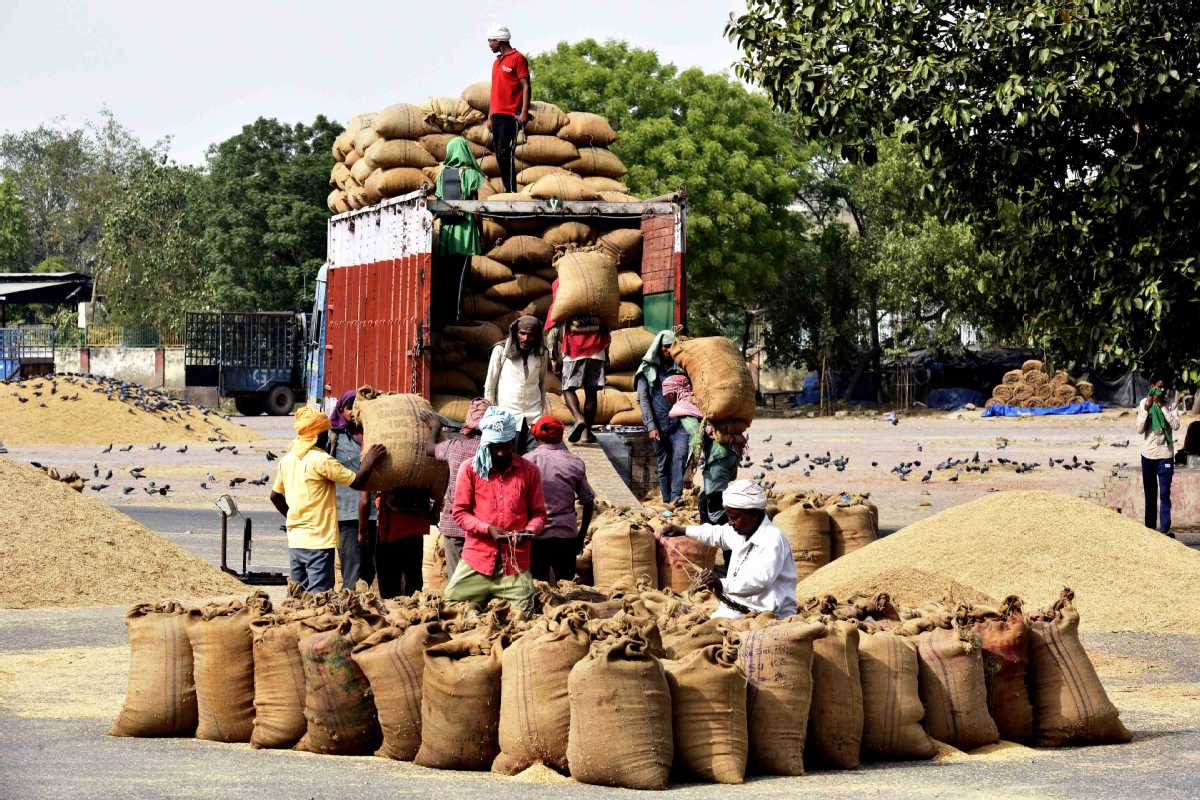
Struggling to survive
Gabriela Bucher, executive director of Oxfam, said millions of people are "skipping meals, turning off the heating, falling behind on bills and wondering what they can possibly do next to survive".
"This grotesque inequality is breaking the bonds that hold us together as humanity. It is divisive, corrosive and dangerous," said Bucher. "This is inequality that literally kills."
Food prices have risen an estimated 37 percent year-on-year, according to the World Bank, leaving the world on the brink of a nutrition and food security crisis.
In early April, International Monetary Fund Chief Economist Pierre-Olivier Gourinchas warned that inflation and food insecurity will lead to "supply disruptions … and social unrest", and this is now beginning to play out in several countries including Peru and Sri Lanka where food shortages and the rising cost of basic goods have led to societal upheaval.
Christine Lagarde, president of the European Central Bank, has put the rampant rise in inflation down to three main factors. First, rising gas and fertilizer prices, exacerbated by the Russia-Ukraine conflict, have led to surging energy and food prices. Second, Europe has faced shocks to both demand and supply that have led to record-high industrial goods inflation.
Last, Lagarde said Europe has experienced the shock from economies reopening after lockdowns, which has triggered a rapid rotation of demand back to services, especially in tourism and hospitality businesses, which have struggled to find staff quickly enough to meet rising demand, leading to rising services inflation.
The conflict "may well prove to be a tipping point for hyper-globalization, causing geopolitics to become more important for the structure of global supply chains", Lagarde said in a statement. "That could lead to supply chains becoming less efficient for a while and, during the transition, create more persistent cost pressures for the economy."
Lagarde also added that the conflict in Europe is set to reshape demand and prices for select commodities. Some advanced economies, including the UK and the United States, have sought to double down on domestic fossil fuel exploration in response to rising gas prices. Others have looked to accelerate the switch to renewables, including Germany, which recently announced plans to raise a 2030 target for renewable power from 65 percent to 80 percent of the national energy mix.
The conflict "is likely to speed up the green transition as a means of reducing dependence on unfriendly actors", Lagarde said.
"Indeed, green technologies are set to account for the lion's share of the growth in demand for most metals and minerals in the foreseeable future. The faster and more urgent the shift to a greener economy becomes, the more expensive it may be in the short run."


Oleksandra Suprun and her mother were picking up garbage in the Parc Cinquantenaire in Brussels late Saturday morning. The two Ukrainians were taking part in a clean-up activity to show gratitude to the Belgian people by refugees who recently arrived in the country.
Belgium has received some 45,000 refugees from Ukraine, according to Promote Ukraine, the organizer of Saturday's event.
Belgium's federal agency for the reception of asylum seekers (Fedasil) estimated some 78,000 Ukrainian refugees will be registered in Belgium, a number much lower than previous estimates.
Several dozen people showed up on Saturday, mostly women but also children and a few men. The Ukrainian government does not allow men aged 18 to 60 leave the country.
Suprun and her mother came to Belgium a month ago from Ukrainian capital Kyiv. She said everything has been okay since their arrival, so far.
"The country has been very welcoming. Belgium is very international, very friendly," she said in fluent English.
She added they came to the event to show their appreciation to the Belgian people and European Union.
Suprun said her mother is still struggling because she speaks neither English nor French.
"Learning language is difficult (for her)," she said.
Anastasia Lisenko, another young Ukrainian refugee, said she and her 18-month-old daughter came to Belgium from Kyiv on March 10, while her mother, sister and niece came from the city of Kharkiv.
"It is still difficult inside," she said, pointing her finger at her heart.
"We wait for the war to stop, so we can go back," she said, adding all the men and many other family members are still in Ukraine.
"We want to thank Belgian people for their help," she said, with her mother, sister and niece next to her ready to start the clean-up work.
Lisenko hopes to find a job that can be done online so she can also take care of her baby daughter.
More than 14 million Ukrainians are thought to have fled their homes since the outbreak of the Russia-Ukraine conflict on Feb 24, according to the United Nations. Poland alone is hosting 3.5 million.
More than 6 million have left for neighboring countries, while 8 million are displaced inside their own country.


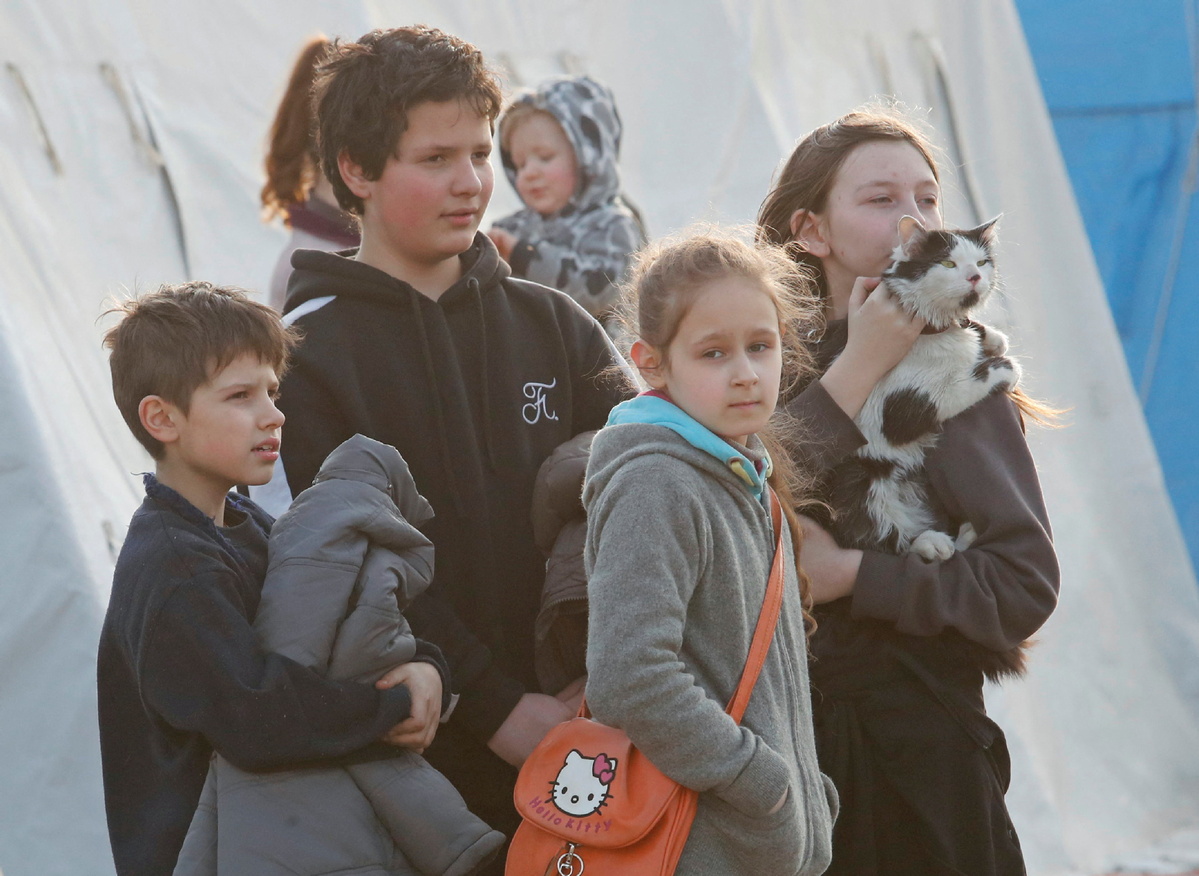
KYIV - The United Nations (UN) estimated that nearly 14 million Ukrainians have been forced to flee their homes due to the Russia-Ukraine conflict, the government-run Ukrinform news agency reported on Saturday.
According to a statement by Amin Awad, assistant secretary-general and United Nations crisis coordinator for Ukraine, most of those displaced are women and children.
The conflict has left 15.7 million Ukrainians in need of humanitarian support, with some of them lacking access to water and electricity, the statement said.
Since the beginning of the conflict on Feb 24, the UN has provided immediate humanitarian aid to some eight million people across Ukraine, including in besieged cities in the east of the country, the UN official said.
The UN warned that the humanitarian crisis in Ukraine may further exacerbate in winter.

Kyiv- Ukrainian Prime Minister Denys Shmyhal said Friday that the country has begun the first stage of its post-conflict reconstruction, the government's press service reported.
In the first stage of the recovery, the Ukrainian authorities will assess the losses caused by the Russia-Ukraine conflict, prepare technical documentation for the reconstruction projects and carry out the repair of critical facilities, Shmyhal said at a cabinet meeting.
"The government's task is to restore most of the damaged critical facilities by the autumn," he said.
Ukraine's state road agency Ukravtodor has said that the conflict has destroyed about 300 bridges and some 24,000 km of roads in Ukraine.

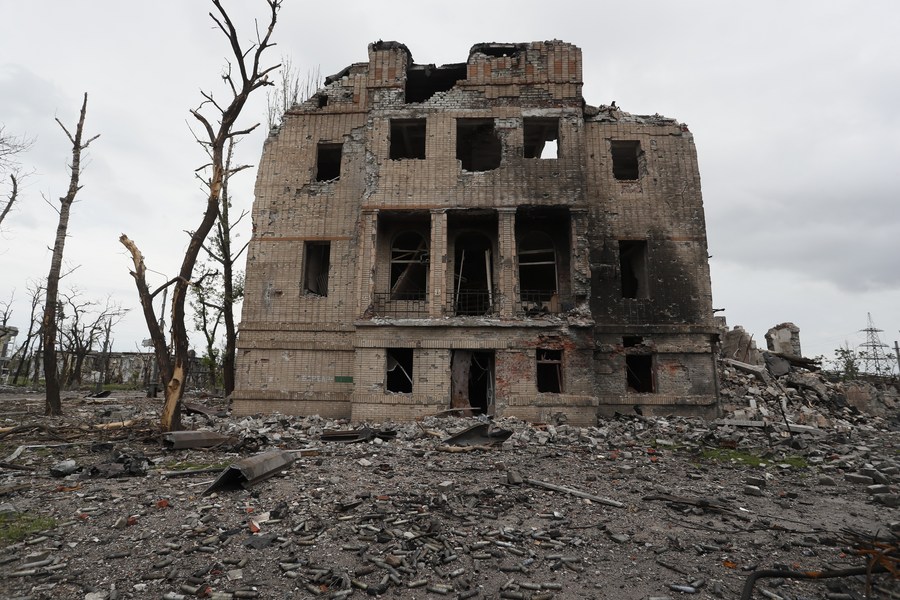
As the Russia-Ukraine conflict reached its 100th day on Friday, world leaders and experts called for an end to the crisis, which has triggered growing concerns about refugees, food shortages and possible escalation into a wider conflict.
Jeffrey Sachs, a professor at Columbia University who served as an adviser to three United Nations secretaries-general, said that "it is in Ukraine's interest to return to the negotiating table, which it has refused to do since late March".
"I believe that the US should recognize that it acted irresponsibly in pushing for NATO enlargement into Ukraine and Georgia," he told China Daily.
His remarks came as Russian forces advanced in eastern Ukraine.
Sachs warned of two enormous risks of allowing the conflict to continue: a dangerous spiral into a war between Russia and NATO members, and more Ukrainian territory being lost to Russia.
"It is time to reject escalation, press both sides for compromise, and work toward a negotiated settlement based on Ukrainian neutrality and the US acceptance that NATO will not enlarge into Ukraine and Georgia," said Sachs, adding that Russian troops should withdraw from Ukraine as an outcome of a negotiated settlement.
Erik Solheim, a Norwegian politician and former UN undersecretary-general, said that the West should reach out to lead developing nations like China, India, Brazil and South Africa to find a common platform to urge a ceasefire and bring peace.
"Such a platform will have to include support for the national sovereignty of Ukraine and understanding of legitimate Russian security concerns. Unified global efforts are much more likely to bring a negotiated peace," he told China Daily.
French President Emmanuel Macron and German Chancellor Olaf Scholz, in a phone call with Russian President Vladimir Putin on May 28, called for a cease-fire and urged Putin to hold direct talks with Ukrainian President Volodymyr Zelensky. Putin, in turn, emphasized Moscow's willingness to continue negotiations with Kyiv.
Zelensky said recently that the conflict could only come to a conclusive halt "at the negotiating table". However, he said Ukraine will not cede land to Russia, but added that it was not possible to regain all lost territory by military means.
Zelensky criticized the suggestions by former United States secretary of state Henry Kissinger and an editorial in The New York Times that Ukraine should give up part of its territory as a concession to end the conflict.
Kissinger told the World Economic Forum in Davos, Switzerland, on May 23 that "negotiations need to begin in the next two months before (the conflict) creates upheavals and tensions that will not be easily overcome".
A May 19 editorial in The New York Times said negotiated peace might require Kyiv to make some hard decisions.
"A decisive military victory for Ukraine over Russia, in which Ukraine regains all the territory Russia has seized since 2014, is not a realistic goal," it said.
The editorial urged US President Joe Biden to make clear to Zelensky and the people of Ukraine that there is a limit to how far the US and NATO will go to confront Russia.
At a seminar on Tuesday held by the New York-based Council on Foreign Relations, several senior US foreign policy experts lamented the lack of diplomacy and agreed that there is little chance for Ukraine to defeat Russia militarily.
Many European Union leaders, while showing solidarity with Ukraine, have become increasingly worried about the heavy blow to their economies caused by the conflict.
Ding Chun, director of the Center for European Studies at Fudan University, said the continuing conflict will have a negative impact on the EU in terms of economy, people's livelihood and integration.
"I hope both sides of the conflict will adopt a voluntary and realistic approach to achieve a balanced outcome through negotiations," he said.

Russia slammed the United States on Wednesday for "adding fuel to the fire" in Ukraine as a result of Washington's announcement of a $700 million weapons package for Kyiv.
US President Joe Biden announced that his administration agreed to send Ukraine a small number of high-tech, medium range rocket systems, which the Ukrainian authorities have long asked for.
The new security assistance package, announced on Wednesday, also included air surveillance radars, additional Javelin anti-tank weapons, anti-armor weapons, artillery rounds, helicopters, tactical vehicles and spare parts to help the Ukrainians continue maintaining the equipment.
"We believe that the United States is purposefully and diligently adding fuel to the fire," Kremlin spokesman Dmitry Peskov said. The Russia-Ukraine conflict started on Feb 24 and will mark its 100th day on Friday.
"Such supplies do not contribute to the Ukrainian leadership's willingness to resume peace negotiations," Peskov said.
In a statement on Wednesday, Biden said that the US would "keep providing Ukraine with more of the weapons that they are using so effectively to repel Russian attacks".
He said the new package would include "new capabilities and advanced weaponry", including High Mobility Artillery Rocket Systems with battlefield munitions.
Senior US administration officials confirmed that the systems the US is sending Ukraine will be equipped with munitions that will allow Ukraine to launch rockets about 79 kilometers. That is far less than the systems' maximum range, but far greater than anything Ukraine has been sent to date.
Still, Biden sought to spell out clearly what the US' aims in Ukraine were and was careful to note that the US is not looking to directly engage with Russia.
Peskov said the Kremlin does not trust Ukrainian President Volodymyr Zelensky's claim that Kyiv would not use multiple launch rocket systems to attack Russian territory if they receive them from the US.
And there is still no clear-cut vision with regard to a meeting between the Russian and Ukrainian presidents, Peskov added.
Russian Foreign Minister Sergey Lavrov said Ukraine's push for more weapons is a "direct provocation intended to draw the West into the fighting". He warned that the multiple rocket launchers would raise the risk of an expanded conflict.
"Sane Western politicians understand those risks well," he said.
Meanwhile, British Defence Secretary Ben Wallace said on Wednesday that the United Kingdom will send multiple-launch rocket systems to Ukraine.
Britain will send M270 launchers able to strike targets up to 80 kilometers away, offering "a significant boost in capability for the Ukrainian forces", according to a statement from the British Foreign Office.
The British government also said that Ukrainian troops will be trained on how to use the launchers in the UK, so the effectiveness of the launchers can be maximized.
Meanwhile, taking part in an International Children's Day event on Wednesday, Russian President Vladimir Putin said, "I am confident that in this complicated world, Russia will only bolster its strength, independence and sovereignty."
Agencies contributed to the story.

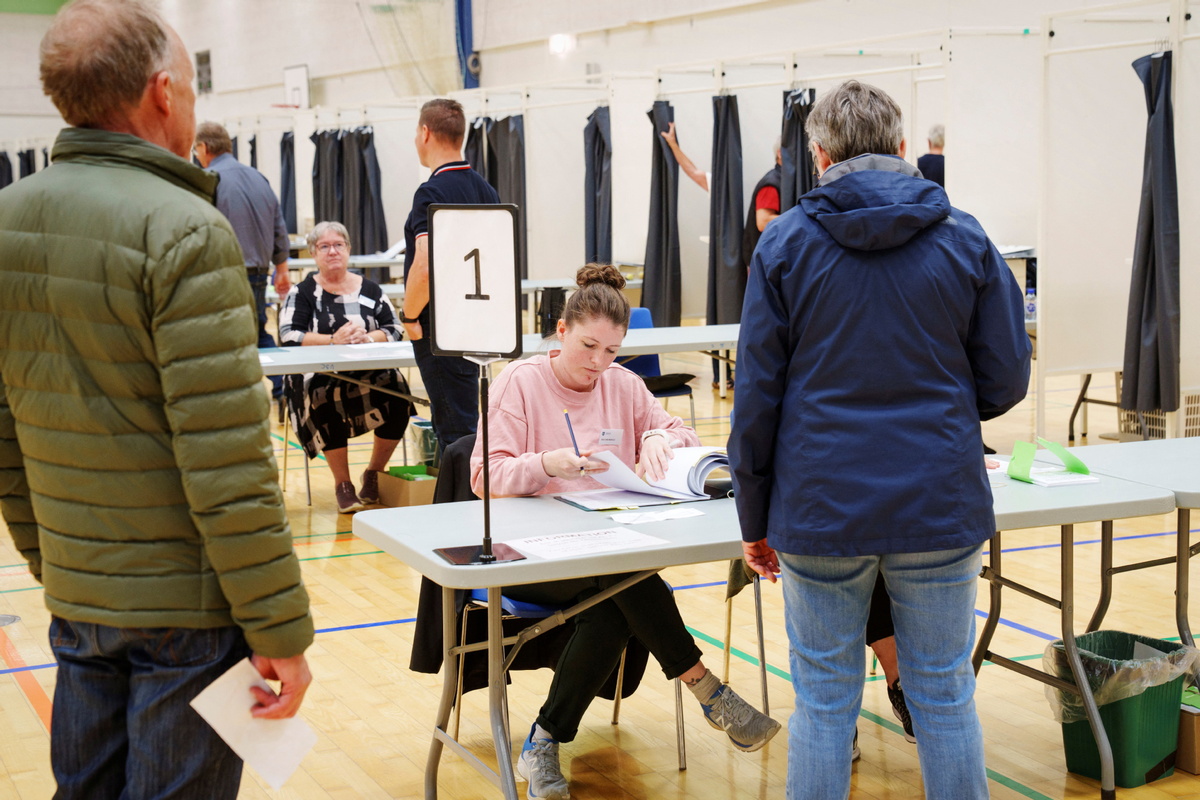
COPENHAGEN - Denmark has voted to join the European Union's defence pact and scrap its 30-year-old opt-out from the bloc's common security and defence policies.
In a referendum held on Wednesday, a vast majority, or 66.9 percent, of Danish citizens, have voted for the move, according to the preliminary results from Statistics Denmark, which gives the Nordic country a seat at the EU table to discuss military cooperation. The vote occurred with a turnout of 65.76 percent of the 4,260,944 electoral roll.
"I believe that it is the right thing for Europe and for Denmark and our future," said Prime Minister Mette Frederiksen after casting her ballot earlier in the day, believing that Denmark may be more united than ever on EU policy.
Due to the defence opt-out, Denmark could not participate in EU military operations or cooperation on the development and acquisition of military capabilities within the EU framework. Furthermore, the country was not obligated to provide military support or supplies to EU-led efforts in conflict zones, nor to participate in any operational decisions or planning.
In March, the Danish Parliament decided to hold on June 1 the referendum, part of a new multi-party agreement on defence, amid mounting concerns over the Russia-Ukraine military conflict.
In addition, Denmark aims to meet NATO countries' target defence spending of 2 percent of GDP by 2033, with efforts starting to be made in 2024, according to the agreement.

KYIV - Russian forces took control over the eastern part of Severodonetsk city, the administrative center of the Ukraine-controlled part of the Lugansk region, the General Staff of the Ukrainian Armed Forces said Wednesday.
Meanwhile, Sergey Gaidai, head of the Lugansk regional military administration, said on Facebook that Russia seized some 80 percent of Severodonetsk.
Street fighting in the city continued and Ukrainian forces carried out counterattacks in some parts of Severodonetsk, Gaidai said.
Ukrainian troops captured six Russian soldiers during the battle for Severodonetsk, Gaidai said.

KYIV - The governments of Ukraine and Poland on Wednesday signed a string of bilateral documents in the fields of defense, energy and regional development, the Ukrainian government press service reported.
The agreements were inked during the intergovernmental consultations in Kyiv in the presence of Ukrainian Prime Minister Denys Shmyhal and his Polish counterpart Mateusz Morawiecki.
In particular, the two countries agreed to set up a joint commission that will prepare recommendations on the format of the Ukrainian-Polish joint venture for the manufacture of weapons and military equipment.
"This will take our defense and military cooperation to a new level and allow us to create modern types of defense weapons," Shmyhal said.
Besides, Ukraine and Poland signed a joint declaration on cooperation at the level of border services and a document on developing Ukraine's communities as a part of the country's post-conflict recovery.
In addition, the governments of Ukraine and Poland inked a memorandum to strengthen their cooperation in the energy sector.
Shmyhal and Morawiecki agreed to hold the next meeting of the Ukrainian-Polish intergovernmental consultations in Warsaw in 2023.

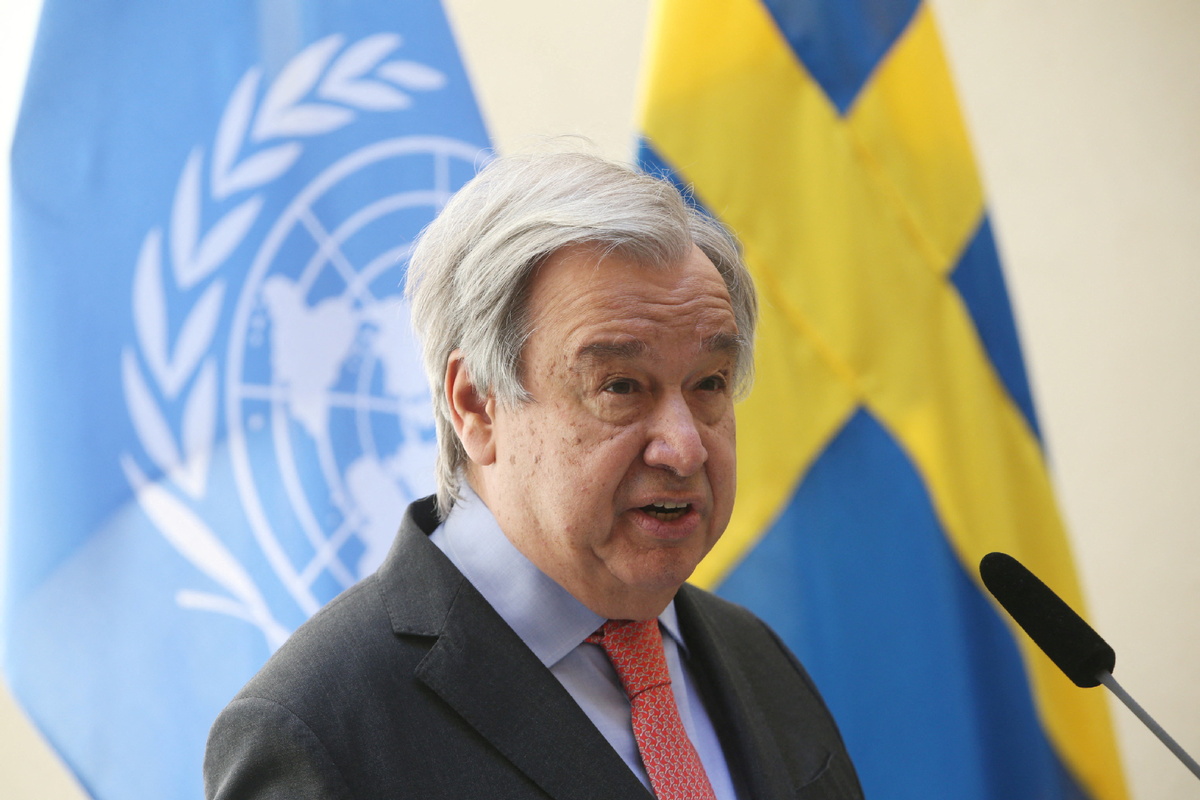
STOCKHOLM - The Russia-Ukraine conflict could lead to a global food crisis that will hit developing countries the hardest, United Nations (UN) Secretary-General Antonio Guterres warned in Stockholm on Wednesday.
Guterres met with Swedish Prime Minister Magdalena Andersson to discuss the security situation in Europe, recovery from the pandemic and the green transition.
The Russia-Ukraine conflict is creating suffering and devastation, and "must end now," Guterres said at a press conference after the meeting.
He also called for swift decisions to counter the food crisis that could arise from the conflict, putting developing countries most at risk.
The situation is fueling "a three-dimensional global crisis for food, energy and finance" that is affecting "the most vulnerable populations, countries and economies," he warned. A "perfect storm" is threatening to destroy the economies of many developing countries," he added.
The food crisis cannot be resolved effectively unless Russia's manure and food production, and Ukraine's food production can reach world markets again, he emphasized.
According to the UN Food and Agriculture Organization (FAO), Russia and Ukraine are the world's largest and fifth-largest wheat exporters, respectively. Together, they provide 19 percent of the world's barley supply, 14 percent of wheat and 4 percent of maize, making up more than one third of global cereal exports.
In Ukraine, which is known as the breadbasket of Europe, the conflict has left unharvested wheat that was planted months ago, while maize and sunflowers sown when the conflict broke out were left unfertilized. It is estimated that Ukraine's grain production may fall by more than 50 percent in the current season.
Moreover, Russia is the leading producer of fertilizers, accounting for 13 percent of global production. Restrictions on Russian fertilizer exports due to the US' sanctions have led to a surge in global fertilizer prices. This has forced farmers in Brazil, the United States and other major agricultural countries to reduce their use of fertilizers, which could affect future harvests.


ROME - Soaring prices are expected to limit economic growth in Europe this year, with gross domestic product estimates for 2022 being lowered across the continent.
Prices in Europe started climbing late last year, pushed mostly by supply chain issues.
But the conflict between Russia and Ukraine, which started in late February, had an immediate impact on energy prices, putting further upward pressure on prices for transport, industry, food and heating.
Consumer prices in the eurozone rose by an average 8.1 percent in May, the highest annual level since the creation of the common currency in 1999, Eurostat, the statistical office of the European Union (EU), said on Tuesday.
The figure was higher than the previous record of 7.4 percent set a month earlier, and it also outpaced consensus estimates of a 7.8-percent increase for May.
In the eurozone, energy costs were 39.2 percent higher than a year earlier, Eurostat said.
These trends are taking a toll on growth prospects for Europe, especially in the eurozone.
Last week, ratings agency Moody's lowered its 2022 growth forecast for the eurozone to 2.3 percent from 2.5 percent. Moody's identified the crisis in Ukraine as the main driver behind the lowered growth prospects.
Meanwhile, the EU member states decided late on Monday to ban around 90 percent of Russian oil imports by the end of the year. This has unnerved investors in Europe's main economic centers, with the blue chip stock market indexes in Frankfurt, Madrid, Milan and Paris all ending Tuesday's trading day at least 0.7 percent lower.
Christine Lagarde, president of the European Central Bank (ECB), wrote in a blog post on May 23 that euro-denominated interest rates were likely to be raised this year.
"Based on the current outlook, we are likely to be in a position to exit negative interest rates by the end of the third quarter," Lagarde wrote.
"If the euro area economy were overheating as a result of a positive demand shock, it would make sense for policy rates to be raised sequentially above the neutral rate," read the post.
The situation in Italy is particularly difficult. The country's National Institute of Statistics (ISTAT) reported on Tuesday that Italy's economy grew by 0.1 percent in the first quarter of 2022 against preliminary estimates of a 0.2 percent contraction.
But ISTAT's estimates for economic growth for the year as a whole were just 2.6 percent, compared to estimates as high as 4.7 percent before the start of the conflict in Ukraine.
This dovetails with Moody's estimates. In its latest report on European economies, Moody's predicted that Italy's economy would grow 2.3 percent this year, down from previous estimates of 3.2 percent.

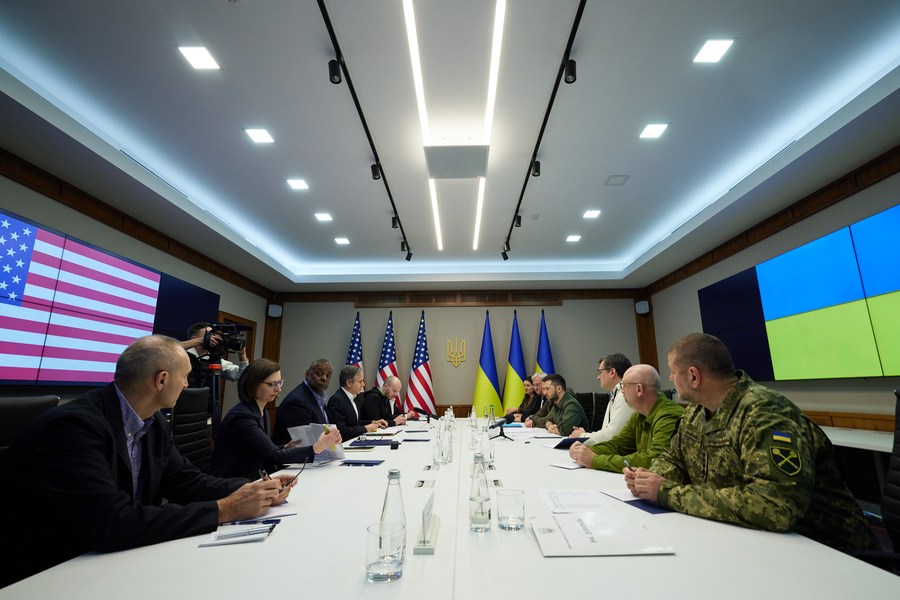
WASHINGTON - The United States will send medium-range rocket systems to Ukraine in a new security assistance package, senior administration officials said Tuesday.
A 700-million-US-dollar weapon package will be formally unveiled Wednesday, including High Mobility Artillery Rocket Systems (HIMARS), which are to enable Ukraine to fire more precisely at targets in its eastern part, the officials said.
The officials, who spoke on condition of anonymity, said Ukrainian officials had offered assurances that the HIMARS would not be used to strike targets inside the Russian territory.
The announcement came amid reports that the United States was preparing to aid Ukraine with advanced long-range rocket systems, something Kyiv is craving in its fights against Russia in the eastern Donbass region.
Instead of those long-range rocket systems that can travel as far as 186 miles (300 km), the United States is sending what it considers medium-range rockets to Ukraine, ones that can travel about 50 miles (80 km), according to the officials.
Also on Tuesday, US President Joe Biden wrote in a guest essay carried by The New York Times that his administration will continue to "provide the Ukrainians with more advanced rocket systems and munitions that will enable them to more precisely strike key targets on the battlefield in Ukraine".
The United States does not seek "a war" between NATO and Russia, Biden said.
On Monday, he ruled out the possibility of Washington sending to Ukraine "rocket systems that can strike into Russia".

MOSCOW - Russian energy giant Gazprom said Tuesday that it would no longer supply gas to Denmark's largest energy company Orsted and will halt deliveries to Germany under the Shell Energy Europe contract.
Orsted has notified Gazprom Export that it would no longer make payments for gas in rubles, and Shell Energy Europe Limited said it would not pay in rubles for gas supplies to Germany, Gazprom said on Telegram.
The cuts will be effective from Wednesday, it added.
Russian President Vladimir Putin signed a decree on March 31 on new rules regarding natural gas trade with "unfriendly" countries and regions. According to the decree, existing contracts would be halted if these buyers refused to pay in rubles.

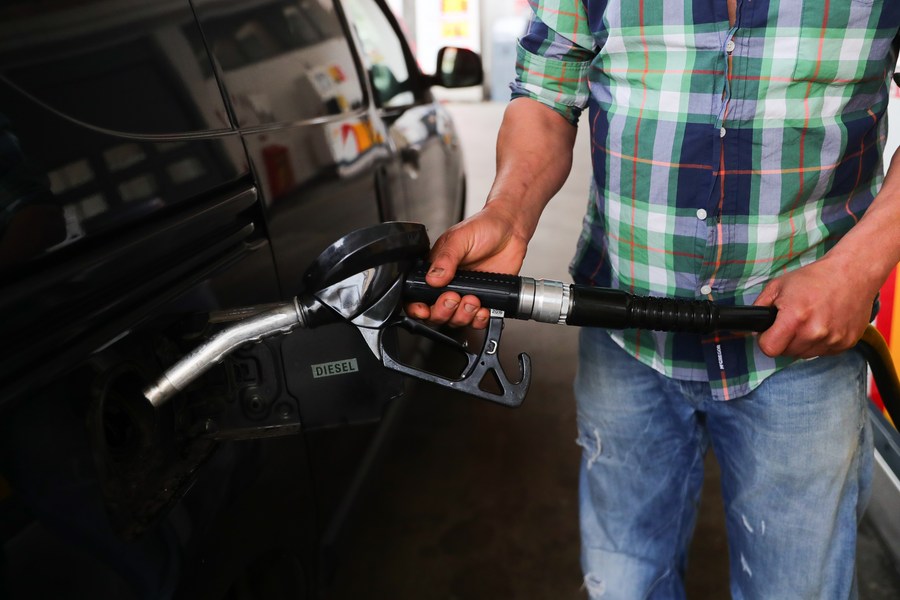
Though compromise excludes piped supply, Brussels highlights unity
European Union leaders agreed in principle on Monday to ban most Russian oil imports by the end of the year, with the common ground reached in talks that went late into the night in paving the way for the sixth package of sanctions against Russia.
The ban will target only seaborne oil imports, while exempting pipeline imports in a compromise that accommodates the demands of Hungary and several other member states.
"These are very strong signals sent today because (in) the recent hours and recent days there were speculations about the risks of lack of unity, European Union unity," European Council President Charles Michel told a news conference in the early hours of Tuesday after the first day of a two-day EU summit in Brussels.
"I think that we're able to be strong, able to be firm, and we're able to be tough in order to defend our values, to defend our interests."
The sixth round of sanctions, which was first unveiled about four weeks ago by European Commission President Ursula von der Leyen, also excludes Russia's largest bank, Sberbank, from the SWIFT payments system and suspends three additional Russian state-run media outlets from broadcasting in EU.
While Michel first tweeted that the ban will cover two-thirds of Russian oil imports, von der Leyen said 90 percent would be covered. They later explained that the 90 percent included commitments by Poland and Germany to phase out oil imports through the Druzhba pipeline by the end of the year. The Druzhba, meaning friendship, is the world's longest oil pipeline carrying oil to Ukraine, Hungary, Poland, Germany, Slovakia, the Czech Republic and Austria.
"It's a big step forward what we did today," said von der Leyen, admitting that it was a difficult undertaking after the regional bloc decided in April to phase out Russian coal by August.
The EU is the largest buyer of Russian oil, each day taking on average some 2.2 million barrels of crude, along with 1.2 million barrels of refined products, according to figures before the Russia-Ukraine conflict started on Feb 24.
The details covered by the political agreement reached on Monday will have to be finalized by ambassadors of the 27 member states before the oil embargo takes effect.
Member states including Hungary, Slovakia, the Czech Republic and Bulgaria had earlier voiced objections or concerns to the original plan, arguing that it would have had devastating effects on their economies.
Monday's agreement is seen as a huge win for Hungarian Prime Minister Viktor Orban, who led the opposition in the past weeks.
Exemption secured
Besides securing an exemption for pipeline oil imports, Hungary has secured the right to import Russian oil by sea if the country's pipeline deliveries are cut off.
"We have defended the utility cost reduction program … Hungarian families can sleep peacefully tonight," Orban said.
Dutch Prime Minister Mark Rutte expressed his understanding of the concerns of these countries. "They are in a difficult position. In this sense, they have a point," he said, referring to their refineries' ability to use only Russian crude.
But he said that when the EU plans a seventh round of sanctions, it should have an upfront debate about the technicality issue before starting to discuss the actual sanction package.
Rutte's words came as Russian gas company Gazprom said that it was cutting its supply to the Netherlands from Tuesday after Dutch wholesaler GasTerra refused to pay in roubles, as Russia demanded, for fear of breaching EU sanctions.
Guntram Wolff, director of the Brussels-based economic think tank Bruegel, said that it is great that the EU agreed on an oil embargo.
"But the agreement is not ideal. It will take many months until implemented, months during which prices will be high and Russian revenues will increase, rather than decrease," he said in a tweet on Tuesday.
He pointed out that Russia can easily find new buyers for the oil that would have gone to Europe by sea, but the supply going by pipelines can't be redirected.
Oil prices jumped after the EU announced its agreement. US crude futures for July rose 3.19 percent to $118.69, while Brent crude futures rose 1.52 percent to $123.52 during Asian trading on Tuesday, CNBC reported.

US President Joe Biden said he will not send rocket systems to Ukraine that could potentially reach into Russia, after reports that the administration was preparing to send long-range systems to the besieged European nation.
The Washington Post reported that the administration had been mulling providing the Multiple Launch Rocket System, or MLRS, which would allow Ukrainians to fire rockets much farther than they are currently able to.
The MLRS had reportedly been a top request from Ukrainian officials, who say they need it to stop the advance of Russian forces in the east.
"We're not going to send to Ukraine rocket systems" that can reach Russia, Biden told reporters at the White House on Monday, the Reuters news service reported.
The US has provided thousands of portable Stinger anti-aircraft and Javelin anti-tank missiles to Ukrainian forces as well as advanced drones and field artillery.
'Serious step'
Russian Foreign Minister Sergey Lavrov last week cautioned Western powers against supplying Ukraine with weapons capable of hitting Russian territory, warning that such a move would be a "serious step toward unacceptable escalation".
Russia's Ambassador to the US Anatoly Antonov reinforced that message, demanding that Washington "not take such a provocative step".
As Russia's military actions continue across Ukraine's eastern Donbas region, Ukrainian President Volodymyr Zelensky said the situation remained "extremely difficult".
Lavrov was expected to visit Saudi Arabia on Wednesday where he will meet foreign ministers from Gulf Cooperation Council states, two Gulf officials said on Tuesday.
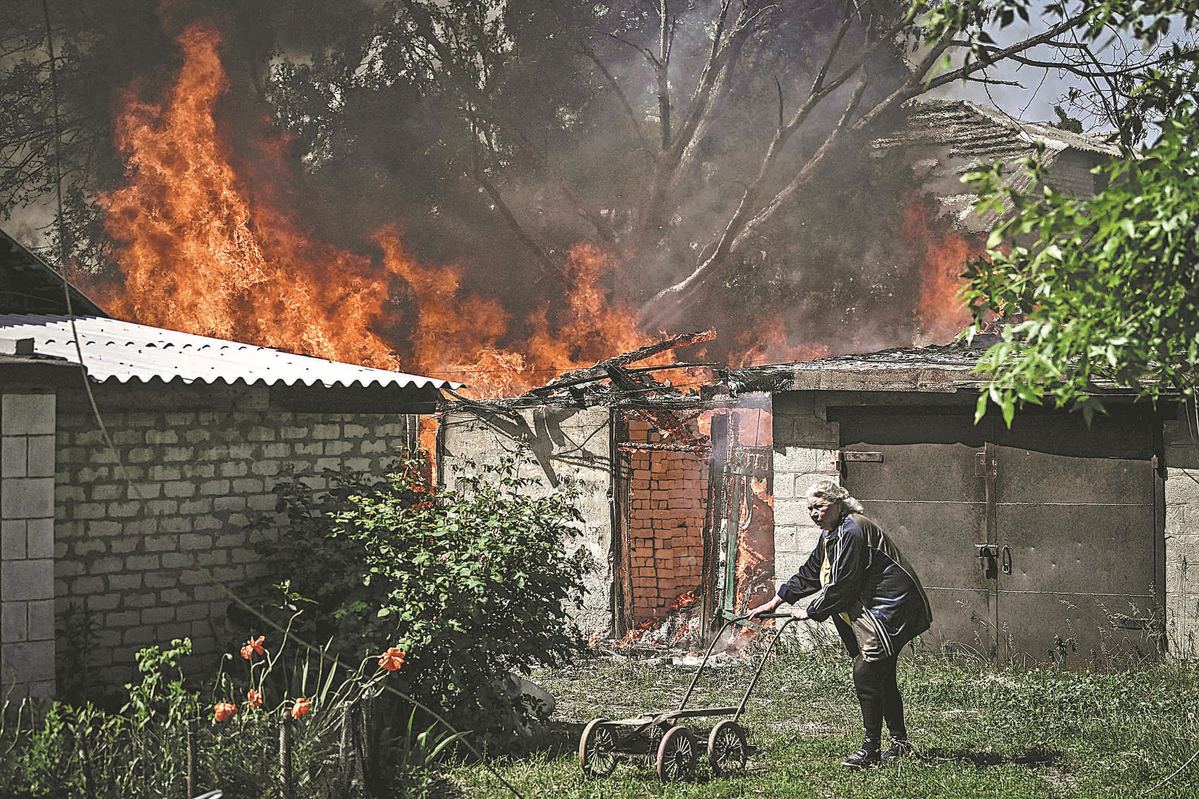
Attention has been focused on Sievierodonetsk, where part of the city is "controlled by the Russian army" and Russian troops are "gradually moving toward downtown", Serhiy Hayday, head of the Lugansk regional military administration, said on Tuesday.
"The city is essentially being destroyed ruthlessly block by block," Mayor Oleksandr Striuk told The Associated Press. He said heavy street fighting continues in the city.
On the other side of the border, officials in the Russian city of Kirov have ordered residents to clear out the basements of their apartment blocks so that they can be used as potential bomb shelters.
On Monday, Turkish President Recep Tayyip Erdogan called his Russian counterpart Vladimir Putin, who told him that Moscow is ready to work with Ankara to free up Ukrainian ports that Russia has blocked during the "special military operation". Erdogan called Zelensky as well later that day, and both leaders "unanimously agree on the need to restore peace".
During an earlier call with the leaders of France and Germany, Putin was asked to release the Ukrainian fighters that had been holed up in the Azovstal steel plant in Mariupol.
Kyiv has said it wants to exchange the soldiers in a prisoner swap, but Moscow has indicated that they will first stand trial.
Agencies contributed to this story.

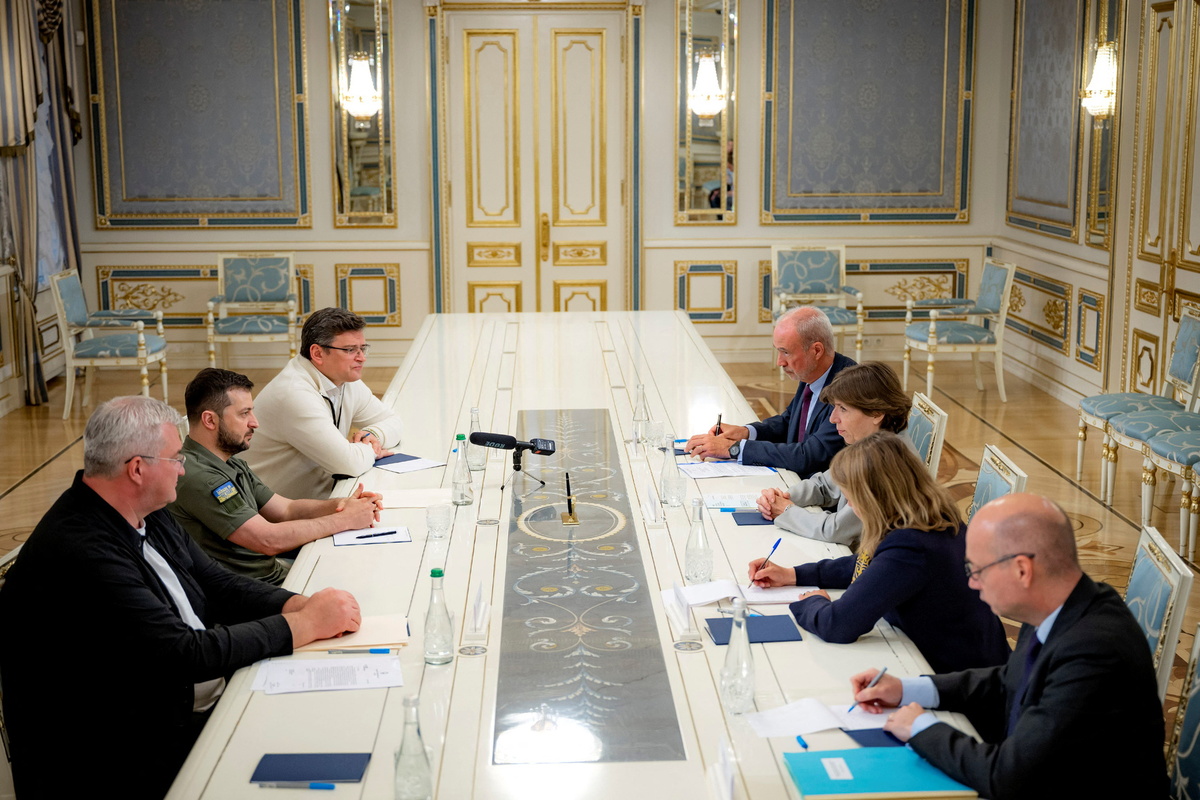
Kyiv - Ukrainian President Volodymyr Zelensky on Monday met with visiting French Foreign Minister Catherine Colonna to discuss support for Kyiv, the presidential press service said.
The parties talked about the assistance in armaments, strengthening sanctions on Russia and bringing Ukraine closer to European Union (EU) membership, according to a statement on the Ukrainian presidential website.
During the talks, Zelensky thanked France for the financial aid for Kyiv and the assistance of the French government in the treatment of wounded Ukrainian servicemen.
The Ukrainian leader added that Kyiv is counting on France's support for Ukraine on its path toward getting to a candidate status for EU membership in June.
Zelensky and Colonna also exchanged views on the ways to unblock Ukrainian ports to prevent the global food crisis, and they touched upon Ukraine's post-conflict recovery.
Colonna arrived in Ukraine earlier in the day, becoming the highest-ranked French official to visit Kyiv since the start of the Russia-Ukraine conflict on Feb 24.
Colonna also held talks with Ukrainian Foreign Minister Dmytro Kuleba, pledging to continue military assistance for Ukraine.







