


Penalties for radioactive waste violations to go up









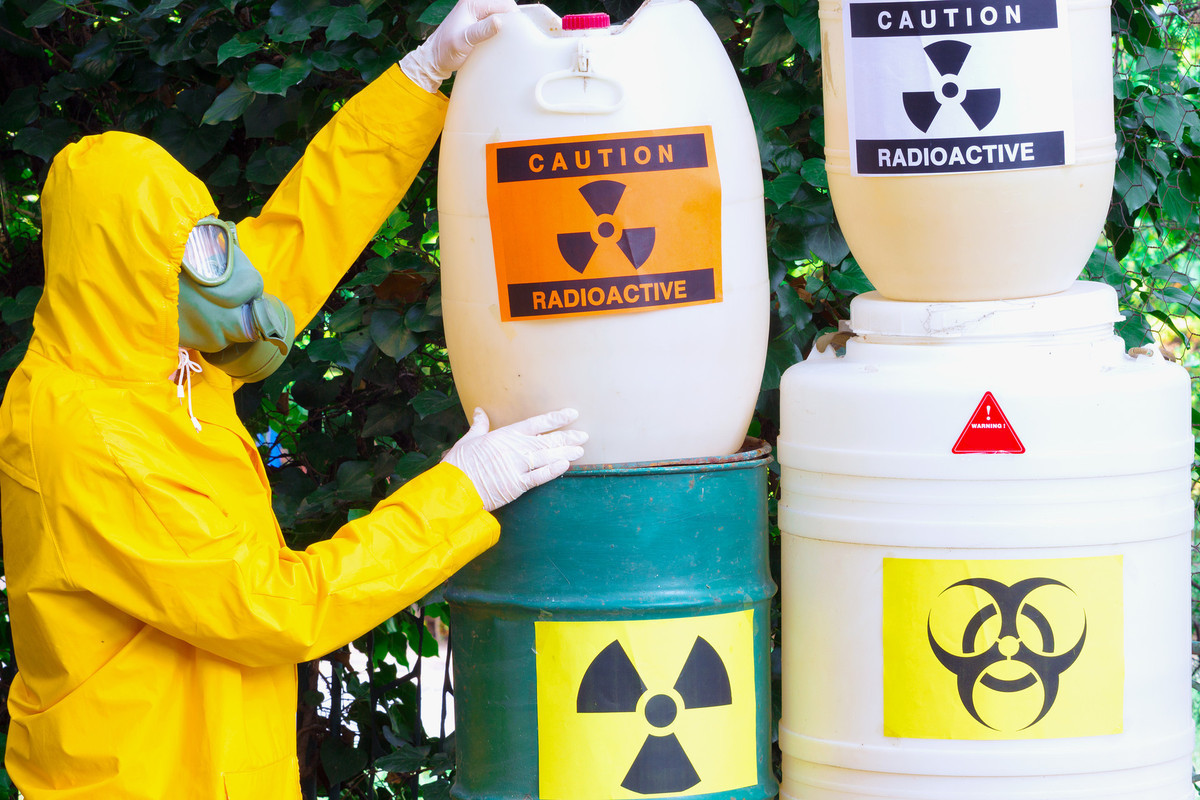
China plans to intensify punishments for violations related to radioactive material management, according to a draft ecological environment code.
The newly revised draft code was submitted on Monday to an ongoing session of the Standing Committee of the National People's Congress, China's top legislature, for its third deliberation.
The new draft, for instance, aims to toughen penalties for violations involving radioactive source management by bringing them in line with those concerning hazardous waste.
It states, for instance, that entities would be subject to fines of 20,000 to 200,000 yuan ($2,841 to $28,417) if they fail to display radioactive labels, signs, or Chinese warning notices as required, provide radioactive safety education and training to their personnel or implement effective protective safety measures.
Entities that fail to treat or dispose of radioactive solid waste generated by them in accordance with national regulations should make corrections within a specified time limit, and be fined between 50,000 and 200,000 yuan.
If corrections are not made within the time limit, a qualified entity would be designated to carry out the treatment and disposal on their behalf, with all costs borne by the generator of the radioactive solid waste, and an additional fine of between 200,000 and 1 million yuan would be imposed.
While addressing the NPC Standing Committee, Shen Chunyao, head of the committee's Legislative Affairs Commission, said the draft also proposed the transition from a penalty model for radioactive pollution prevention and control that is contingent upon failure to rectify violations, to one that directly imposes penalties for illegal acts.
Those who discharge prohibited radioactive waste gas or wastewater into the environment or dump radioactive solid waste should take remedial measures to eliminate the pollution, and be fined between 200,000 and 2 million yuan, according to the draft.
Under serious circumstances, the violators would be ordered to suspend operations and even shut down, the draft said.
If remedial measures are not taken within the prescribed time limit, a qualified entity shall be designated to undertake the remediation, with all costs borne by the violators.
The draft code also seeks to advance the development of specialized trial mechanisms for handling eco-environmental cases in a move to strengthen judicial work in this domain.
The draft code mandates that prefecture-level governments and above could seek compensation for environmental pollution or damage that causes state losses. If negotiations fail, they could take the case to court.
When authorities either fail to initiate negotiations or decide not to sue after talks break down, the procuratorate could file a lawsuit against the responsible parties.
This means that the procuratorate would be established as the sole body capable of initiating litigation in such cases of uncompensated state loss, Shen said.





- Penalties for radioactive waste violations to go up
- Pottery craft breathes new life into village
- Soccer success story shot for smallest screens
- China reviews report on application of sci-tech achievements
- Micro-dramas directed to tackle sports
- Hong Kong's Southbound Travel for Guangdong Vehicles scheme officially implemented