



Israel defies ceasefire with Gaza strikes









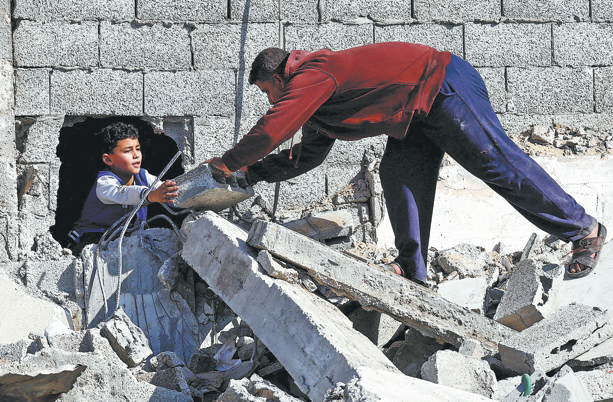
Israel has again defied a ceasefire through artillery and helicopter strikes in southern Gaza on Monday, which killed a girl and her uncle, bringing the Palestinian death toll since October to at least 422.
According to a report by Al Jazeera, citing the Nasser Medical Complex in southern Khan Younis, the strike hit a tent in al-Mawasi area, injuring four others, including children.
The Israel Defense Forces posted on X that the Israeli forces "struck a short time ago a terrorist from the Hamas terror organization who planned to carry out a terror attack against IDF forces operating in southern Gaza Strip in the immediate time frame". But it made no mention of the tent attack nor provided prior or post-strike evidence of the claim.
During a press briefing on Monday, UN Spokesperson Stephane Dujarric told reporters that Israeli airstrikes continued to be reported across several areas of the Gaza Strip.
Dujarric said these come amid harsh winter conditions and destructive winter storms that are damaging infrastructure and putting water, sanitation and hygiene services under continuing pressure.
According to the UN Office for the Coordination of Humanitarian Affairs, Israeli airstrikes, shelling and gunfire "continued to be reported across several areas of the Gaza Strip between 30 December and 2 January with several casualties reported".
"Partners working in water, sanitation and hygiene say that heavy rains have affected damaged and unmaintained water-related infrastructure. For example, recent rains raised water levels in Wadi Gaza in Deir al Balah and Sheikh Radwan lagoon in Jabalia," it added.
Further, the OCHA said in order to ensure the operation of dewatering pumps, the humanitarian community is engaging with the Israeli authorities to allow the entry of specialized equipment. On New Year's day, five Palestinians were reported killed and 11 others injured across the Gaza Strip over the previous 48 hours.
Dujarric said that 100 percent of minimum caloric standard was met for the first time in Gaza since October 2023, but reiterated his call for aid to remain unimpeded.
He said that last week alone, the UN and its partners brought more than 10,000 metric tons of aid through the Kerem Shalom, Karem Abu Salem crossing and the Zikim crossing.
But the recent announcement by Israeli authorities to ban operations of select nongovernmental organizations threatened to impede critical assistance for civilians.
Israel enforced a ban on the activities of 37 international NGOs operating in Gaza for allegedly failing to comply with security requirements concerning their employees.
In a joint statement by 53 NGOs published on Jan 2, they noted that international NGOs deliver more than half of all food assistance in Gaza, run or support 60 percent of field hospitals, implement nearly three-quarters of shelter and nonfood item activities, and provide all treatment for children with severe acute malnutrition.
"Recent efforts to assess the impact of deregistering INGOs through selective metrics do not capture how humanitarian assistance is delivered in practice. Humanitarian access must be measured by whether civilians receive the right assistance, in the right place, at the right time," it added.










