


Beating the drum of heritage preservation









For Liu Yuxin, marching to the beat of his own drum has been an apt mantra for his life.
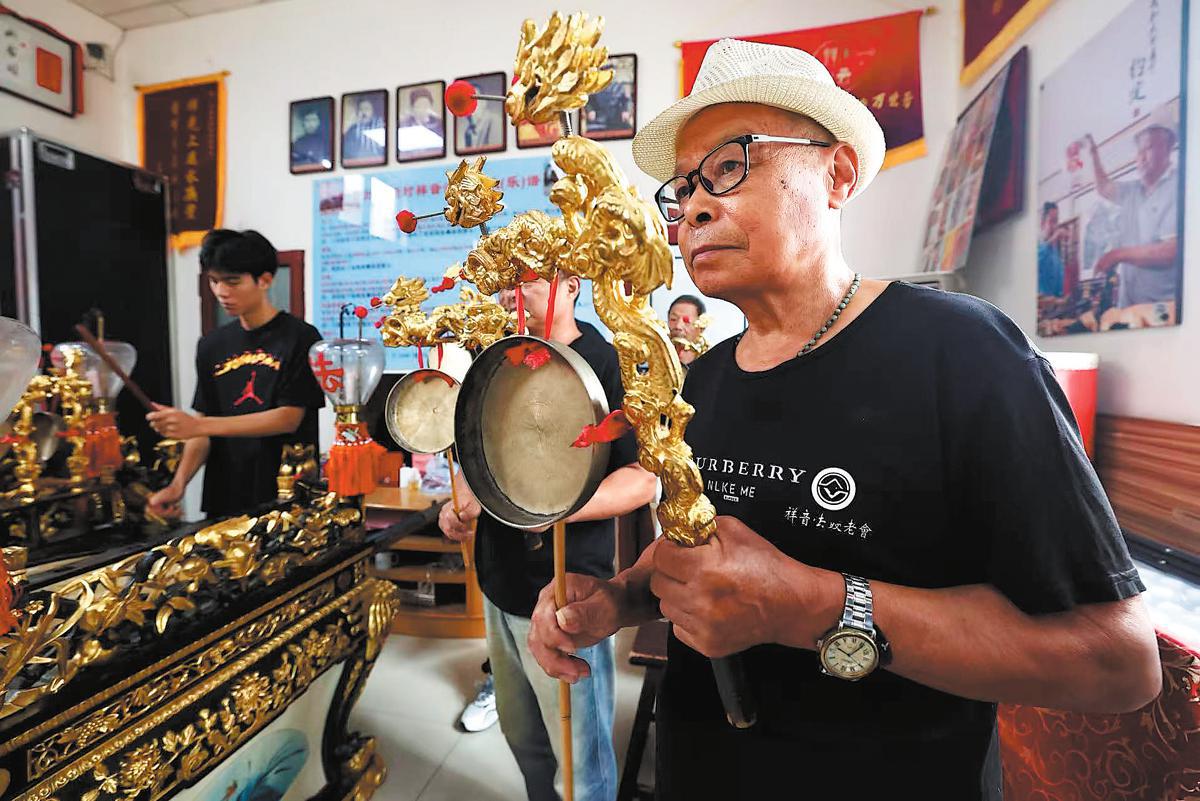
The 55-year-old from Liuyuan in Tianjin's Beichen district is a fifth-generation teacher of the village's very own intangible cultural heritage — Liuyuan Xiangyin Fa drumming.
This dharma drumming tradition emerged in the area during the rule of Emperor Daoguang (1820-50) in the Qing Dynasty (1644-1911). In the village of Liuyuan, drumming was performed for Buddhist, Taoist and folk rituals, often to bring good fortune.
Some two centuries on, and in the summer courtyards of Liuyuan, the drums still ring out, joined by the crash of cymbals, the melodic parps of bamboo flutes and reed pipes, and the whir of mouth organs.
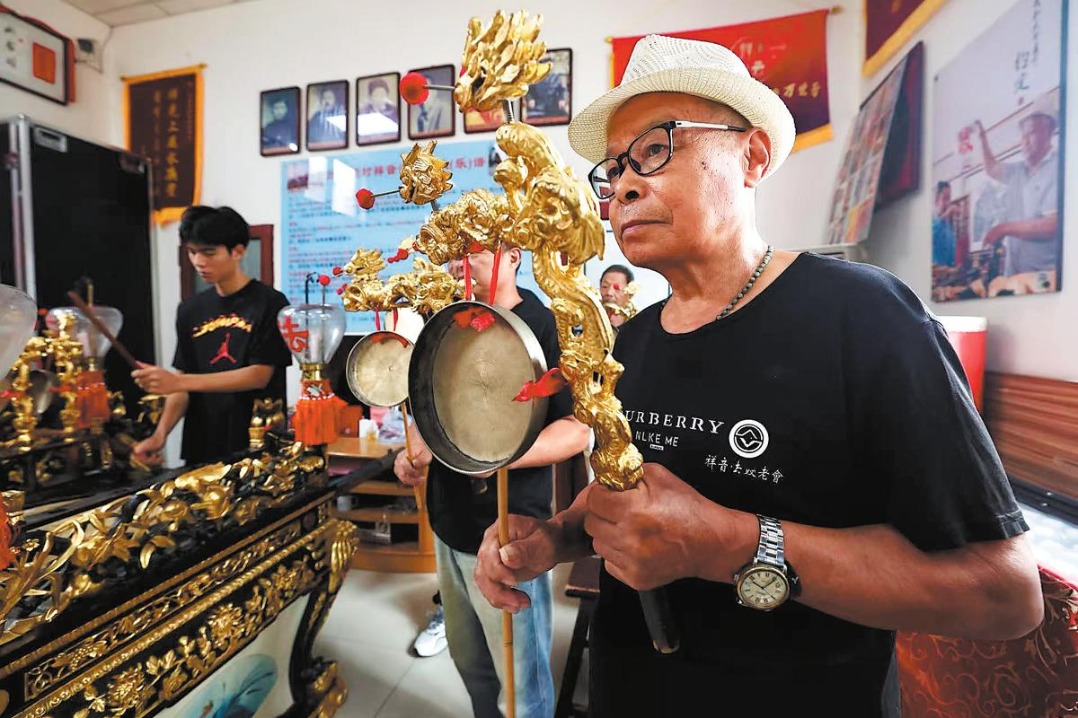
At the village's Liuyuan Xiangyin Fa Drumming Training Base, where teacher Liu plies his trade, a broad spectrum of music lovers, from age 5 to 80, learn and practice together.
"We offer free classes about the history and movements of Xiangyin Fa drumming, hoping to inspire more people's love and interest in this traditional art," said Liu, who is one of Tianjin's 16 representatives listed in the sixth batch of national intangible cultural heritage inheritors.
In June 2008, the drumming was named a national intangible cultural heritage, according to the Tianjin Intangible Cultural Heritage Network.
Liu said that Liuyuan Xiangyin Fa drumming mainly consists of drums, cymbals and gongs of different sizes, but that other instruments are also sometimes included.
Each classical score comes with its own performance routines and unique movements, said Liu, before demonstrating how to hold the drumsticks and ways to strike the skins.
"We encourage our students, who are mostly locals, to actively participate in performances to promote this national intangible cultural heritage art," Liu said.
Every year, the Liuyuan Xiangyin Fa drumming troupe collaborates with other intangible cultural heritages, such as stilt-walking, to hold the "Spring of the Canal" flower fair performance.
"The older generation of inheritors of these skills are generally less well educated, so they had more time to practice when they were younger," Liu said. "We hope the next generation can help promote the intangible cultural heritage through enhancing cultural literacy."