
The China Story
at your Fingertips
OPEN

Russia's President Vladimir Putin says his country will continue its yearlong "special military operation" in Ukraine, and he accused the US-led NATO alliance of fanning the flames.
Russia-Ukraine conflict would have cost world economy $1.6 trillion in 2022, according to a study published by the German Economic Institute.
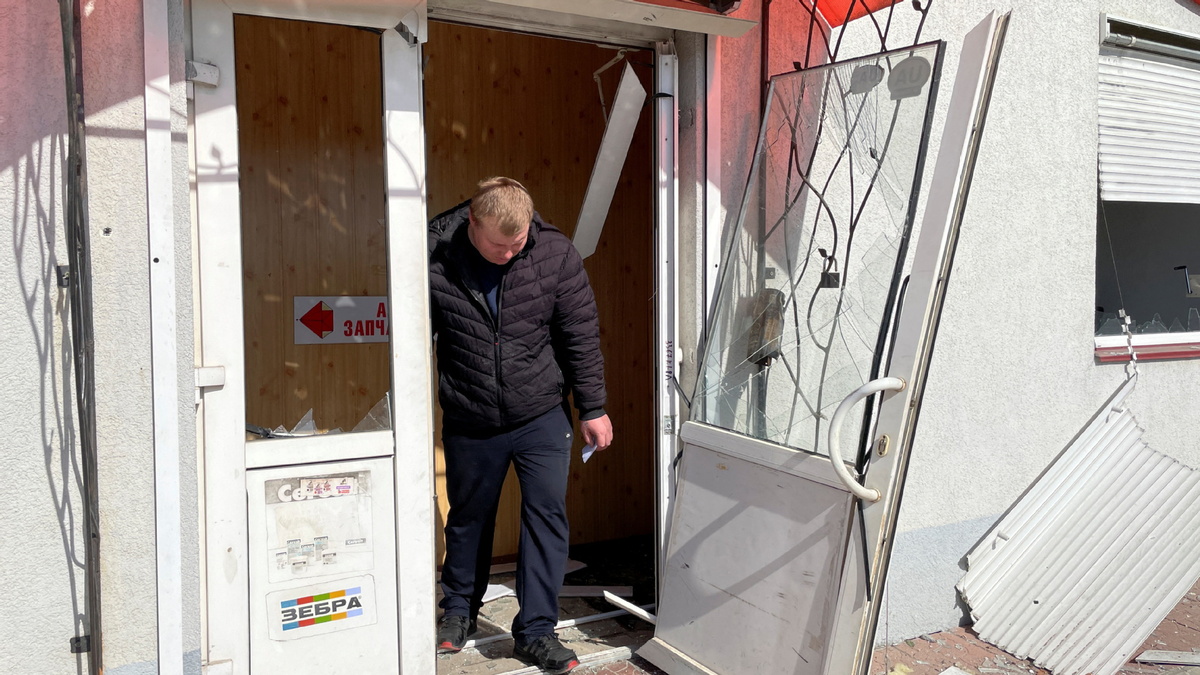
MOSCOW - Russia will expand the scale of its missile strikes on Kyiv in response to any Ukrainian forces' attacks or sabotage on Russian territory, the country's defense ministry said Friday.
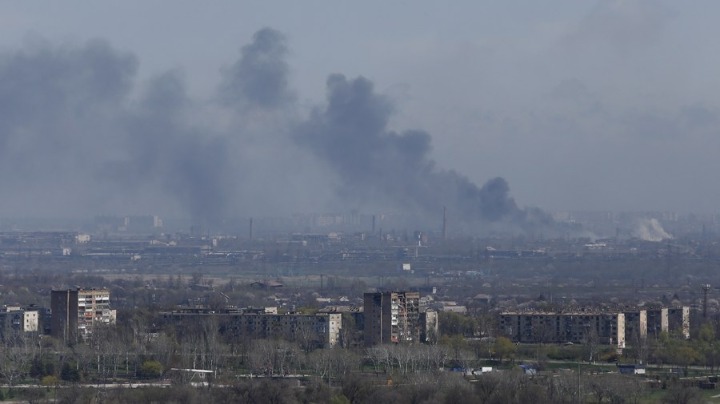
"Russian troops and forces of the Donetsk People's Republic have taken control of the Ilyich Iron and Steel Works in the city of Mariupol as a result of a successful offensive," Defense Ministry spokesman Igor Konashenkov told a daily briefing.
The Russian forces used high-precision sea-based Kalibr missiles to strike a military facility on the outskirts of Kyiv, he added.
According to the ministry, Russian forces have destroyed 132 aircraft, 105 helicopters, 245 anti-aircraft missile systems, 456 unmanned aerial vehicles, 2,213 tanks and other armored combat vehicles, 249 multiple rocket launchers, 966 field artillery and mortars, as well as 2,110 units of special military vehicles of the Ukrainian forces.



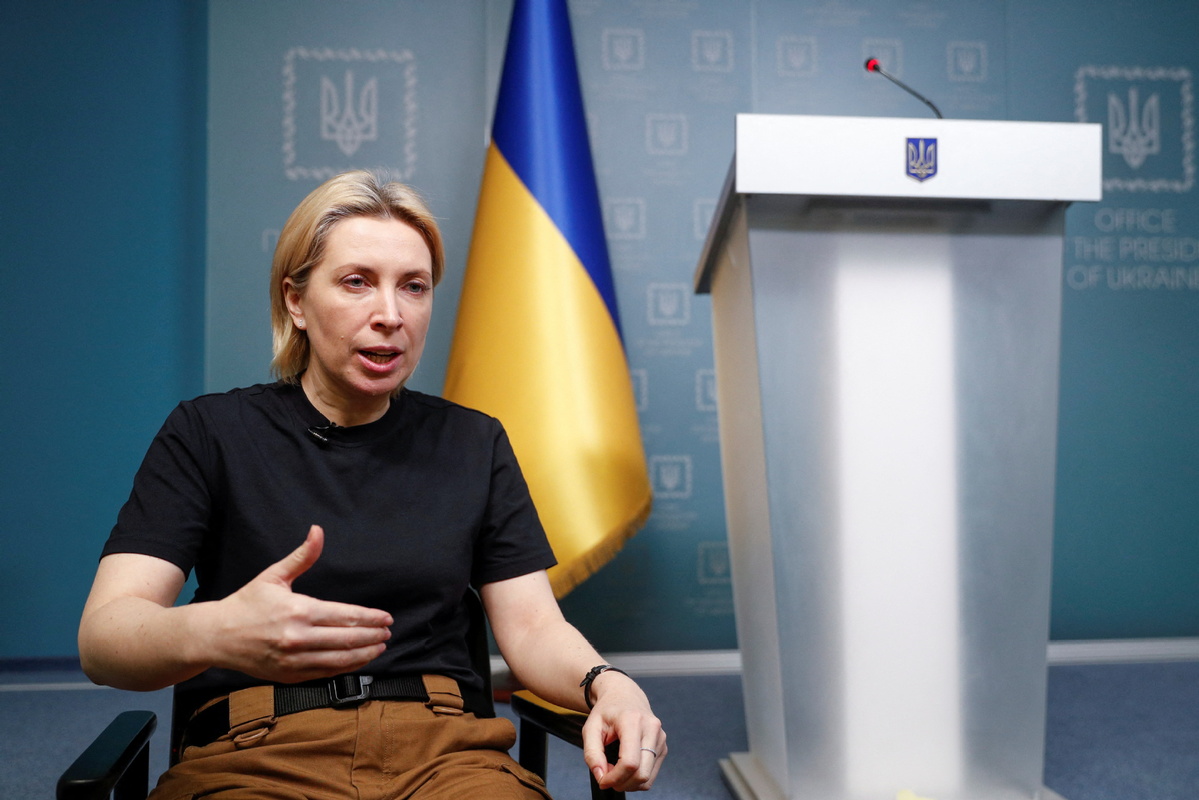
BEIJING - Ukraine and Russia conducted their fourth prisoner swap since the start of the conflict, Ukrainian Deputy Prime Minister Iryna Vereshchuk said on Thursday.
Thirty Ukrainian prisoners-of-war, including 8 civilians, held by the Russian military were released, Vereshchuk said on Telegram, without specifying the number of captives freed by the Ukrainian side.
Out of the 22 Ukrainian troops released under the swap, there were five officers, she said.
Ukraine and Russia conducted their first prisoner exchange on March 24.


Russian Defense Ministry said on Thursday that the latest update on the Pentagon-funded research in Ukraine has noted that the US-funded biolabs have carried out unethical human experiments, according to RT, Russia's English-language TV news network.
The allegations concern a laboratory located in Merefa, a city in Ukraine's Kharkov region, located about 20 kilometers southwest of the provincial capital. The Russian military claimed that in the period between 2019 and 2021, "American scientists from the lab" have carried out a series of experiments on human beings, using the patients at a psychiatric ward in Kharkov as subjects.
Russian Defense Ministry said that the research involved using "potentially dangerous biological preparations" without explaining what exactly was being tested.
The subjects were screened based on their age, nationality and immunity status and were closely monitored, the ministry said.
The Russian ministry said it had eyewitness testimonies of the "inhuman experiments," but the ministry did not give any further detail or name of the witnesses, citing the necessity to protect them.
The data collected indicates that the lab shut down in January and all the operative equipment in the lab was transferred to western Ukraine.
Russia suspects that the Pentagon is liable for the funding of clandestine bioweapon labs in Ukraine and many other nations, RT reported.
The US government says the labs operating under the US military's Defense Threat Reduction Agency (DRTA) act as biological outposts monitoring the environment for potentially dangerous infections that could emerge naturally.
Moscow says the research found may have military applications.
The Russian Defense Ministry has held some media briefings regarding the program and labs in Ukraine since Moscow launched the special military operation in the country. The Russian government has argued that the evidence found has confirmed its long-held suspicions about American intentions.

Lockheed Martin stocks have grown 20% since the start of the Ukraine crisis.
US Congressmen bought stocks of weapons contractors just days before the Russia operation in Ukraine started.
We've got a list of US politicians who've profited from the war and who will financially benefit from a prolonged conflict.?

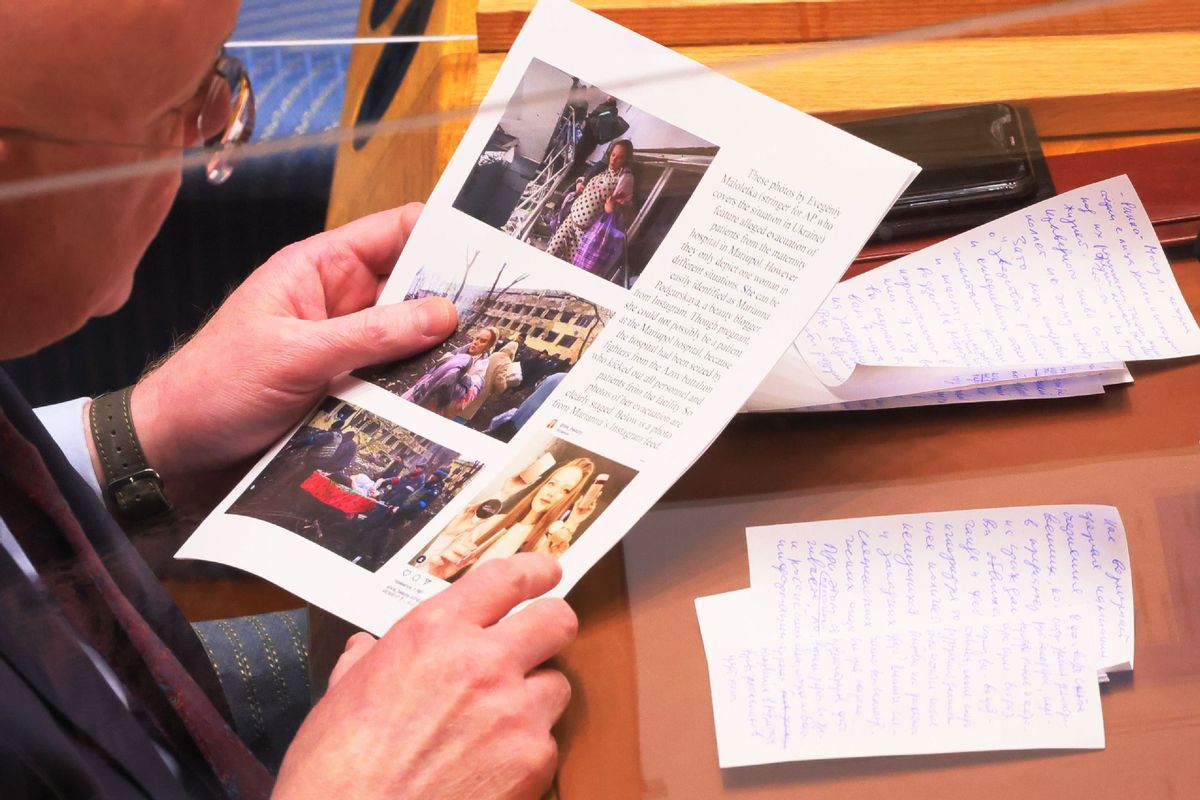
MOSCOW -- Washington has spent more than $350 million "in recent years alone" on projects of the Science and Technology Center in Ukraine (STCU), including on military biological programs, the Russian military said Thursday.
The STCU distributed grants for research in the interests of the Pentagon, including in the field of biological weapons, said Igor Kirillov, chief of the Radiation, Chemical and Biological Defense Forces of the Russian Armed Forces.
From 2014 to 2022, the STCU implemented more than 500 research projects in some post-Soviet countries, he said.
Many of them were aimed at studying potential agents of biological weapons and pathogens of economically significant infections, he added.

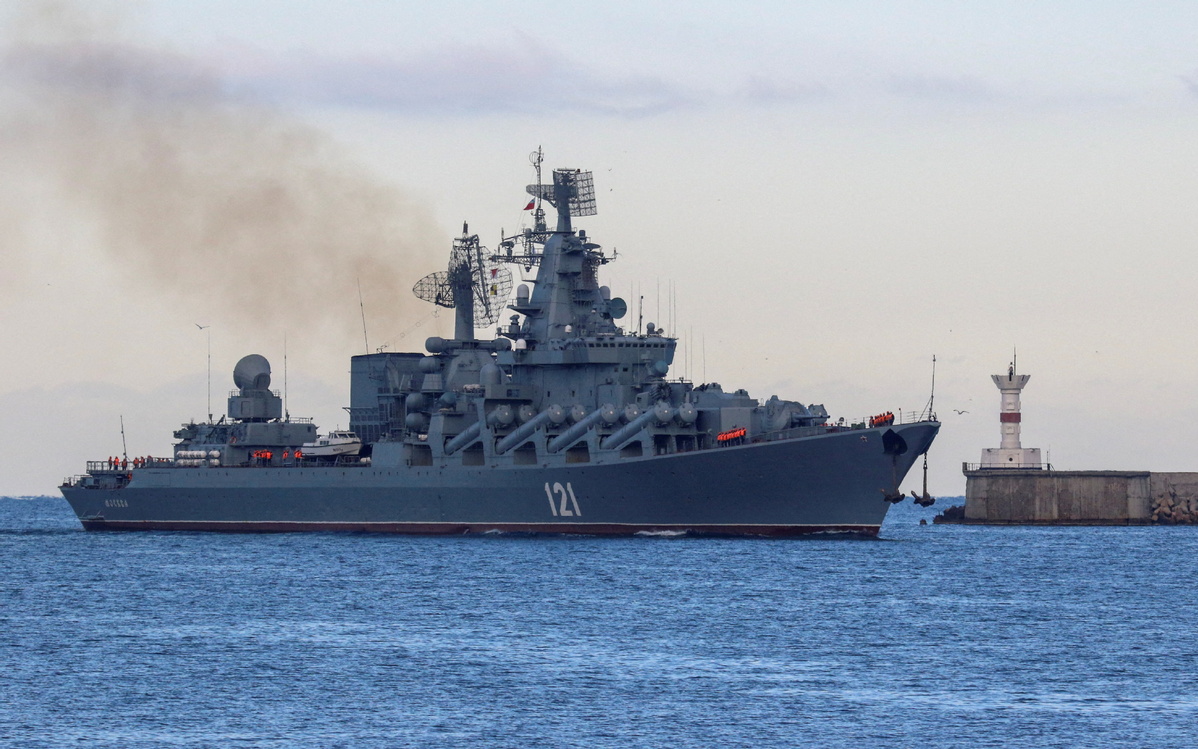
MOSCOW - Russia on Thursday said the flagship of its Black Sea Fleet, the Moskva missile cruiser, sank in stormy seas when it was being tugged to a port after having been damaged in a blast.
Due to the damage to the hull caused by explosions of ammunition onboard, Moskva lost stability, the Russian Defense Ministry said, adding that its crew members had been evacuated to other ships.
Moskva was "seriously damaged" by the detonation of ammunition onboard as a result of a fire, but it remained afloat after there were no open flames, the ministry said earlier in the day.
Maksim Marchenko, the governor of Ukraine's Odessa region, said on Telegram on Wednesday that Ukraine's border guards on Snake Island used Neptune anti-ship cruise missiles to deliver "very serious damage" to cruiser Moskva.


The world is beset by the Russia-Ukraine conflict and its cascading spillovers.
The Ukraine issue involves complex historical veins as well as various factors brought about by the current crisis. Western experts had long ago warned of risks that could arise from the United States-led NATO's eastward expansion against Russia.
However, ignoring Russia's legitimate security concerns and breaking the promises of former Western leaders, a certain powerful country punched Russia into a corner by launching NATO's five-round extension of more than 1,000 kilometers toward the Russian border. And this finally lit the fuse to the powder keg.
Rather than putting out the fire and ending the war, that country is doing just the opposite. Before the conflict, it hyped the possibility of a hot war and offered Ukraine a large number of weapons. During the crisis, it has not made efforts to ease the situation or promote peace talks, but rather delivered even more weapons to Ukraine to fuel the tension. Worse, it imposed extreme unilateral sanctions on Russia alongside its allies, gumming up the global supply and industrial chains and further dragging down a world economy already hit hard by the COVID-19 pandemic.
Creating crises, shifting blame and exploiting chaos to reap profits are usual tactics of the superpower to practice its hegemony. Just recall what it did to the Federal Republic of Yugoslavia in the 1990s, to Afghanistan and Iraq at the beginning of this century, and to Libya and Syria over the years.
When the Ukraine crisis broke out, that big power pledged to provide over $1 billion in aid to Ukraine.
But in fact, a considerable portion was spent on ammunition, channeling huge sums into the military-industrial complex.
The sanctions against Russia have stirred the global stock market and driven up the prices of oil, gas and commodities, hitting the global economy and trade as well as the livelihoods of people around the world.
But the superpower's energy giants are making a fortune during this time, with their liquefied natural gas exports up 16 percent month-on-month in March-a record high-and more than 60 percent of the total being shipped to Europe.
Russian assets have bottomed out and a large amount of international capital has flowed to the certain power, making its stock market roar and financial consortiums richer. The world has again witnessed the country's selfishness and hypocrisy.
Yet another puzzle is that it is often other countries, even allies of the certain country, that pay for disasters. History has shown that Europe's interests have been compromised by the superpower more than once-last time in Afghanistan and this time in Ukraine. Facing the war in Ukraine, it is Europe that has borne the brunt and faces a security dilemma. The natural gas price in Europe is skyrocketing and European people are taking a beating. The continuous influx of Ukrainian refugees has also placed a heavy economic and social burden on Europe.
European Union countries need to see clearly the "offshore balancing" trick of the superpower country, upgrade their strategic autonomy, and stop "pulling chestnuts out of the fire" for the country, which is the way forward for Europe to protect its interests.
While provoking conflict between Russia and Ukraine and perplexing the European situation, the certain power has not ceased to upset the Asia-Pacific by peddling the so-called "Indo-Pacific strategy" and showing its muscles in the South China Sea and the Taiwan Straits.
Conflict and confrontation are in no one's interest, and peace and security are the most valuable assets of the international community. China believes that dialogue and negotiation is the most realistic way to resolve crises. We hope that all parties involved in the Ukraine conflict can exercise restraint and support all diplomatic efforts that help the peaceful settlement of the crisis.
Asia-Pacific countries, as stakeholders in global stability, should learn lessons from the Ukraine conflict, maintain the region's hard-won peaceful and stable development, and resist with high vigilance any attempts at stoking bloc antagonism and creating instability in Asia.
We must not allow Cold War mentality to be revived in Asia, and we must avoid small and medium-sized countries in the region becoming tools or even victims of major power games.
China will work with other Asia-Pacific countries to build a balanced, effective and sustainable regional and global security architecture and play a more constructive role in the peace and stability of the region and beyond.
The author is commissioner of the Ministry of Foreign Affairs of the People's Republic of China in the Hong Kong Special Administrative Region.

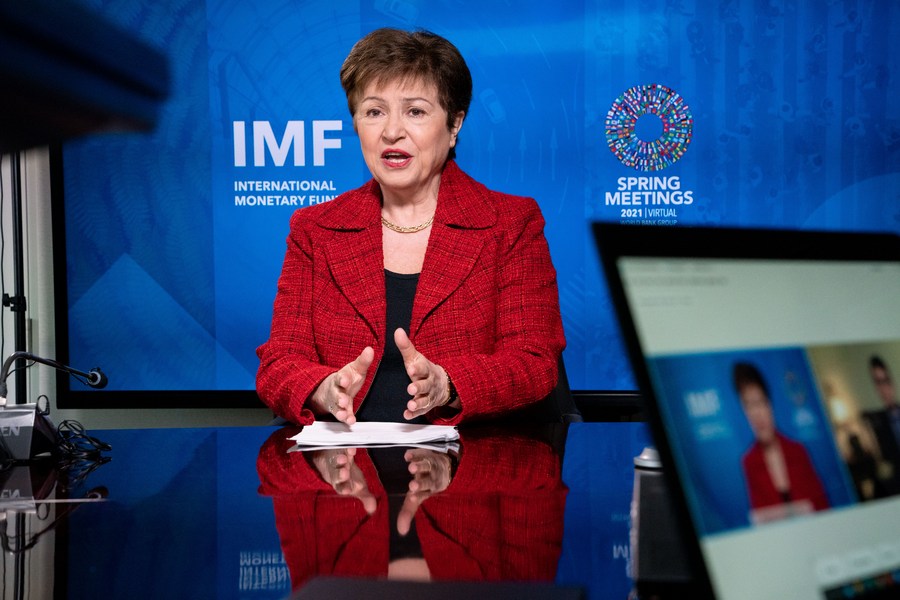
WASHINGTON - The International Monetary Fund (IMF) chief said Thursday that the organization will revise down its global growth forecast amid the Russia-Ukraine conflict, the impact of which will contribute to downgrades for 143 economies this year.
"To put it simply: we are facing a crisis on top of a crisis," IMF Managing Director Kristalina Georgieva said in a curtain raiser speech ahead of the 2022 spring meetings of the IMF and the World Bank scheduled next week.
"In the past seven weeks, the world has experienced a second major crisis - a war on top of a pandemic. This risks eroding much of the progress we have made over the past two years, climbing back from COVID," said Georgieva.
In an update to its World Economic Outlook (WEO) report released in January, the IMF already cut 2022 global growth forecast by 0.5 percentage point to 4.4 percent amid Omicron surge, as economies grapple with supply disruptions, higher inflation, record debt and persistent uncertainty.
"Since then, the outlook has deteriorated substantially," largely because of the war and its repercussions," Georgieva noted.
The IMF chief noted that the economic consequences from the Russia-Ukraine conflict spread "fast and far," "hitting hardest the world's most vulnerable people."
It has pushed up energy and food prices and exacerbated inflation, hurting hundreds of millions of families who were already struggling with lower incomes and higher prices, and threatening to further increase inequality, she said.
"As a result, we will be projecting a further downgrade in global growth for both 2022 and 2023," Georgieva said, noting that the impact of the war will contribute to forecast downgrades for 143 economies this year - accounting for 86 percent of global GDP. The IMF will release its World Economic Outlook next Tuesday, April 19.
Georgieva noted that prospects vary greatly across countries: from catastrophic economic losses in Ukraine, to a severe contraction in Russia, to countries facing spillovers from the war through commodity, trade, and financial channels.
The double crises and the world's ability to deal with them are further complicated by another growing risk: "fragmentation of the world economy into geopolitical blocs - with different trade and technology standards, payment systems, and reserve currencies," she said.
The immediate priorities, according to the IMF chief, are to end the war in Ukraine, confront the pandemic, and tackle inflation and debt. She also highlighted efforts to fight climate change, while urging policymakers to embrace digital revolution.
In the face of surging inflation, central banks should act decisively, keeping their finger on the pulse of the economy and adjusting policy appropriately, Georgieva said, adding that they should also communicate clearly.
She warned that emerging and developing economies face the added risk of "potential spillovers" from monetary tightening in advanced economies - not only higher borrowing costs but also the risk of capital outflows.
To address these challenges, countries should be prepared to use the full set of tools available, which ranges from extending debt maturities and using exchange rate flexibility to foreign exchange interventions and capital flow management measures, she added.

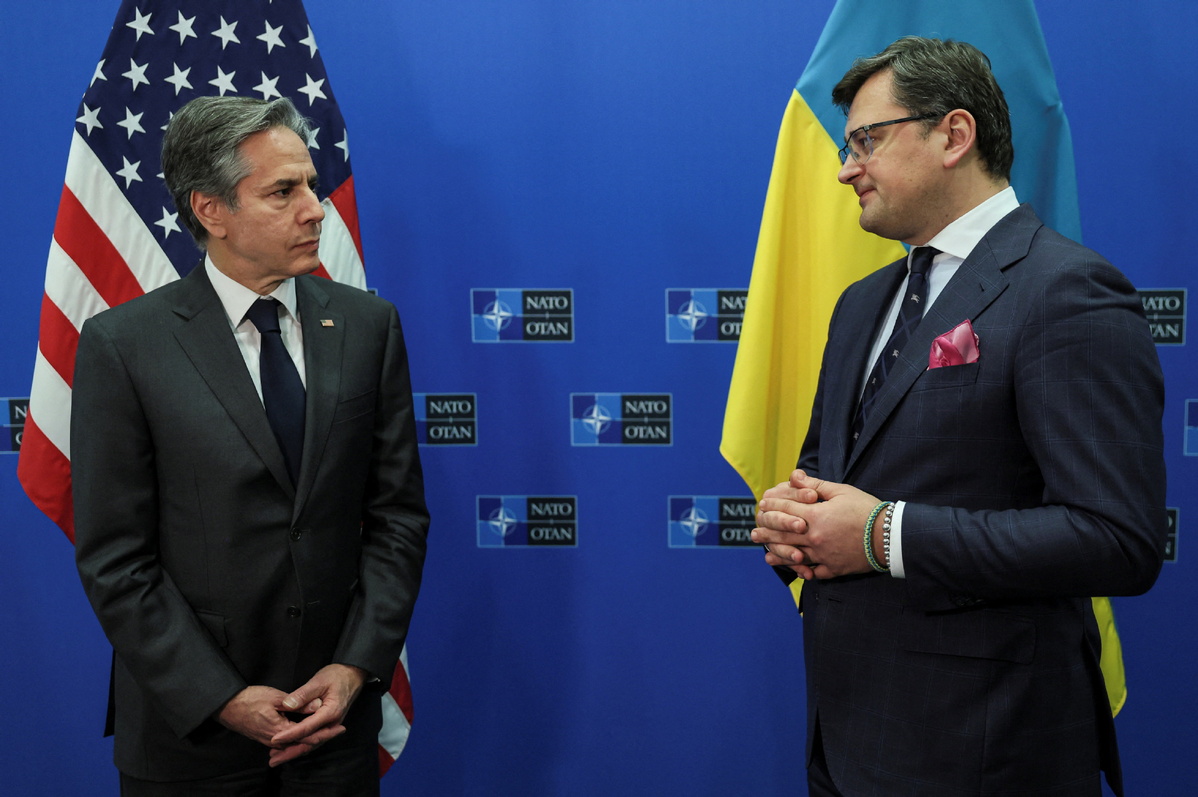
KYIV - Ukrainian Foreign Minister Dmytro Kuleba said on Thursday he had discussed new military aid for Ukraine with US Secretary of State Antony Blinken in a phone conversation.
"In our new call, US Secretary of State Antony Blinken and I discussed the next military aid package for Ukraine," Kuleba tweeted.
During the talks, the Ukrainian and the US parties also coordinated their positions on further sanctions which will be imposed on Russia over its conflict with Ukraine, Kuleba said.
He also thanked the United States for its "unwavering support" for Ukraine.
On Wednesday, US President Joe Biden said his administration would provide Ukraine with an additional 800 million US dollars worth of military aid due to what Washington anticipated to be a "wider assault" by Russia in eastern Ukraine.


Russia's Defense Ministry says a fire on the Moskva cruiser, the flagship of Russia's Black Sea Fleet, has been contained. It says the vessel remains afloat and will be towed to port.
The ministry said in a statement on Thursday that there is no open fire on the ship anymore and explosions of the ammunition have ceased.
"The main missile weapons were not damaged," the statement read.
In the early hours of Thursday, the Russian Defense Ministry said the ship sustained "serious damage" after its ammunition detonated "as the result of a fire". The ministry did not ascribe the fire to a missile strike.
Ukrainian officials claimed however that the ship was damaged.
Ukraine's southern military command said that it hit the warship with a Ukrainian-made Neptune anti-ship missile and that it had started to sink.
A spokesman for the Odessa military administration, Sergey Bratchuk, said on social media that "according to available data, the cause of the 'serious damage' was 'Neptune' domestic cruise missiles".
The Moskva is believed to be the second major Russian warship to suffer serious damage since Russian President Vladimir Putin ordered a special military operation in Ukraine on Feb 24. Ukraine said last month it had destroyed a large landing ship, the Orsk, in the Azov Sea near the besieged port city of Mariupol.
The Moskva was built in the Soviet era in Mykolaiv, Ukraine, and entered service in the early 1980s, according to Russian media.
With a crew of 510, it was previously deployed in the Syria conflict in which it served as naval protection for the Russian forces' Hmeimim air base.
Russia's navy has launched cruise missiles into Ukraine and its activities in the Black Sea are crucial to supporting land operations in the south of the country, where it is battling to seize full control of the port of Mariupol.
Leaders' visit
The attack on the Russian flagship was carried out as the presidents of Poland, Lithuania, Latvia, and Estonia met President Volodymyr Zelensky in Kyiv on Wednesday and called for increased military support for Ukraine.
Reuters said the European presidents arrived in the Ukrainian capital by train as Russian forces have drawn from the country's north.
"It is our duty to help Ukraine with all kinds of weapons," said Latvian President Egils Levits.
His Lithuanian counterpart Gitanas Nauseda said: "The future of Ukraine will be decided on the battlefield… Ukraine must win."
Zelensky, in a video address on Wednesday, said: "Those four leaders of the four nations are always protecting us, always standing up for us."
He said Russian forces are increasing their activities on the southern and eastern fronts, "attempting to avenge their defeats".
Russian Deputy Foreign Minister Sergey Ryabkov said his country will view US and NATO vehicles transporting weapons on Ukrainian territory as legitimate military targets.
Agencies contributed to this story.

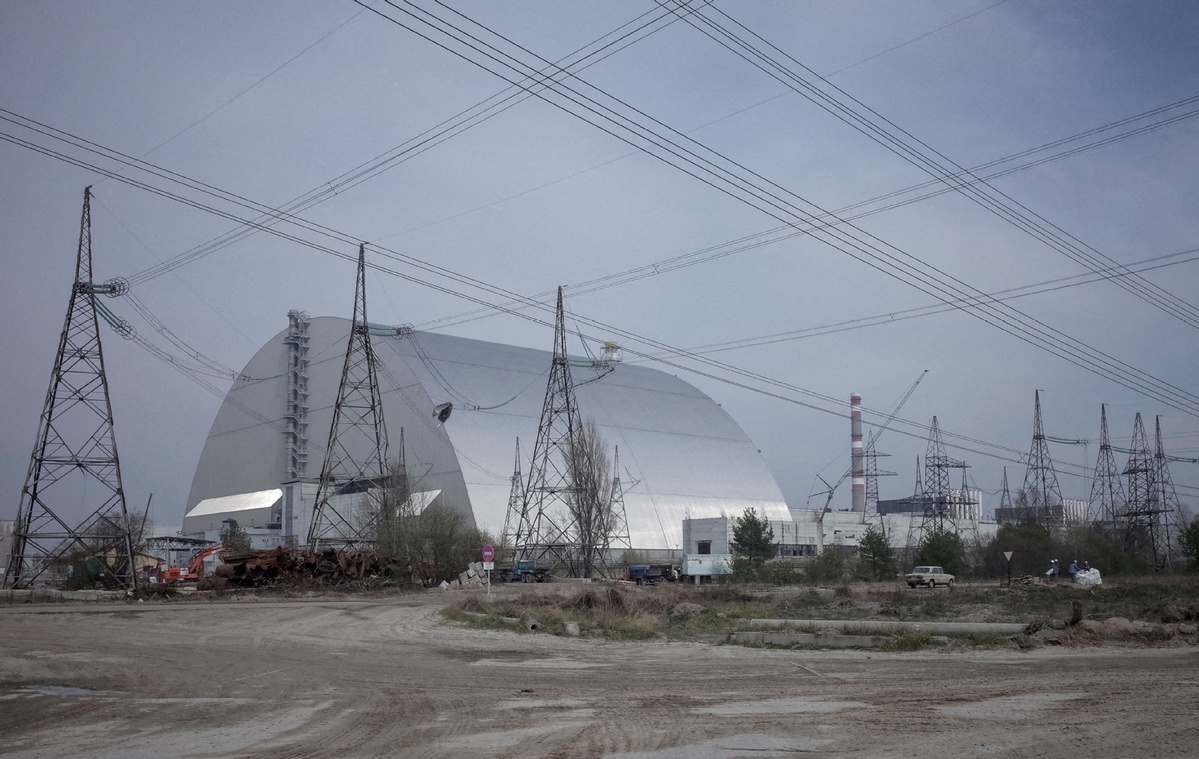
The risks to nuclear security have increased with the continuation of the Russia-Ukraine conflict. The geopolitical game involving Russia and Ukraine but also the United States and some European countries poses a big threat to nuclear nonproliferation and nuclear deterrence.
Perhaps a bigger threat is that the nuclear risks will carry with them the hidden dangers to nuclear security in the post-conflict era.
Strategic stability is possible only if the arms race among major powers ends, and the nuclear powers pledge to non-first use of nuclear weapons. That's why the US and the Soviet Union signed treaties to limit, rather reduce, their nuclear arsenals.
Nuclear deterrence in volatile situations can prompt rival powers to launch a nuclear attack based on misleading intelligence. And disturbingly, the US and Russia have accelerated their nuclear development over the past few years.
On Feb 27, Russia raised its nuclear alert level to "special combat readiness" and in late March, US President Joe Biden proposed the use of nuclear weapons in extreme circumstances. That in effect has raised the risks of a nuclear conflict.
Also, on Feb 21, Ukraine announced it was withdrawing from the 1994 Budapest Memorandum on Security Guarantees, saying it was a mistake to give up nuclear weapons and now the country wants to regain them. And on Feb 27, Belarus held a referendum on a proposal renouncing the country's non-nuclear status and considering redeploying Russian nuclear weapons on its soil, thereby consolidating its "nuclear bond" with Russia.
Ukraine and Belarus respectively are allied with the US and Russia, and both want to repossess nuclear weapons. This shows the political wrestling between the US-led West and Russia has shaken countries caught in the middle and could prompt many of them to develop or get nuclear weapons.
Besides, Polish Deputy Prime Minister Jaroslaw Kaczynski said in a recent interview with German newspaper Die Welt that Poland was open to stationing US nuclear warheads on its soil.
Ukraine and Belarus do not possess nuclear weapons. Under the 1994 Budapest Memorandum on Security Guarantees, they transferred the nuclear weapons inherited from the Soviet Union to Russia for decommissioning in exchange for security assurances from the US and the United Kingdom and Russia. Also, despite not being in a position to acquire or develop nuclear weapons, they are caught in the vortex of large-scale political, economic and military confrontations and conflicts between the West and Russia.
With the Korean Peninsula and Iran nuclear issues yet to be resolved, the attempts of Ukraine and Belarus to acquire nuclear weapons could fuel a new round of nuclear proliferation.
Since Biden took office, the US administration's stance on nuclear nonproliferation has been wavering and ambiguous. Early in his tenure, Biden talked about the necessity of nuclear arms control, including reducing the nuclear weapons arsenal, saving the cost of competition, preventing nuclear proliferation, and maintaining nuclear stability. But of late, he has been talking about great power competition, providing nuclear deterrence to US allies, and has not ruled out the use of nuclear weapons as deterrence.
The nuclear posture review of the Biden administration, too, is unclear, and it is likely to use the Russia-Ukraine conflict to accord higher priority to nuclear weapons in national security, and accordingly increase the defense budget to finance Washington's geopolitical games. In fact, the administration has already proposed a huge budget including higher spending, of $813 billion, on defense.
After the Anti-Ballistic Missile Treaty expired and the US let the Intermediate-Range Nuclear Forces Treaty become defunct, the New Strategic Arms Reduction Treaty remains the sole nuclear arms control treaty between the US and Russia. But due to the ongoing Russia-Ukraine conflict, Washington has adopted a tougher stance at the negotiations, casting a shadow over the prospects of US-Russia talks on nuclear nonproliferation.
Fifteen nuclear reactors generated roughly half of the electricity for Ukraine. Perhaps that is the reason why Russia has targeted those nuclear power plants during its special military operation. On March 4, a fight for the control of the Zaporizhzhia Nuclear Power Station in southern Ukraine caused a fire. But, fortunately, it was extinguished without any radiation leak.
Russia has reportedly withdrawn from the Chernobyl nuclear power plant, and Russia-Ukraine peace talks have progressed on expected lines. But military and media attacks have not stopped. So the risks over Ukraine's nuclear facilities are far from over.
Global nuclear security has deteriorated over the past few years and the Ukraine crisis has made the future gloomier. So it is imperative that all parties make concerted efforts and restrain their respective military actions, and exhibit courage to hold talks on arms control and nuclear nonproliferation.
The author is an expert on military security.
The views don't necessarily represent those of China Daily.
If you have a specific expertise, or would like to share your thought about our stories, then send us your writings at opinion@chinadaily.com.cn, and comment@chinadaily.com.cn.

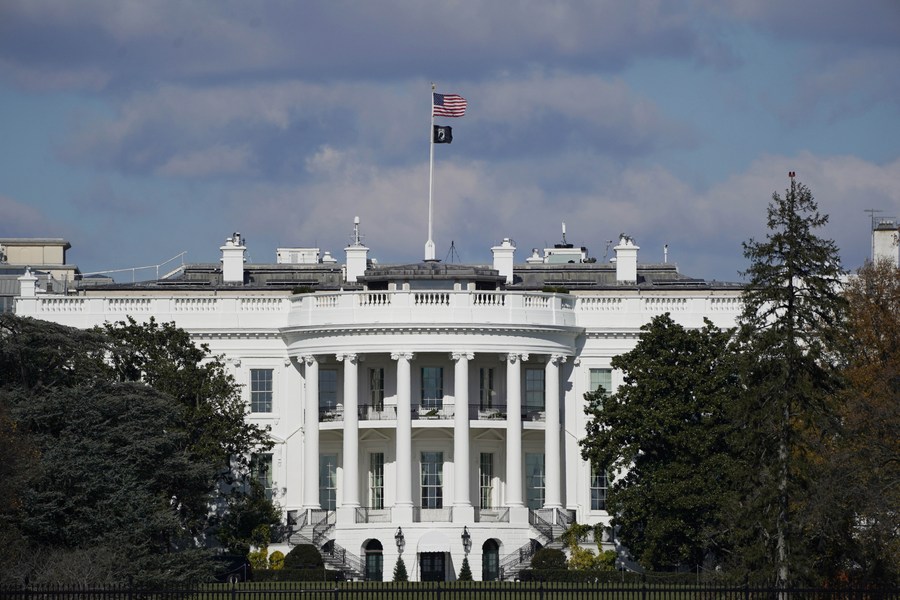
The United States is funneling hundreds of millions of dollars more in military assistance to Ukraine that includes "new capabilities", in an apparent escalation of the conflict in Eastern Europe.
President Joe Biden on Wednesday announced an additional $800 million in support and expanded the scope of the weapons systems provided.
The US tab for military aid to Ukraine, which is not a member of the North Atlantic Treaty Organization (NATO), now stands at $2.6 billion.
The latest installment includes artillery systems, armored personnel carriers and unmanned coastal defense vessels.
"This new package of assistance will contain many of the highly effective weapons systems we have already provided and new capabilities tailored to the wider assault we expect Russia to launch in eastern Ukraine," Biden said in a statement.
The package, according to the Pentagon, includes 11 Mi-17 helicopters that had been earmarked for Afghanistan before the US-backed government collapsed last August, and 18 155mm howitzers, along with counter-artillery radars and 200 armored personnel carriers. It is the first time the US has provided howitzers to Ukraine.
Also included are 40,000 artillery rounds, two air surveillance radars, 300 Switchblade "kamikaze" armed drones and an additional 500 Javelin missiles designed to take out tanks and other armor.
The expanded range of the equipment is giving the conflict, which started on Feb 24, an air of a proxy war between the US and Russia.
Dr Ron Paul, a former US congressman and presidential candidate, wrote Wednesday that "it sure seems like the Biden Administration is doing all it can to prolong the war in Ukraine. Sending weapons that have little chance of making a big difference in the outcome only keeps the fighting and killing going strong, and the Administration has shown no interest in pushing a quick diplomatic end to the war".
"On the contrary, Biden openly calling for regime change and a war crimes trial makes diplomacy nearly impossible. Why prolong the fighting?" Paul wrote on the antiwar.com website's blog.
"US National Security Advisor Jake Sullivan gave us a hint, when he told NBC News over the weekend that the US wants 'a weakened and isolated Russia'," Paul said.
Pentagon spokesman John Kirby said Wednesday that some of the military equipment, like the howitzers and radars, will require training for Ukrainian forces.
"We're aware of the clock and we know time is not our friend," Kirby said when asked about the timetable for the deliveries.
Russian Deputy Foreign Minister Sergey Ryabkov, in an interview published Wednesday on rt.com, said that regular contact with the US was not possible due to "Washington's unabashed support for militaristic intentions of the Kiev regime [and] the pouring of modern weapons" into the country.
"We are warning that American-NATO transports carrying weapons across the Ukrainian territory are considered legitimate military targets," he added.
Ryabkov said that Western economic sanctions on Russia failed to achieve their objective and that Washington "is irritated by our calm focus on the tasks of stabilizing the economy and ensuring its sustained functioning in the environment of unprecedented foreign pressure".
On March 18, Zhao Lijian, spokesman for China's Foreign Ministry, said of previous American military assistance to Ukraine: "Will the latest US assistance of weapons bring stability and security to Ukraine or cause more civilian casualties? Which do the civilians in Ukraine need more, food and sleeping bags or machine guns and mortar rounds? It won't be difficult for anyone in his right mind with a shred of common sense to make the right call."
The latest US aid will be funded using Presidential Drawdown Authority, in which the president can authorize the transfer of articles and services from US stocks without congressional approval in response to a deemed emergency.
John Spencer, a retired US Army major and expert on urban warfare at the Madison Policy Forum think tank, said he was pleased to see that the White House was sending artillery and artillery rounds. "You need these bigger, more powerful weapons ... to match what Russia is bringing to try to take eastern Ukraine," Spencer told Reuters.
"War is a chaotic universe of military strategies intertwined with inhumanity, violations, uncertainty, doubts, and deceit," wrote Antonio De Lauri, a contributor to the Costs of War Project of the Watson Institute for International and Public Affairs at Brown University, on commondreams.org.
Also on Wednesday, executives from US weapons makers met with Pentagon officials to discuss the industrial challenges in the event of a protracted conflict in Ukraine. Scheduled to attend were executives from BAE Systems, General Dynamics, Lockheed Martin, Huntington Ingalls Industries, L3Harris Technologies, Boeing, Raytheon Technologies and Northrop Grumman.
Russia said it had taken control of the port in Mariupol and that more than 1,000 Ukrainian marines had surrendered in the southeastern Ukrainian city.
Reuters contributed to this story.


Russia will "calmly" continue its special military operation in Ukraine, and Moscow and Minsk should strengthen integration in a situation where the West has unleashed a total sanctions war, said Russian President Vladimir Putin on Tuesday.
Putin made the remarks after meeting with his Belarusian counterpart Alexander Lukashenko in the Far East region. The two presidents also visited the Vostochny Cosmodrome spaceport in the Amur Region.
Putin stressed the importance of strengthening the integration of the two countries within the Union State framework in the current situation, with Western countries unleashing "a total sanctions war against Russia and Belarus".
He also said Russia and Belarus are close allies that have built relations on the unshakable principles of mutual respect and support. He emphasized that the governments of the two countries had "made arrangements for import substitution and smooth functioning of financial and commodity markets".
Both presidents also discussed the situation in Ukraine. Putin said talks between Moscow and Kyiv have again hit a wall because the Ukrainian side moved away from the agreements reached at a meeting in Istanbul at the end of March.
The special military operation is proceeding according to plan and will conclude when all its initial goals are achieved, Putin said. Accelerating the operation may lead to losses, so Moscow will act "calmly at a measured pace as scheduled, according to the plan that was originally proposed by the General Staff".
Putin dismissed claims that Moscow's army was struggling against Ukrainian resistance and was forced to withdraw around major cities, including the capital Kyiv.
Claims dismissed
When asked about reports of the discovery of hundreds of dead bodies of civilians in the town of Bucha outside Kyiv after the withdrawal of Moscow's troops, Putin dismissed them as "fake".
Russia's defense ministry said on Wednesday that 1,026 soldiers of Ukraine's 36th Marine Brigade, had surrendered in Mariupol, according to Reuters.
However, there was no immediate comment from the Ukrainian side.
The United States Secretary of State Antony Blinken claimed on Tuesday to have "credible information" that Russia "may use chemical agents" in its offensive to take Mariupol.
"We had credible information that Russian forces may use a variety of riot control agents, including tear gas mixed with chemical agents that would cause stronger symptoms to weaken and incapacitate entrenched Ukrainian fighters and civilians, as part of the aggressive campaign to take Mariupol," he said.
However, Blinken said he was "not in a position to confirm" recent allegations that Moscow used chemical weapons in the strategic port city on the Sea of Azov.
On Wednesday, the Russian embassy in Washington dismissed the possibility of Russia using chemical weapons in Ukraine.
German President Frank-Walter Steinmeier said on Tuesday that he had offered to visit Ukraine, but Kyiv had told him that his trip was "not wanted".
Speaking during a visit to Warsaw, Steinmeier said he had planned to travel to Kyiv with the presidents of Poland, Estonia, Latvia and Lithuania this week "to send a strong signal of joint European solidarity" to Ukraine.
Germany's top-selling Bild newspaper quoted an unnamed Ukrainian diplomat as saying: "We all know of Steinmeier's close relations with Russia here … He is not welcome in Kyiv at the moment. We will see whether that changes."
However, Ukrainian presidential adviser Oleksiy Arestovych told German public television on Wednesday it had not been Zelensky's intention to offend Berlin.
"I think the main argument was different-our president expects the chancellor, so that he can take direct practical decisions, including weapons deliveries," he told broadcaster ZDF.
Agencies contributed to this story.

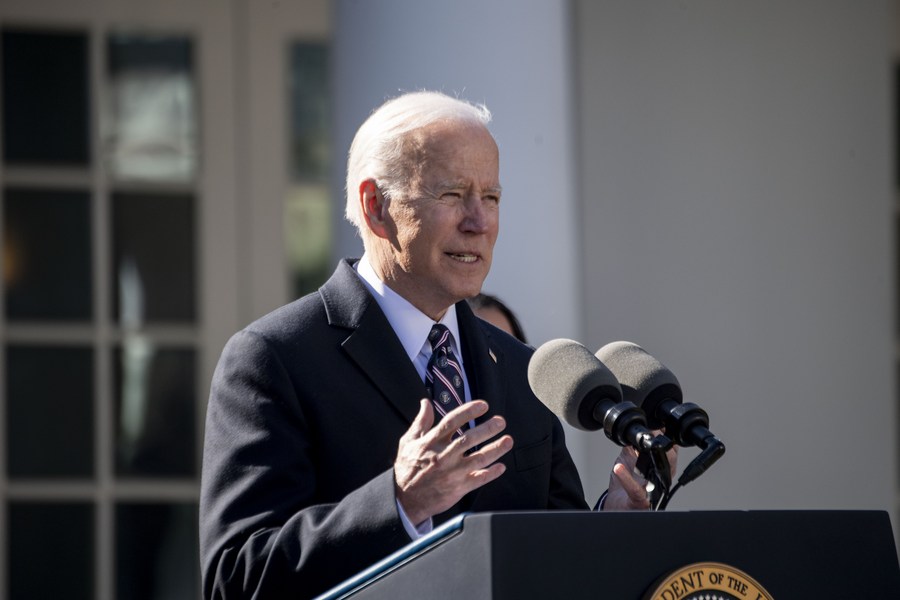
WASHINGTON -- US President Joe Biden said Wednesday his administration will provide Ukraine with an additional 800 million US dollars' worth of military aid due to what Washington anticipated to be a "wider assault" by Russia in eastern Ukraine.
"As Russia prepares to intensify its attack in the Donbas region, the United States will continue to provide Ukraine with the capabilities to defend itself," Biden said in a statement after a phone call with Ukrainian President Volodymyr Zelensky.
The new package, Biden said, "will contain many of the highly effective weapons systems we have already provided and new capabilities tailored to the wider assault we expect Russia to launch in eastern Ukraine."
"These new capabilities include artillery systems, artillery rounds and armored personnel carriers. I have also approved the transfer of additional helicopters," he said, adding that the United States will continue to facilitate the transfer of significant capabilities from its allies and partners around the world.
The United States has committed 1.7 billion dollars in security assistance to Ukraine since Russia began its "special military operation" on Feb 24.


HELSINKI -- The Finnish government on Wednesday submitted to parliament a report on changes to Finland's foreign and security policy environment following the Ukraine crisis.
The report is a framework for a broader debate on foreign, security, and defense policy, and includes an assessment of how Finland can boost national defense capability and international defense cooperation, as well as the effects of possible NATO membership.
National broadcaster Yle said that although the report is the basis for a discussion on NATO in the coming weeks, it will not lead to a parliamentary vote, only a communication.
The issue will then be referred back to the government and president.
PRESIDENT: DECISION BEFORE THE SUMMER
Also on Wednesday, President Sauli Niinisto said Finland's decision on NATO membership would be taken before the summer.
Niinisto told the newspaper Helsingin Sanomat that the report provides crucial information to decision-makers.
However, the final decision on membership will fall to Niinisto.
He warned against delays in the decision-making process, saying that the fate of Finland and Sweden was being used as a political football.
Russia's possible reaction is another reason to speed up the process, he added.
Public support for Finnish membership of NATO has surged in Finland since late February. In Finnish media polls, around 60 percent supported accession, while this week over half of the members of parliament backed NATO membership.
MOVING FORWARD WITH SWEDEN
Finnish Prime Minister Sanna Marin and Swedish Prime Minister Magdalena Andersson also discussed NATO membership in Stockholm on Wednesday.
The Finnish government's report estimates that the accession of Finland and Sweden to NATO would increase stability in the Baltic Sea region.
Meanwhile, Marin said on Wednesday that Finland's decision on its membership of NATO would come within weeks.
Sweden and Finland have intensified their military cooperation with each other, and with NATO in recent years. Although both countries have emphasized their autonomy in making security policy decisions, they have also expressed their desire to move in tandem regarding potential NATO membership.
Marin said there were risks involved in both applying for membership, and in not doing so.
Meanwhile, President Niinisto said on Wednesday said that "it would be best for Finland and Sweden to decide jointly and find the same path."
Kremlin spokesperson Dmitry Peskov on Monday reiterated his claim that further NATO expansion will not bring stability to the European continent.


MOSCOW -- US-funded biological laboratories in Ukraine were engaged in developing components of biological weapons, Deputy Chairman of the Russian Security Council Dmitry Medvedev said Tuesday.
"It is impossible not to mention the activities conducted by the United States and its allies near the Russian borders," Medvedev said at a government meeting.
Such activities were not aimed at searching for effective means of protection against dangerous diseases or cooperating with the international community, he stressed.
"Work there was carried out behind closed doors. In fact, components of biological weapons were developed and pathogenic microorganisms were studied, posing a threat to all mankind," Medvedev said.
"Therefore, we consider such activities as a whole absolutely unacceptable both in Ukraine and other countries surrounding us," he said, adding that such activities should be transparent and under control.

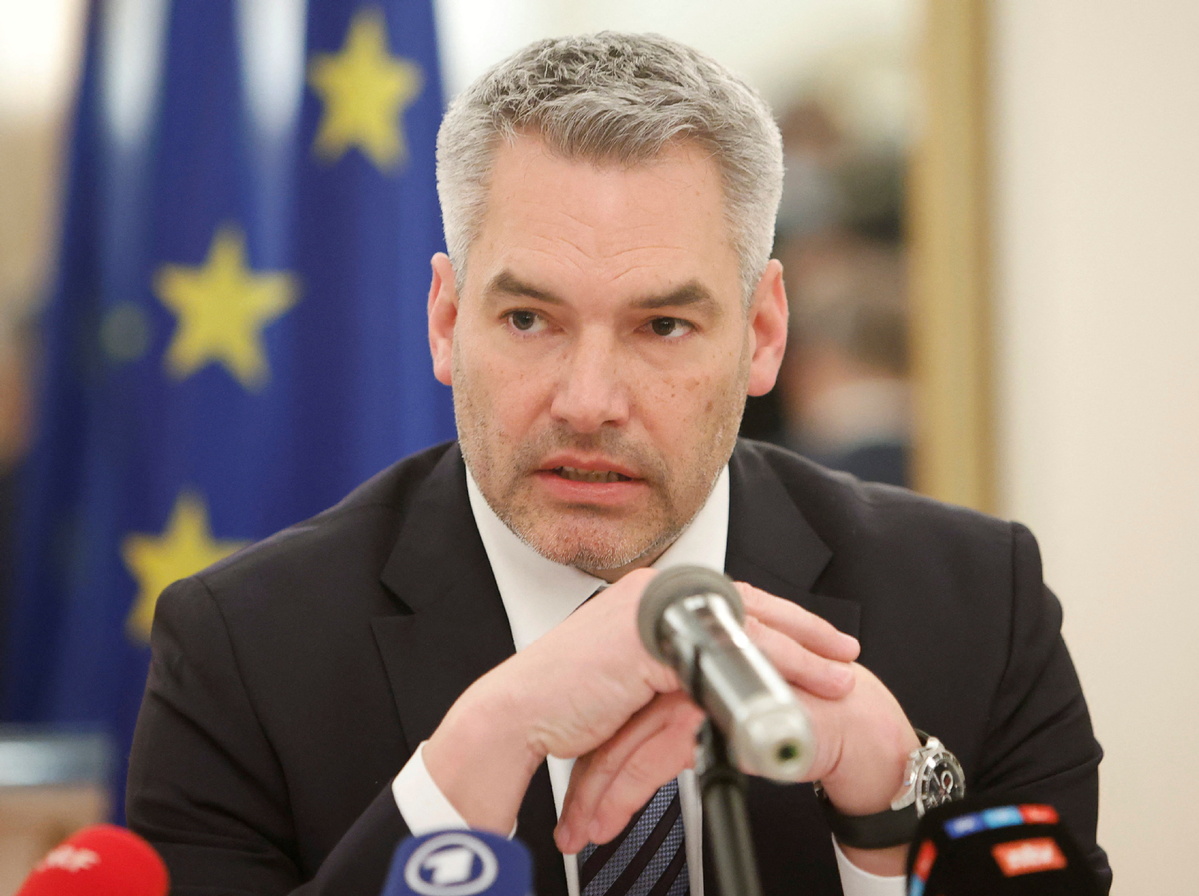
'Open and tough' meeting, says chancellor of first Russia trip by EU figure amid crisis
Austrian Chancellor Karl Nehammer held "very direct, open and tough" talks with Russian President Vladimir Putin near Moscow on Monday, in Putin's first meeting with a European Union leader since Russia's special military operation in Ukraine started over six weeks ago.
Austria, which obtains 80 percent of its natural gas from Russia, generally maintains closer ties to Moscow than much of the European Union, but that has not been the case recently.
Nehammer has expressed solidarity with Ukraine, while his government has joined other EU countries in expelling Russian diplomats, albeit only a fraction of the large Russian diplomatic presence there.
"My most important message to Putin was that this war must finally end," Russia's state-run TASS news agency quoted him as saying shortly after the meeting at Putin's official residence outside Moscow.
A spokesman for Nehammer said the chancellor repeated previous comments that he had hoped to help bring an end to the conflict or improvements for Ukraine's beleaguered civilian population such as humanitarian corridors.
The Kremlin said little about the meeting. "The conversation was short, short according to current standards," Kremlin spokesman Dmitry Peskov was quoted as saying on Monday by Russia's RIA Novosti news agency.
When asked to comment on the Austrian chancellor's statement about a lack of optimism after the meeting, Peskov said he was unaware of the results of the negotiations.
The spokesman had said the closed-door meeting would not be followed by a joint news conference.
The Kremlin didn't reveal more details, but Peskov said Putin and Nehammer focused on the situation around Ukraine, as well as the issue of gas supplies, "because this topic is very relevant for the Austrian side".
Putin also had talks with his Belarusian counterpart Alexander Lukashenko in the Russian Far East.
Putin said that Moscow would counter attempts to isolate Russia and Belarus and stressed the need to deepen integration between the countries in light of Western sanctions, the RIA agency reported.
In other developments, the Japanese government on Tuesday approved additional sanctions against 398 people and 28 organizations from Russia in connection with its military operation.
In particular, deputies of the State Duma have fallen under sanctions, according to the website of the Japanese Foreign Ministry.
Russian Foreign Minister Sergey Lavrov said Russia's military operation is being fought partly to end the "total dominance" and "reckless expansion" of the United States on the world stage.
Response to expansion
"Our special military operation is designed to put an end to the reckless expansion and the reckless course toward the total dominance of the US-and the rest of the Western countries under them-in the international arena," he said.
The foreign minister also accused the US of not following international law.
"In Iraq, they saw a threat to their American security, they bombed it. And when neo-Nazis and ultra-radicals are being grown right on our borders … we are not allowed to react to this threat on our borders," Lavrov said.
On Tuesday, Serhii Haidai, the head of the Lugansk Regional Military Administration, claimed to have destroyed a Russian weapons depot in the region's Novoaidar district.
On the economic front, Hungary plans to pay for Russian gas in euros through Gazprombank, which will convert the payment into rubles to meet a new requirement set by Putin, Foreign Minister Peter Szijjarto said on Monday.
Putin has warned Europe it risks having gas supplies cut unless it pays in rubles as he seeks retaliation over Western sanctions for Moscow's military operation.
Agencies contributed to this story.

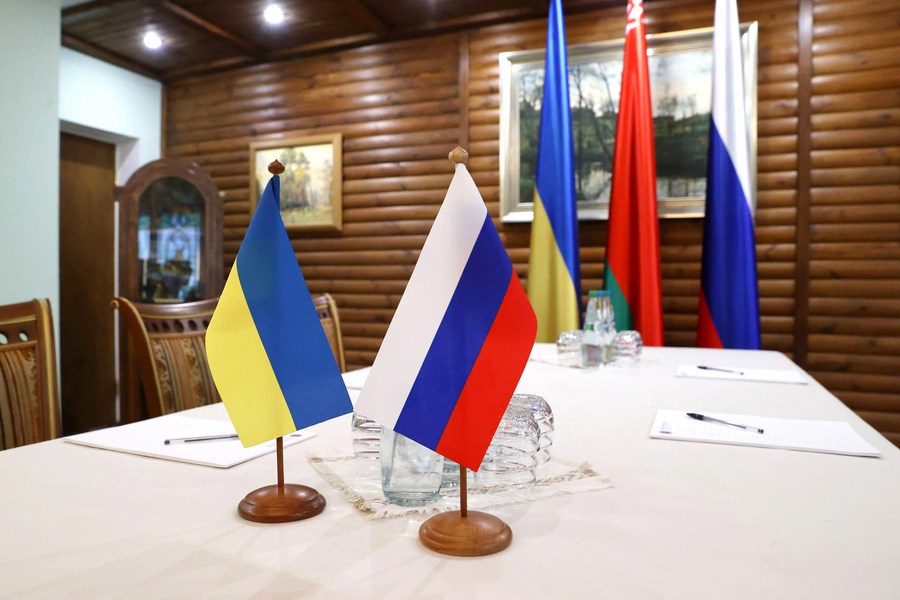
KYIV -- Ukraine's negotiating position at the peace talks with Russia remains unchanged, the head of the Ukrainian delegation David Arakhamia said Tuesday.
"The Ukrainian side adheres to the Istanbul Communique and hasn't changed its position," Arakhamia wrote on Telegram.
The only difference is that the Ukrainian side does not take into account all the additional issues that were not included in the Istanbul Communique. This may have led to a misinterpretation of the current state of the negotiation process, he said.
The negotiations regarding the security guarantees for Ukraine continue in an online regime, Arakhamia said.
Earlier in the day, Russian President Vladimir Putin said Ukraine had changed its stance from last month's peace talks in Turkey's Istanbul.


WASHINGTON-US President Joe Biden and Indian Prime Minister Narendra Modi had a "candid exchange of views" on the Ukraine crisis at a virtual summit on Monday, but the United States appeared to have made little progress in wooing India away from its neutral stance on Russia, according to media reports.
Biden made no major demands of India, and there was no indication of significant progress toward a unified posture on the Ukraine conflict.
But White House spokeswoman Jen Psaki said Biden "made clear that he does not believe it's in India's interest to accelerate or increase imports of Russian energy and other commodities".
Meanwhile, India reiterated its support to Russia, as its Defense Minister Rajnath Singh called the two countries "natural allies".
When asked whether India was considering further diversification of its defense procurement after the start of Russia's operation in Ukraine, Singh said in an interview with the Hindustan Times, "Wait and see".
Modi has tried to walk a tightrope between maintaining relations with the West, but has raised concerns in Washington by continuing to buy Russian oil.
India has reportedly bought at least 13 million barrels of crude oil from Russia since Feb 24, compared with nearly 16 million barrels in all of 2021, given the huge discounts offered by Moscow.
At a State Department news conference with Secretary of State Antony Blinken, Indian Foreign Minister Subrahmanyam Jaishankar pointedly suggested that Europe, not India, be the focus of Washington's concern about energy purchases from Russia.
"I suspect, looking at the figures, probably our total purchases for the month would be less than what Europe does in an afternoon," he said.
Soaring prices
Crude prices are soaring in the international market with the conflict unfolding. New Delhi has called for an immediate cease-fire in Ukraine, but abstained from voting on multiple United Nations resolutions on the military operation despite growing pressure from Washington and its allies.
Last year, Russia only accounted for around 2 percent of India's total oil imports. Following the West's imposition of sanctions on Russia, Moscow has been seeking new markets for its oil exports by offering discounts. Indian companies took advantage of the opportunity to increase imports from Russia and placed orders.
However, in the wake of sanctions on Russian banks, these companies are facing challenges on how to finance these discounted purchases.
In a recently concluded Parliament session, Rameswar Teli, minister of state at the Ministry of Petroleum and Natural Gas in India, said there was currently no contract or proposal under consideration of oil undertakings in the public sector with Russia or any other country to buy crude oil in Indian rupees.
Insiders say New Delhi and Moscow have been looking to establish a rupee-ruble trade system and discussions between financial officials from the two countries are ongoing. Other options for all possible payment mechanisms are also being explored.
Agencies - Xinhua

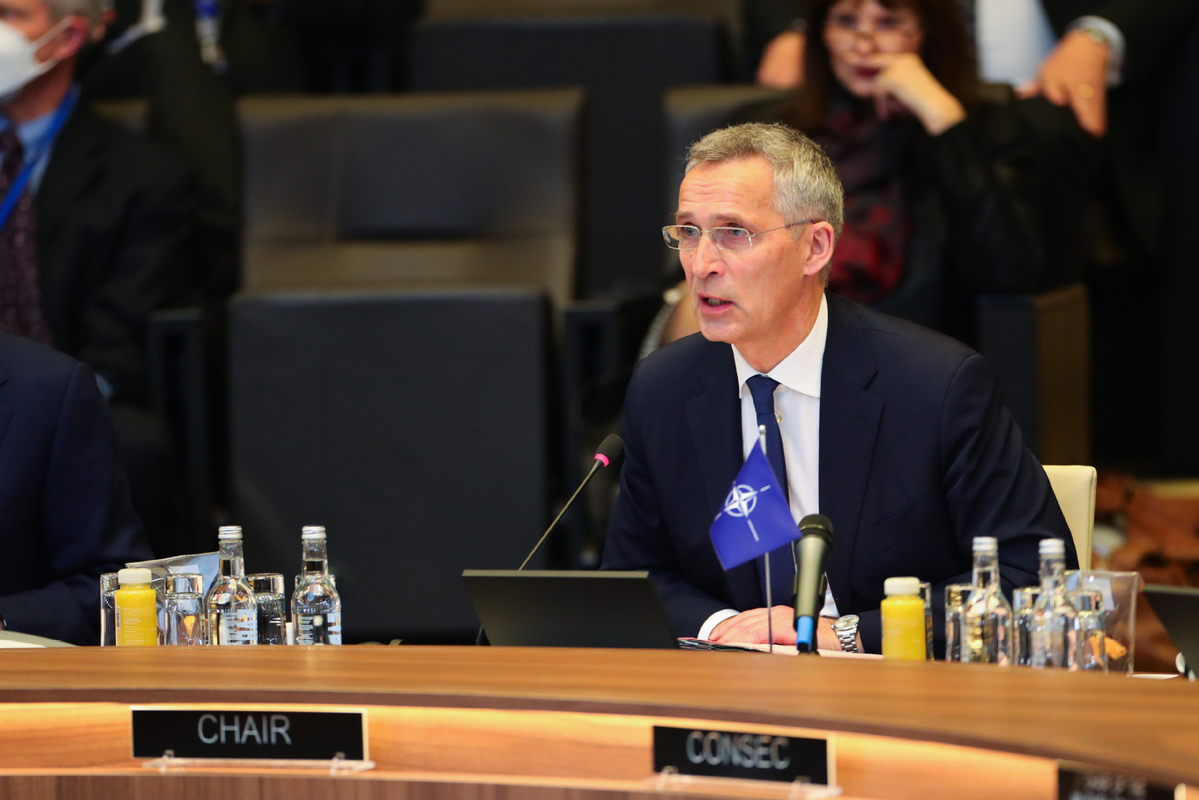
Alliance chief's distortion of efforts to promote peace aids no one, experts say
Provocative comments by NATO Secretary-General Jens Stoltenberg have once again distorted China's responsible position of promoting peace talks to resolve the Ukraine crisis and served to hype up Beijing's supposed threat to the security of the Western alliance's members, analysts said.
Stoltenberg said amid meetings of NATO foreign ministers last week that NATO allies see it as "a serious challenge" that China has not condemned Russia over the conflict with Ukraine.
He said that NATO's next iteration of its Strategic Concept will for the first time take account of the systemic challenges to the security of democracies posed by China's "growing influence and coercive policies".
And to make NATO members feel safer and more secure, he expected that they will deepen their cooperation with Asia-Pacific partners, including in areas such as arms control, cybersecurity, and technology.
It was also for the first time that foreign ministers from the United States' Indo-Pacific allies-Australia, Japan, New Zealand and South Korea-participated as a group in a NATO ministerial meeting.
Xu Liping, director of the Chinese Academy of Social Sciences' Center for Southeast Asian Studies, said NATO's eastward expansion and its moves to deepen cooperation with Asia-Pacific partners to build a new form of military alliance displays a trend that is "very dangerous" to world peace.
"NATO has deliberately played up the 'China threat' to make their move of smearing and suppressing China legitimate," he said. "The accusations are false because China's national defense construction is defensive in nature and is not aggressive at all."
He said NATO has acted as an instrument for the US to retain its hegemony and contain other countries' development. Under the pretext of the Ukraine crisis, the US has deliberately driven a wedge between Europe and China as it tries to find an excuse for some of its moves in the Asia-Pacific region.
Chen Yang, an associate professor of European studies at the China Institutes of Contemporary International Relations, said that the comprehensive containment of China has become the established strategy of the US in recent years. After the Russia-Ukraine conflict broke out, the US further strengthened its control over NATO. Under such circumstances, it is not surprising that NATO is following Washington's lead and even forging alliances in the Asia-Pacific region to bind the trans-Atlantic alliance to Japan, South Korea, and Australia. "But NATO's rhetoric on how it frames China is hollow and clumsy," Chen said.
Following the outbreak of the conflict in Eastern Europe, NATO hurriedly joined Washington in a bid to obstruct a political settlement, fan the flames and magnify the regional conflict, Chen said. It did so by providing Ukraine with money and weapons and pummeling Russia with sweeping and indiscriminate sanctions. Such efforts "can't bring peace or security", Chen said.
Instead, China, with an objective and just attitude, has been working actively toward realizing a cessation of hostilities as soon as possible, averting a humanitarian crisis and restoring stability, Chen said.
China adheres to an independent foreign policy of peace and reaches its own conclusions on an issue's merits. But ironically, while accusing China of "coercive policies", NATO has been busy pressuring other countries to take sides in the conflict.
Openness required
Sven Biscop, director of the Europe in the World Programme at the Egmont-Royal Institute for International Relations, said there is a debate proceeding among the NATO allies. While the US wants to see China more prominently on its agenda, the European countries are less inclined to do so because they don't see China as "a military threat".From that standpoint, Europeans feel that "the European Union is better suited to make policy on China".
Biscop said that a new Cold War-type confrontation would be in nobody's interest, and avoiding it requires openness on all sides.
Cui Hongjian, director of the European studies department at the China Institute of International Studies, said that it is worth observing any shift in how NATO describes China: from a "challenge" in the current phrasing to its potential designation as a so-called "threat" in the next Strategic Concept, which will be finalized for the Madrid summit of alliance members in June.
He said the US has been exploiting the Ukraine crisis by trying to convince Europe that China is a "threat "to Europe and that China is in the same position as Russia amid the crisis, so that Washington can urge its European allies to work together to smear, contain and suppress China.
Cui said that previously, European countries have had different concerns with the US. While the US has long sought to retain its hegemony, the European countries focused more on economic challenges from China but did not see China as a threat to their security.
"Europe used to consider the US policy toward China too confrontational, which is not in the interests of Europe," he said. "But as the Russia-Ukraine conflict lasts, Europe, which is hugely affected, is becoming more emotional, so whether the US will successfully affect their attitude toward China still is unclear."
China's Foreign Ministry spokesman Zhao Lijian said in a daily briefing on Monday that for some time, Stoltenberg has disregarded the facts and confounded black with white when making groundless accusations and smears against China.
"He has made irresponsible comments on China's foreign policies, touted the 'China threat' and even used coercion on China recently," he said. "China deplores and rejects this, and has made solemn representations with NATO many times."
As the largest military alliance born out of the Cold War, NATO has long adhered to an obsolete concept of security, engaged in bloc confrontation according to the playbook of the old Cold War, and reduced itself to some country's tool for its hegemonic aims.
While claiming to be a defensive organization, NATO has been constantly making trouble and creating confrontations. While asking other countries to abide by the basic norms governing international relations, NATO has waged wars against sovereign countries and fired shells indiscriminately in ways that caused civilian deaths, he said.
Zhao added that China has always been a builder of world peace, a contributor to global development, and a guardian of international order.
He urged NATO to immediately stop spreading disinformation and making provocative remarks targeting China, and abandon the confrontational approach of drawing ideological lines.
"NATO has disrupted Europe. It should stop trying to destabilize Asia and the whole world," he said.







