


Vaccination encouraged amid rising flu cases









China's flu activity continues to rise and is likely nearing its peak, prompting experts to call for sustained prevention and control efforts over the next two months.
Data released by the Chinese National Influenza Center on Wednesday shows increasing flu levels in both northern and southern provinces, with the H3N2 strain of influenza A currently dominant. The country reported 1,541 outbreaks of flu-like illnesses for the week starting on Nov 24, up from 1,234 the previous week.
Wang Dayan, director of the center, told China Central Television that 17 provincial-level regions in China have reached high flu activity, while others are experiencing moderate levels.
"It is estimated that the flu season in China will likely peak around early to mid-December," she said. "It will take some time for influenza activity to fall to a low level, so prevention and control measures must not be relaxed over the next six to eight weeks."
She said the H3N2 strain accounts for more than 95 percent of infections, with a small proportion involving the H1N1 strain of influenza A and the influenza B virus.
Since November, several schools across the country have temporarily suspended classes after clusters of infections.
Peng Zhibin, a researcher at the Chinese Center for Disease Control and Prevention, said at a previous news conference that health monitoring, environmental cleaning and ventilation mechanisms should be strengthened at facilities such as schools, nurseries and elderly care homes. She emphasized that students and teaching staff should avoid attending school while ill to prevent the spread of infection.
In Beijing, the rising trend of flu activity has begun to slow, suggesting the virus may have already peaked, the Beijing Center for Disease Prevention and Control said on Wednesday. The center said the flu season in the city began around mid-November, four weeks earlier than the previous season. The H3N2 strain accounts for 99.8 percent of local infections.
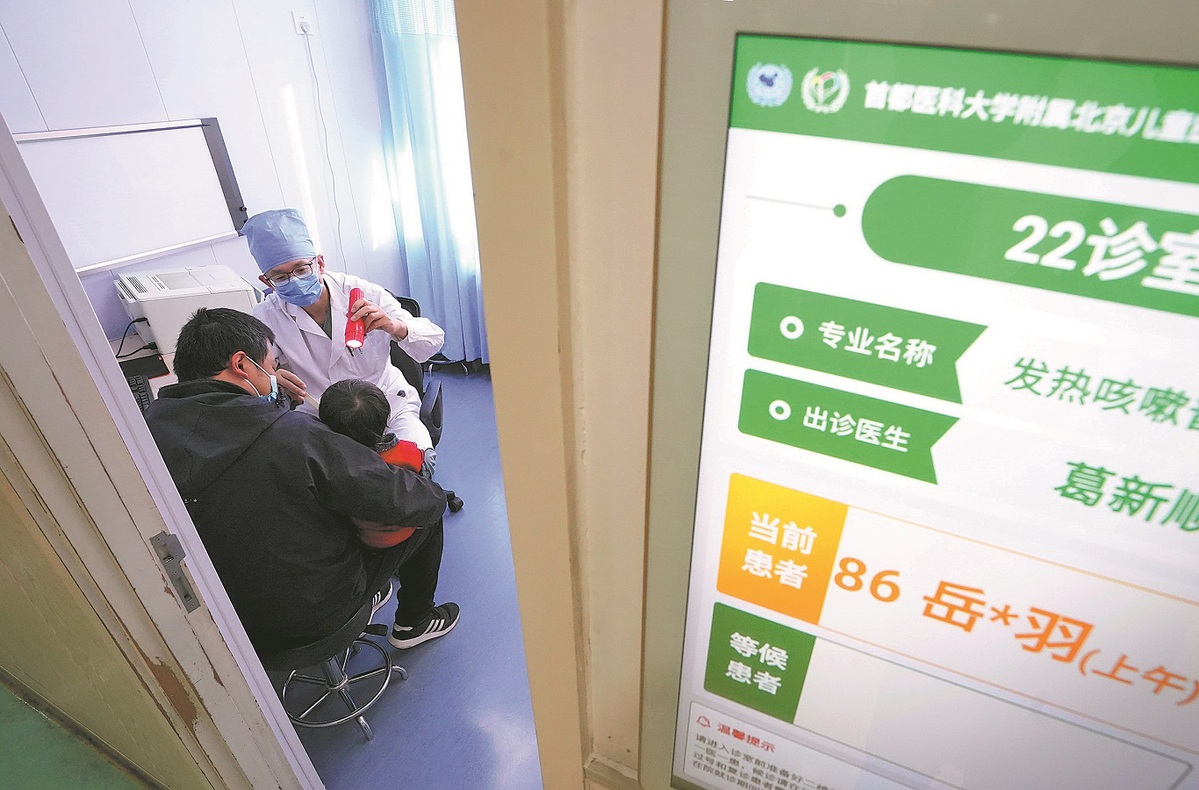
The current flu positivity rate among influenza-like illnesses is higher than the peak of last winter but lower than the peak in November of 2023, it said. Fever clinic visits also remain below levels seen in the past two flu seasons.
Wang said flu vaccination remains the most economical and effective method to reduce the overall risks of influenza.
"Due to individual differences, some people may still get infected after receiving the flu vaccine, but symptoms will be milder. This is because the flu vaccine helps reduce infection, alleviate symptoms, lower the risk of severe illness and minimize serious complications," she said.